
Recently I’ve seen several articles about the dire consequences of continuous and increasing global nocturnal light pollution, not only on the ecology and natural systems and plant and animal species, but also on humans. It has become apparent that artificial light at night disrupts our physical and psychological well being in profound ways.
I’ve known this intuitively since I was a teenager. I grew up in a small town and enjoyed darkness at night. As a child in the yard on Main Street in Stewartstown, Pennsylvania it was possible to see the Milky Way overhead. This changed with the installation of bright mercury street lamps which illumined automatically at dusk and which stayed lit until dawn. After that, I found myself unable to sleep more than an hour or two at a time, and often woke and saw light on the ceiling and walls, an insidious unnatural silvery light which penetrated cracks between curtains and small holes in blinds. This made falling asleep again difficult. When I moved to even more rural Pennsylvania at age 7 we regained the Milky Way, and in the headlights of cars at night it was possible to see an impossible blizzard of flying insects.
As a teenager we lived in a very rural area away from any town, but the local community installed a terrible single sodium street light 20 meters outside my bedroom. Despite being filtered by an acre of woods it substantially affected my sleep patterns despite heavy dark curtains. Fed up, I disabled the lamp by bashing its power cables in with a baseball bat, and did so every time they repaired it.
Then for my entire adult life I lived in cities–Baltimore and its environs for more than 30 years, and Philadelphia for 2 years, and Panama City Panama for 4 years. I had miserable sleep patterns and suffered anxiety and manic depressive episodes. It was virtually impossible to filter out all of the artificial light at night.
My mother still lives in a remote rural corner of Pennsylvania, 30 minutes by car from cities or towns and in a nice wooded lot. And yet when I go outside her house at night the sky is not dark at all–there is murky orange glow all around the horizon from the continuous lighting in New Freedom, Shrewsbury, and York. Only a few very bright stars and planets are visible at all.
When I became a school teacher in Baltimore City Public Schools, the first thing I did to manage behavior in my classroom was to turn off the glaring and merciless fluorescent lighting and to put shaded and colorful and DIM lamps around the room. Other teachers noted how calm and productive my students were, but the administrators would often burst in and shriek at me and turn on the overhead lights. Immediately students would become agitated and go bonkers. Many of those poor kids in Baltimore have NEVER SEEN STARS OR PLANETS. It is impossible in the confines of the city to do so, because the sky is orange with light at night. When there are clouds they are illuminated a dark malevolent reddish hue.
We need darkness. We are designed to experience extended periods of darkness, and it is necessary for our natural rhythms and health, including physical and mental health–and I would add, our spiritual health! Being inside the house with lights off while glaring lights burn all around outside is not being in darkness. Plants, birds, animals, and insects need darkness–not what we’ve come to think of as darkness, but total, immersive night.
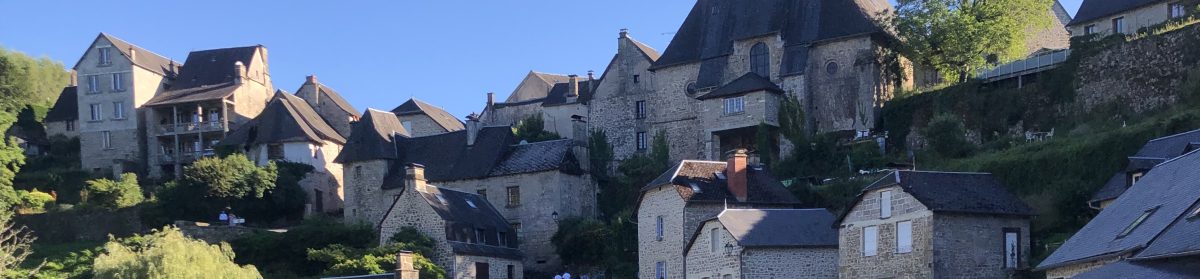
One of my favorite things about living in Treignac is that a law was passed here in the Correze last year forbidding the use of public electric lights between the hours of 11 pm and 6am. We now live in an International Dark Sky Reserve, and I love it. When we first purchased our house there was a glaring sodium lamp outside our front door lit all night, which unfortunately lit half our garden and wrecked an astonishing night sky view, and which cast an orange haze into our bedroom despite metal hand-cranked blinds and a curtain. Since the law was passed we have an incredibly clear night sky and the Milky Way is majestic arching directly above our building. For the first time in nearly 40 years I sleep 8 uninterrupted hours almost routinely. It’s delicious. I don’t feel the continuous jangly kind of nervous anxiety I always felt before. (Of course being self-employed and no longer in the USA hypercapitalist rat race might also be responsible for this improvement).
Recently an Englishman and I were discussing our appreciation for the new dark sky initiative, which not only heals and allows an appreciation of the beauties of the night sky, but also saves electricity. A friend chimed in and said she wanted the lights back on until at least midnight or 1 am. “If you were a woman you would understand. I like to walk home safely from the bar at night without fear of rape or other violence. Women and girls who carry torches at night are made into targets that way.”
I would never advocate for anything which might increase the likelihood of violence of any sort, and especially of violence against females. I grew up in a household where my father used violence against my mother, and where as a small child I would get pummeled for attempting to intervene. In fact, the town where I grew up had the attitude that this was OK. If my mother showed up at the grocer’s bruised or with a black eye, the women would say “wonder what she did to deserve that,” or “she must’ve spoke up when she shoulda shut up.” But I don’t think artificial lighting at night protects women and girls at all.
Every major urban area I’ve inhabited or visited worldwide is brightly lit all night every night. In Baltimore, for example, every alley, street, highway, park, garage, parking lot, yard and bridge is completely saturated with yellow, orange, or green light from dusk until dawn. Yet in these places rape and sexual violence have not stopped or been diminished at all. The idea that street lights staying on past 11pm will mitigate rape or sexual violence in a place like Treignac where it does not occur, while it has not done so in every major city globally is simply ludicrous. I’d argue that all this light at night provides a false sense of security, and that a woman or girl walking brightly lit spaces at night is actually more easily targeted than one using her cell phone to light a path. It’s far easier for a stalker to watch and plan an attack or abduction if everything is well-lit, and to find that one wooded area or dark lot where they can drag a victim off the lit street. In fact the area of Baltimore where girls end up abducted into trafficking at the highest rates is incredibly well-lit all night long.
I suggested that the bar should close BEFORE the lights turn off at 11 if you really want to protect girls and women from potential violence. This idea was scoffed at, but think about it. What fuels more violence against women than booze? Women drinking alcohol are more likely to be victimized, and men drinking alcohol are more prone to violence. Turn the damn lights off completely and even earlier I say, so we can all heal and dream. Go to the city to if you’d like to hang out in bars later, or drink in our pub and walk home under the stars. I will gladly escort anyone home who feels unsafe, and would post my phone number to do so, so long as we keep the lights off!
“But someone is going to fall and break a leg!” We don’t need to destroy the environment and our health in order to prevent someone from possibly breaking a leg.
 Mysterium Coniunctionis