Tai Chi: The Internal Tradition

I was quite pleased when we moved to rural France to discover a quality Tai Chi course offered locally and at an astonishingly reasonable price. For the past three years I’ve been working with our instructor on the Yang style long form, and have learned almost the entirety, up to near the end of part 3, “The Sky.”

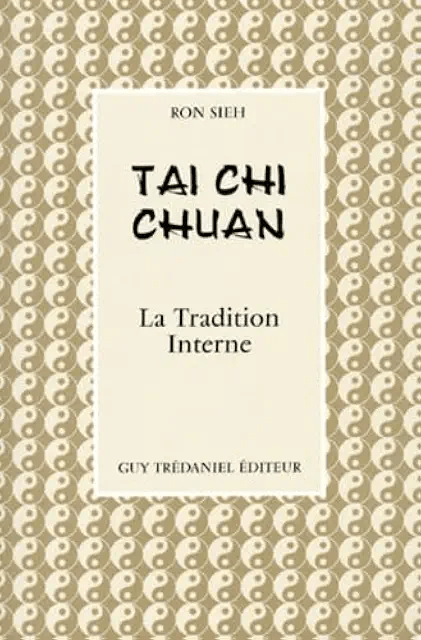
I’ve found during this time that I’ve become much more limber and more sensible about my movements and my balance. For nearly the entire three years I’ve had as my morning activity a round of Qi Gong followed by the Tai Chi form, outside by the river weather permitting or in our event space. My instructor wanted to push me a bit so he leant me a copy of this book, which was written by an American, but I read the French edition because of course here we are.

It was a good time to read a book about the internal focus of Tai Chi, because due to a few injuries (right knee, right shoulder, a recurrence of a previously repaired umbilical hernia) I’ve not been keeping up with my practice. In fact I’ve not done the form or even any Qi Gong exercises for two months. My body as a consequence feels its age for the first time in ages.

But I have tried nonetheless to bring the internal practice of Tai Chi into my daily life as I heal and get stronger. Sieh’s book is not revelatory or ground-breaking, but it is clear about topics which are often presented in tedious and confounding ways by overly technical writers. While physically sidelined I found it edifying and quite useful, and I hope to bring Sieh’s wisdom to bear when I get back in form.

It’s funny how much of Sieh’s book about the internal practice of Tai Chi relies on training with partners. It’s not easy to find someone to practice push hands with in the middle of nowhere.

The Devil by Name

It was just over a year ago that I read Rosson’s Fever House. I really enjoyed that novel and the way it reformatted the familiar zombie apocalypse trope.

I’m sad to report however that volume 2 of the duology is less satisfying. The Devil by Name mostly moves characters around in order to get them in the right place at the right time for the climax. And the climax is sort of Clive Barker rewriting The Stand. Lots of gothic horror and special effects, but a bit rote and too tidy a means of tying up multiple loose ends.

If you read the Game of Thrones novels, you may recall that the fifth novel felt as though Mr. Martin had lost the plot, and was sort of moving an enormous cast of characters around aimlessly as he tried to figure out how to resolve the enormous series of events he’d unfolded, while introducing new characters, cultures, and armies along the way. I think a lack of resolution is in some cases better, and Fever House could have stood alone.

That said, I will read more of Keith Rosson. He’s got skills, and won the Shirley Jackson award for a short fiction collection which sounds right up my alley.

Im Lauf der Zeit (“Kings of the Road”)

I saw Wings of Desire way back when Netflix used to mail DVDs in envelopes. Later I saw Paris, Texas. These are the Wenders films I heard about back when I was first exploring the renowned auteurs of cinema, and I’ve seen them both a few times. Recently I also saw The American Friend.

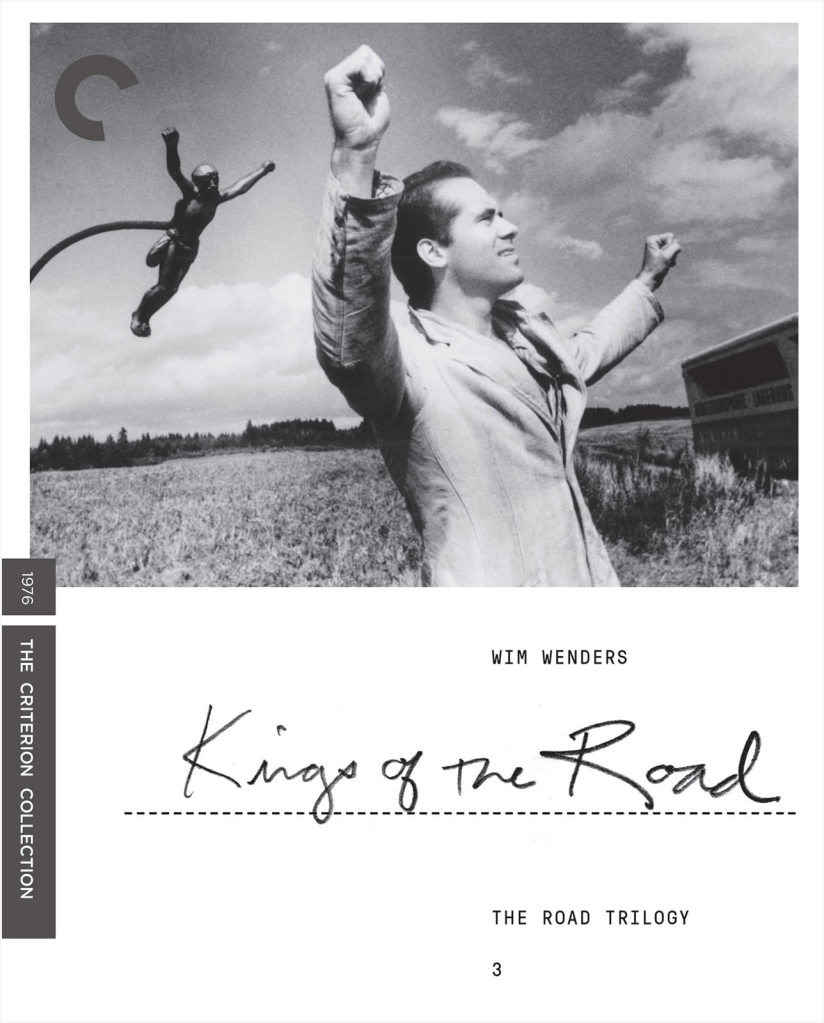
Kings of the Road is superior to the other Wenders films I’ve seen. It has the loose plotting and crazy energy of the superior Fellini films, but also the rich raw aesthetics of Herzog or Pasolini. Though it clocks in at nearly 3 hours in length, I found it breezy and entirely captivating on multiple levels.

The two main characters are perhaps not the best most noble people, but they are resilient and imaginative and do their best to be kind in a completely mad society. And though the narrative is loose and a bit naive there is some profound meaning in the dialogue and imagery. There is for example a subtle but inisistent critique of US influence in West Germany with as much context and as many exemplars as a good Tony Judt essay.

So it made me feel deep feels, it made me laugh, and it made me think. Someday I’ll be glad to revisit Im Lauf der Zeit.