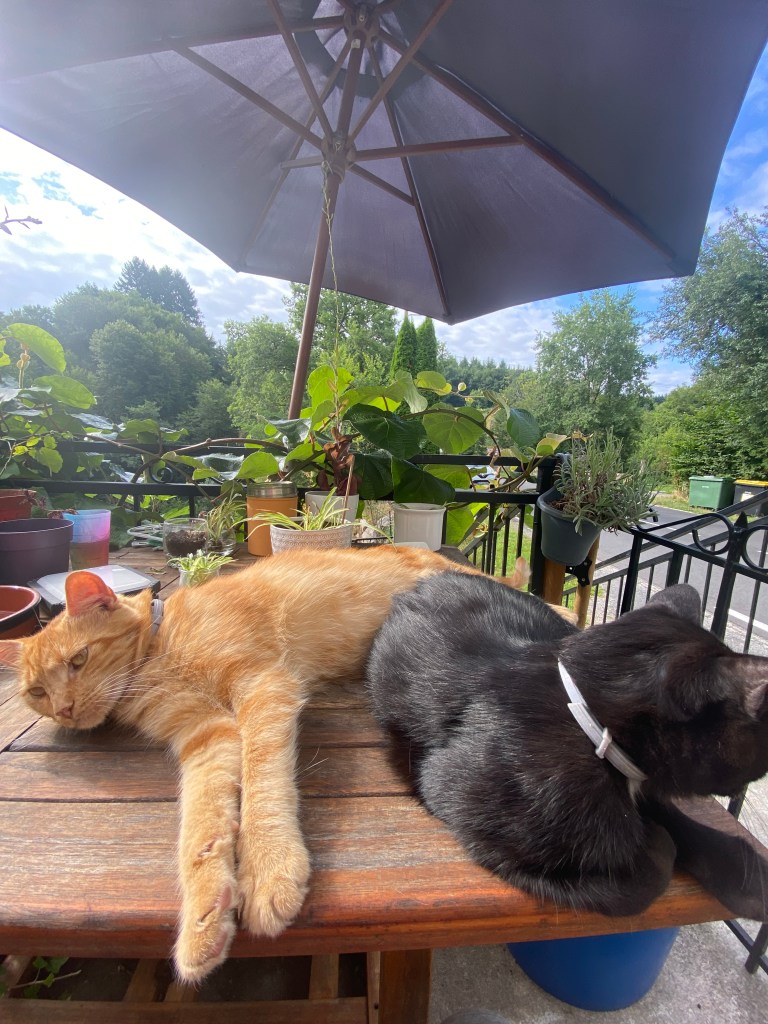
Woke a bit before 6 am this morning. Drank coffee outside on the porch and read an essay in Harper’s by Lydia Davis. She’s an author I’ve encountered many times in journals and magazines, and I’m pretty sure I have a story collection or two of hers somewhere? At any rate she’s writing about observation and the compulsion to write about her observations. She’s got a singular style and voice in her fiction and non-fiction, and does a lot of translation from the French–in fact I’m sure I read an essay by her about French translation at some point. I’m distracted while reading and observing our two cats who are climbing on me one minute, then chasing lizards the next. Lydia Davis is observing cows in her essay, and while I’m reading I hear a horrible guttural stegasaurus groan which I can assume is one of our goats even though it’s a new sound. The male has climbed along a narrow ledge atop a wall which has a metal chain-link fence built into it, at the top of which is a kiwi vine. While standing stretched out full length on his hind hooves to nibble kiwi leaves his hooves slipped off the wall. I rush over to find him being strangled by the kiwi vines with his horns stuck in the fence. I free his horns as he re-positions his hooves on the wall and immediately he is contentedly munching kiwi leaves again as if nothing happened.
At about 8 am guests who’ve rented one of our gite appartements–The Studio–check out. They are two cyclists off to their next destination after a one-night stay in Treignac. I pause my reading to strip down the bed and turnover the apartment for the next guests. Just as I finish hanging the clean sheets and towels from the washer our next guests arrive. They’ve rented The Loft gite for a daytime sleep-over as they are driveing some horrid 24-hour route. They check in at 8:05 and are planning to leave at 5pm. I wonder if they are actually going to sleep or if they are going to fuck. It’s our first overday stay as opposed to overnight stay. And, to complictate things we have a check-in in the same apartment 45 minutes after they are planning to leave. Things will be tight. We are used to it, however, as business has been brisk this year since January.
After checking in the new guests I hear the guttural scream again, and the male goat is once more dangling in the air with his throat tangled in kiwi vines. I free him once more.
I sit again and finish the Lydia Davis piece and then polish off the rest of the magazine. I realize I rarely write about day-to-day stuff anymore the way I used to on a previous and much more successful blog. Has my Muse deserted me? Have I lost interest? On the desk in my office is a pile of language books I put out back in February–I was adamant that I was going to do a daily study/writing routine and that immediately fell apart. Perhaps I’ll get it back together in the fall after tourist season quiets down.
I wanted to refresh my general knowledge of French history before focusing in detail on a few eras, regions, and personalities. A History of France seemed a good place to start. John Julius Norwich had written quite readable histories of Byzantium and European monarchs, and his father Duff Cooper was Churchill’s liason with the Free French during WW2, and later was Ambassador to France from the UK. I thought this book merited a try.
There is way too much history in this short and readable history. We start with Julius Ceasar and his campaigns in Gaul, and progress through 2000 years up to Charles DeGaulle. But this is a fun read, written by a lifelong Francophile, and it did what I hoped it would–reminded me of the proper sequencing of early monarchs and refreshed my knowledge of the 100 years war and 30 years war and the long deeply intertwined relationship of France and England. The cast of characters is immense of course, and Norwich is particularly good at bringing them to life, from Eleanor of Acquitaine and her sons to Joan of Arc to Napolean 3.
I must say that even immediately upon finishing the book I can’t differentiate all the King Louises and King Charleses. There are too many of them to remember. But Norwich brings them to life and situates them in the context of their times and analyzes their impact on the entirety of French and European history.
Like many English (and Americans) of his era he seems to truly admire but also to have not inconsiderable contempt for Charles de Gaulle. But a historian worth his or her salt can hold two contrary opinions in his or her mind at once and still manage to get the job done. I had to laugh out loud when De Gaulle tells Churchill that the French people regard him as a reincarnation of Joan of Arc, and Churchill says “we had to burn the first one.” History is so much fun, except when you have to live through it.
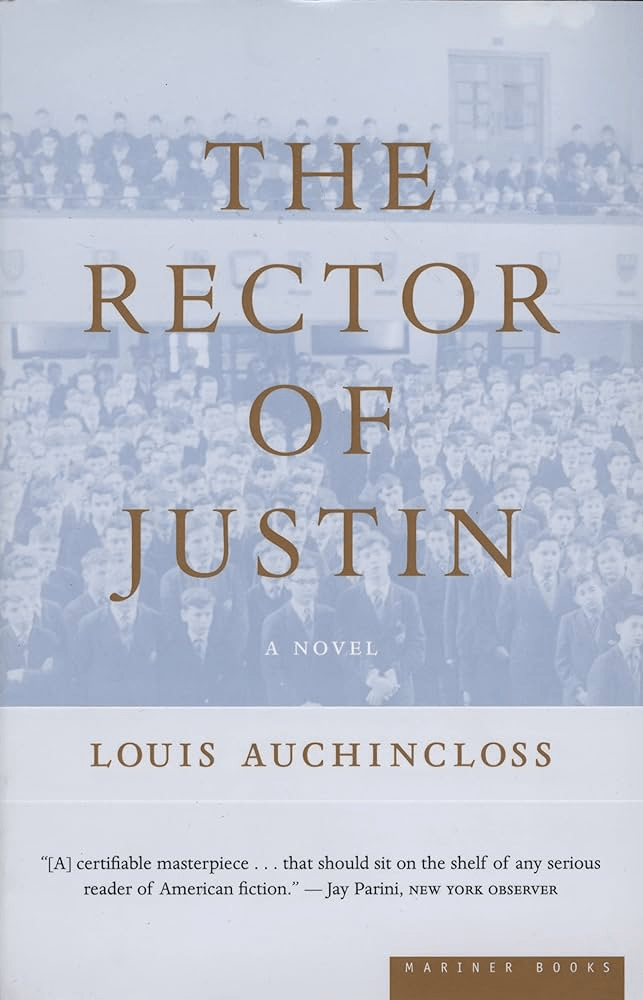
Brian Aspinwall becomes at age 27 a teacher at a prestigious private boys’ school in New England. He is recruited suddenly in 1939 to fill in for a master who has gone off to Canada to enlist in the RAF. It is primarily through Brian’s diary that we learn about the school Justin Martyr and its famous founder Reverend Francis Prescott. Immediately Aspinwall is awestruck by Prescott and comes to admire him and his accomplishments. He seeks to understand what makes Prescott and his world-class upper crust school tick, and The Rector of Justin takes off.
Aspinwall seems surprised to learn that Prescott is an intellectual and a progressive given the focus on sports, strict discipline, and religious tradition at the school. But many more surprises await. As the novel unspools we learn from other sources who come into Aspinwall’s orbit. Eventually Aspinwall is given files and documents by others and he takes on the task of possibly writing Prescott’s biography.
The book is breezy and warmly inviting, despite its substantial and ethically weighty themes. I found it an absolute pleasure. The characters are all interesting, and in particular the Rector himself. There are hints that Justin Martyr was founded out of some dark repressed desires. The WASP identity of the school proves problematic later on as Prescott has an epiphany about the kind of people running the board at his school, and the true values of the wealthy and influential class who send their kids to Justin Martyr. I could in fact trace many of the concerns Reverend Prescott has about his students and their morals down to the ethical catastrophe in current US politics.
Because the novel is from the 60s but set in the 30s and 40s we get groovy stuff intellectuals were into at the time, like Freud. The novel is saturated by Henry James but is not as dense and soupy as The Master’s.
I’d previously read only one other novel by Auchincloss–The Book Class. I remember quite liking that one but nothing about it has stuck with me after 3 decades. I do recall that both novels were given to me by Dan Bouchard in a box of remainders in perhaps ’94? I still have one more book by Auchincloss on the shelf–a collection of short fiction. I look forward to it.
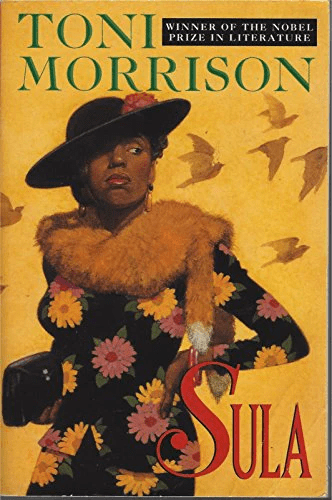
Sula is a magnificent read, a short novel but a richly realized world. We spend almost a century in Bottom, the Black neighborhood of Medallion, Ohio. Two families entwine in the narrative–one-legged Eva Peace serves as matriarch of one. She manages a thriving bungalow of sorts, a chaotic and haphazard structure akin to the Winchester House in complexity. There are family members, hangers-on, boarders, mountain people, addicts, crooks, working people and feral kids in the Peace home. Eva’s daughter Hannah raises her kids amidst the tumult. One of her kids is Sula.
The other family is Helene Wright’s–Helene was raised by her grandmother. Her mother was a prostitute in New Orleans and granny pulled her out of that drama and brought her up. Helene’s household is calm and organized and there is a sheen of middle class respectability. Her daughter Nel is raised in a tidy and peaceful environment and has adopted the virtues and social mores of the community.
Sula and Nel become best friends. Sula is adamant that she will never be bound in any way by the constraints of her community or its judgments and expectations. She will be free and her self will be unimpeded in its development and evolution by anyone or anything. Nel on the other hand is willing to tow the line and to do what’s right. They have a relationship where one is centripital and the other centrifugal, forces working together to flesh out a beautiful and adventurous childhood.
I recall a scene in Henry James’s The Turn of the Screw when well-mannered Flora is playing in the dirt and makes sexually suggestive gestures with sticks–shortly afterward the Governess has her first encounter with the apparition of Miss Jessel. There’s a similar scene in Sula where Sula and Nel are playing in the dirt and digging holes and burying things in the holes and the girls are frustrated and dis-satisfied in their game but manage somehow to conjure up a horrible event in an almost magical ritual. The reactions of each girl to this event have lasting impacts on the course of their lives.
Eventually Nel does what one is supposed to do in Bottom; she gets married and starts a family and focuses her energies on her children, her husband, and their home. On the day of Nel’s wedding Sula leaves town for ten years. When she returns she will be judged and scape-goated for the sins of her town and its inhabitants.
But what are morals and virtues if they simply hide hypocrisy? What are the consequences to true human freedom when small-town values are oppressive and retrograde? Sula, through her refusal to conform and to follow the niceties, becomes for Bottom an easy target for projection–she absorbs all the guilt and hostility and judgments of the town’s inhabitants. But is Nel really superior to Sula morally? What does genuine friendship entail? What are the costs of motherhood and are they compatible with true freedom? Is a life sacrificed for the benefit of others a worthy life? Bottom learns a lot about itself through Sula’s sad fate, and pays a heavy karmic debt.
I’d read 100 Years of Solitude about 30 years ago and was absolutely flabbergasted by it. Immediately one of my life goals became “get your Spanish into adequate shape to read more Garcia Marquez but in the original language.” I managed to have some conversations with locals in Spanish on a couple trips to Colombia, but alas never got my skills up to reading novels.
So I caved in and read Love in the Time of Cholera in English. I was a bit concerned with the high bar set by the other novel that this would disappoint–quite the contrary. I think it’s superior. Where 100 Years is a bit of a “loose, baggy monster,” Cholera is fit and trim. The magical realism is dialed down substantially but not the magic of the description, characters, settings…such a dense and humid world to inhabit for too short a time. A rich, sweaty, mournfully sexy book. It truly captures the decayed glamor of old South American colonial cities and the rich mix of cultures and classes. Exquisite!
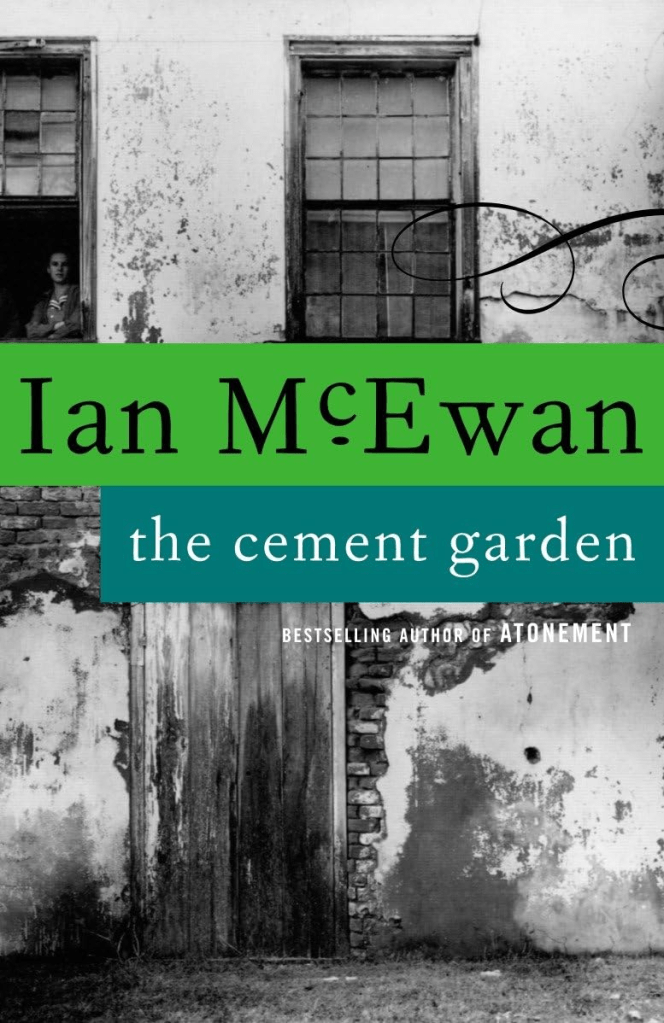
Aw, it’s nice to revisit those care free days of childhood–distant, aloof parents, perverse games, pointless wasted hours at school, the challenge of disposing of corpses…
Not sure how to categorize this one. A bit of Shirley Jackson’s We Have Always Lived in the Castle, a bit of Poe’s Fall of the House of Usher, a bit of 90s pornography.
Four siblings are left alone in a strange castle-like house in the midst of an abandoned urban tower block development when their parents die in quick succession. Instead of the lush natural setting of Eden (or the isle from Lord of the Flies) they inhabit an unnatural cement garden, where only stinging nettles force their way up through cracked concrete to bake in the sun. Without the internet or even TV there is not much to do except go feral.
McKewan can write, and this short gloomfest is arresting and disturbing in equal measure. It probably says something about me to admit that I found it somewhat humorous, the way Rober Coover’s story The Babysitter is humorous. Kids left to their own devices act like adults–and are equally fucked up.
I recently read an article in the NY Review of Books about Ford Madox Ford. Had previously only read The Good Soldier, which is astonishingly good. Thought I should perhaps tackle another of his, but didn’t feel quite up to Parade’s End, which has sat its fat self on my shelves since 1994 without being opened.
So I decided to search the author’s name and pick up whatever book the owlgorithms first suggested. Owltimately it was The Brown Owl, which proved an entertaining little owlegory. Though written for kids it has a sophistication and wit about it which owlevates the book above mere “young adult” fiction.
Read earlier this year an analysis of the Arthurian myths by Emma Jung and Marie Louise von Franz, followed in short order by H is for Hawk. H is for Hawk is a memoir of dealing with the death of a parent while training a hawk and reading T H White’s memoir about training a hawk. All of this brought me round to the realization that I’d never read White’s Once and Future King novels. So I started with The Sword in the Stone. Didn’t much like it. Merlin is too ridiculous, the story is too silly, everything is far too cute. I can see why Disney made a film out it, because it’s tailor made for them.
Despite not enjoying the first volume, I plowed ahead into volume 2 of The Once and Future King. Didn’t like this one even less. Guess I’m too old. I prefer dour, profound old Tolkien to this stuff.
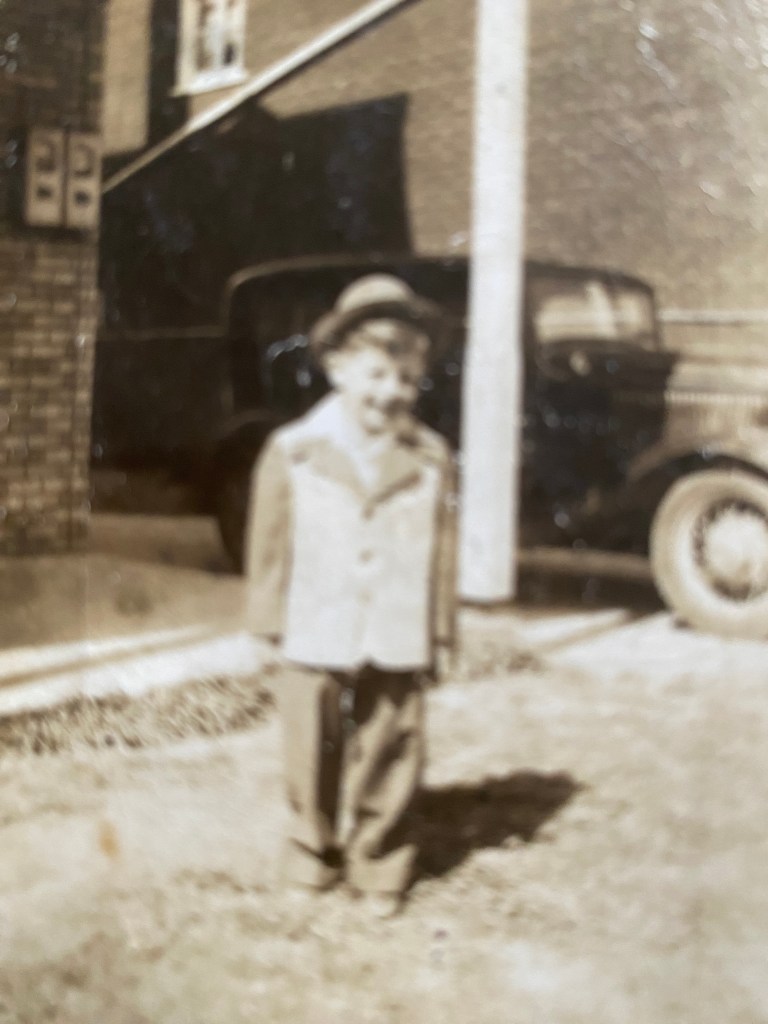
The reverse of this tiny sepia-toned photograph reads “Paul Godfrey Easter 1949 Stewartstown, PA.” It was originally written in pencil but was later partially fleshed out in ink. The handwriting I immediately recognize as that of Mary Godfrey, my paternal grandmother. I’ve no recollection of how I came into possession of this photograph, but after moving to France it fell out of a book as I was unboxing and shelving stuff we’d had shipped from the USA. It’s possible Paul himself sent it. He used to mail me strange messages including Garfield or Far Side clippings from the newspaper and hand-scrawled notes on old receipts. Once he sent me a Polaroid of a woman he was then involved with–she was nude and far younger than he. He’d scrawled “daily vitamin pill” on the photo. I don’t know the name of the young woman but I heard later that she took Paul’s ATM card and emptied his bank account. A bit later Paul became unhoused.
On June 1st at 8:45 pm Paul Godfrey died in hospice care in Gettysburg PA, the town where I was born in 1969. He’d had a stroke a few weeks earlier which left him a bit weak on the left side. He was institutionalized to undergo rehab but refused to participate, refused food and water, and went into a rapid decline. Eventually staff gave up trying to engage him and instead medicated him against the pain of starvation. He was 80.
Paul Benjamin Godfrey was my biological father. Your inclination might be to offer sympathy in this circumstance; that’s kind and considerate but wholly unnecessary. We weren’t close, and were in fact estranged from one another for decades. I think we spoke a half-dozen times in 35 years. My younger sister heroically assisted him his last few years and had visited him in hospice without getting much response. I, on the other hand, had almost entirely excised him from my life quite some time ago. Due to the staid dictum don’t speak ill of the dead, I’ll refrain from cataloging the reasons here. I’ll simply state that my mother gathered our belongings into a few trash bags and left his house after calling the police one night in the 1970s, my sister and I in tow. She wanted the police there as she fled in case Paul showed up. He worked night shift and we escaped to shelter in a good samaritan’s house for a couple weeks before moving into the home of my maternal grandparents. Later, there was a brief attempt at reconciliation which failed and divorce procedings were engaged. I was 7 years old, my sister 5.
My sister asked if I’d write an obituary. I could barely come up with 500 words. It says something that a man of 56 years could know so little about his father’s life that minimal details were tough to scrape together into a brief narrative. But such was our relationship, or lack of.
There will come a time when I have more to write about Paul Godfrey. For now, however I’ll remain silent and allow that photo from 1949 to be my memory of him. It was taken 20 years before my birth, and it’s a very cute and charming photo of a presumably loveable little chap. May the conditions and torments which caused that young child to become the man I knew be laid to rest.
John Rebus is close to retirement. In fact, only days away from turning in his warrant card. A dissident Russian poet is found bludgeoned to death and Rebus and his partner Siobhan Clarke are off to find the killer. As a result they explore the underworld of early 21st century global politics. Big banks are in collusion with Labor and Nationalist politicians and local gangsters to milk Russian oligarchs of their cash. Scotland is aching for independence and the oligarchs find it an attractive place to avoid possibly drinking radioactive tea or falling mysteriously from a high window onto a Moscow street.
Rebus wonders what counts as corruption and illegality when the entire economic and political system is shady. As he tries to unravel the case he ponders his own ethically questionable past doings and wonders if he’ll simply spend retirement in the pub gradually softening himself with malt.
Another murder complicates things. Rebus and Clarke are now no longer detectives in a local precinct police squad; they are George Smileys working in the shadows to uncover an international conspiracy.
Or perhaps not? Maybe there is less there there than appearances suggest. As they work the case Rebus begins the process of handing the reins over to Siobhan as much as possible. She is at once frustrated by his tactics and deeply saddened to be losing his wisdom and experience, but finds herself ready to take over the team.
I jumped into this 17-novel series at book 15 and only read that one and the final volume, but enjoyed them thoroughly. Good pop lit with a cracking plot and sufficient depth and complexity to keep me intrigued. The characters are not one-dimensional types but are fully fleshed out. And Mr. Rankin can indeed write a good sentence. If detective novels and police procedurals are your thing you might want to read these.
We were sitting at the local watering hole a few weeks back and mentioned to friends from the UK that we were going to visit Edinburgh this summer for the first time. Immediately one said “Oh, you must read Ian Rankin before you go. I’ll lend you a couple!” Sure enough a day or two later her significant other dropped off two novels at our front door on his way home from work. Fast service!
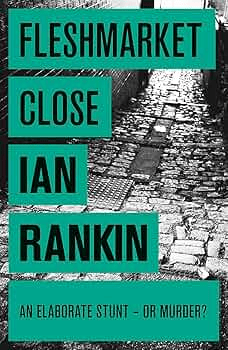
I’ve not read many detective novels or police procedurals or mysteries–I’ve dabbled in noir now and again, and did read the first Simenon Maigret novel in French last year. But I figured it would be an interesting way to get a taste of Edinburgh in advance without relying on Rick Steves for once, so I dived right into Fleshmarket Close.
I was a bit concerned to begin reading a series at about volume 23 or 24, but the novel stands alone quite well. The detective central to the story is John Rebus, who is being pushed aside by his superiors and sent off to pasture in a shoddy department in a squalid neighborhood. Rebus is an attractive type, familiar from the genre–a gutsy guy, tough-minded, unsophisticated in his tastes and not academically inclined, but eclectic. He likes an enormous variety of niche music from jazz and folk to punk and techno. He likes a pint and a malt perhaps too much, and has an ex-wife and estranged daughter who probably featured prominently in earlier volumes. He’s read Dostoevsky. He tends to intuit things other detectives miss, and instead of thinking linearly about a crime he builds up a huge amount of context and finds all sorts of intricate leads to trace. This frustrates his superiors but he gets results.
In Fleshmarket Close the murder of an immigrant leads to a thriving underworld of criminality involving drugs, Irish milita, human trafficking, slumlords, racism, salacious and carnivalesque right-wing media, celebrity lawyers, and pornography. Rebus and his younger partner Siobhan Clark eventually piece together a vast conspiracy. It’s quite satisfying, and Edinbugh is a character in the story just as much as Baltimore is a character in The Wire. In fact, this novel has some substantial similarities to The Wire Season 2. And, I’d note, Edinburgh as portrayed in this novel has some similarities to Baltimore.
It’s fun to see Detective Rebus struggling with “woke” culture as it began to accelerate, and to note his adapting to “new” tech like laptops and mobile phones and DNA tests. And of course it’s interesting to read a pre-Brexit UK novel which shows a lot of the media agitation which led to anti-immigrant and anti-EU sentiment. Rebus comes from Polish immigrant stock himself and he is not pleased by where he sees Scotland and the UK headed.
I’d certainly recommend this to fans of the genre, who might perhaps prefer to start with the first novel instead of one of the last? But also to those who don’t really read this sort of novel as an interesting look at the dark underbelly of a famous tourist destination.
It’s been two years since Martin Amis died at age 73, so I figured it was about time I read something of his. He was, after all, one of those writers I was supposed to read back in the ’80s and ’90s, as the conventional wisdom droned on about him capturing the zeitgeist of that time. Somehow I just never got around to reading his novels, though I did see the film version of The Zone of Interest last year.
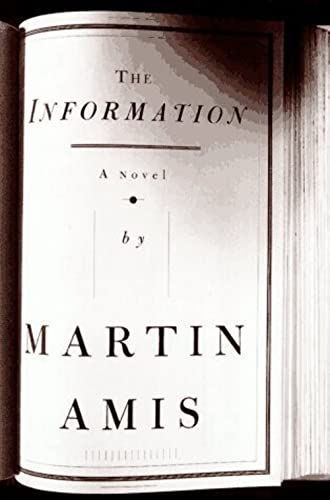
I had on my shelves The Information, l which I’d received in 1995 when I was running the Literature section of the long-defunct Borders Books & Music just north of Baltimore City. It was a signed first US edition, distributed to promote the work and encourage those of us hand-selling novels to read it and recommend it, and apparently I can get about $50 for it on Abebooks. When we had Christopher Hitchens for an in-store event and discussion of The Missionary Position, I should have asked Hitch about this novel and whether it was worth holding onto and eventually reading. Hitch, like Amis, smoked himself to death, and Martin did his eulogy.
The Information is a seething spite-filled cess pit of self-loathing. The main character Richard Tull is a thinly disguised caricature of Amis himself, and is a most unpleasant bloke to be around for 500 pages. Tull is a pretentious novelist and writes unreadable overly complex books no one cares to understand which pile up unpublished in his study. Meanwhile his best friend Gwyn Barry writes noxious and silly tripe which becomes globally successful and makes him a mint and a celebrity. While Richard is a complete failure who drinks and smokes himself to annhilation, Gwyn is continuously interviewed and photographed and consulted about his opinions. Because Richard regards himself as superior intellectually and artistically to his far more successful friend, he decides to get revenge on Gwyn through a series of demented schemes involving shady underworld stereotypes. All of the schemes however fail and end up bouncing back on their initiator.
All of the characters in this novel are hateful and despicable. Women mostly exist in the book to serve the needs of men and don’t have much depth. The plot is a complete farce and this writer whose works so tapped into the zeitgeist of his time seems now to be as dated as his father Kingsley.
But the prose is gorgeous, scintillatingly so. There are passages of the most delicious and sparkling disdain gloriously served up with malevolent humor. This entire novel encapsulates what it’s like to be an upper-crust twit who feels superior to everyone. It lags in parts and in others is uproariously hilarious and brilliant. As a failure, it’s a rather good one. I might be inclined 20 years from now to pick up another of his books.
I bought a few copies of this when we had one of several book signings with John Waters at the old Borders Books & Music 043 in Towson. I gave three of them as gifts over the years and still have two signed copies. Probably have a box full of other stuff signed by John as well–DVDs, VHS tapes, other books.
It’s funny to think of an edgy and completely trashy Baltimore film-maker forging a side identity as a collector and modern art sophisticate well-regarded in New York and Paris. But nothing is surprising in John Waters’ career. A few years ago when we were home in the USA it was great fun to browse his substantial and surprising personal collection donated to the Baltimore Museum of Art. Shortly thereafter the museum dedicated a new public restroom in his honor.
After having Art: A Sex Book for more than two decades I finally got around to reading it. I’d looked at the art before but had never tackled the text. The conversations between Waters and his co-exhibitor Bruce Hainley are astute and clever and often as filthy as anything overheard in a high school cafeteria. I laughed out loud several times.
At the end of the book are 20-some artist responses to a list of provocative questions. These range from the silly to the sublime.
When I was first in grad school in Philadelphia in the early 90s we had a list of novels we were required to read outside of our coursework to ensure we had sufficiently deep knowledge of literature and its icons. On the list were two or three Nabokovs. I read at the time either Pale Fire or Ada, or Ardor–can’t remember which. All I recall from the book is a childhood with lots of butterflies and glimmering grass and trees and lazy summer days. And a sexy sibling or cousin? But the prose was dope. And, of course, I read Lolita.
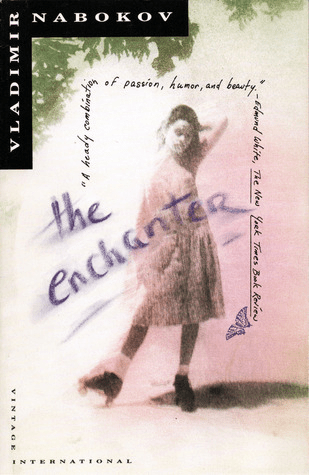
When I found a stack of Nabokov on my bookshelf I took down The Enchanter knowing nothing about it. A quick read of the prologue and I discovered it was not really a novel at all but rather a novella and that the book was mostly prologue and afterward. The prologue discussed the history of the story and the afterward, by Vladimir’s son and translator, was about the challenges of translating some surreal and salacious images from Russian to English.
The Enchanter turns out to be Nabokov’s first examination and expression of the idea which later became Lolita. His son in the afterward explains the experience of reading The Enchanter as being trapped inside the mind of a sick criminal for 70-odd pages. The entire story is about a man who lusts after a 12-year-old girl and who marries her repulsive mother simply in order to rape the child. So, basically the same idea as Lolita, but without the polish. Humbert Humbert is a disgusting pervert but he’s got style and pinache, and discusses his quarry like a sophisticate who knows cheeses and fine wines. Lolita, despite its criminal main character and dark situation, has a sense of humor. The Enchanter has Nabokov’s delicious prose and characterization but I found the experience of reading it less than enchanting–mostly interesting as a curious sort of literary archaeology rather than as an actual good story. BUT the narrator gets his comeuppance in a satisfying way.
Way back in the late 1980s I took a course called Psychology and Literature. It was taught by the miraculously brilliant and completely weird Dr. Benjamin McKulik (who I discussed on Gayle Danley’s Classy Podcast a few years back). One of the novels we read in that course was The Second Coming by Walker Percy. I recall being fascinated by a female character in that book who had schizophrenic episodes and who spoke in punning sentences full of double-entendres and layered with multiple potential meanings. I have no recollection of buying Percy’s The Thanatos Syndrome but figure at some point I saw it cheap in a used bookshop and bought it on the strength of the other.
There’s a lot to detest in this book. The narrator’s terrible Louisianna genteel racism and anti-semitism, his painfully neanderthal politics, the absolutely retrograde and bafflingly naive conservative sexuality (doggy-style sex is apparently evidence of a psychological problem and/or brain syndrome, and so is oral sex?). Vivid descriptions of pedophilia uncovered by the hero make stretches of the book truly troubling to get through. But I found myself pulled along nonetheless by the narrative, which is like a Robert Ludlum or Tom Clancy thriller written by a much more literary prose stylist.
The plot is completely ridiculous but at the same time believable–a bunch of hacks funded by the Federal government decide to dump chemicals in the water supply which revert people to “lower” primate behaviors because they hope the local crime rate will go down and math scores will go up due to savant capacities developed by those who drink from the tainted taps. Success! Just like flouride in the water saves teeth, their chemical brew from a local nuclear reactor coolant tower works as intended. A psychiatrist recently released from prison for hawking prescription drugs to truck drivers has about five interactions with people in his town and immediately suspects something is up from their speech patterns and changes in their sexual behavior. His wife suddenly becomes good at bridge and wants doggy-style and oral sex for the first time ever, so there must be a neurological syndrome in town! What is the cause? Well, our intrepid doctor finds out with the help of a weird cast of Southern Gothic characters including a kissing cousin, a mentally ill Catholic priest and wanna-be Nazi who lives in a fire spotting tower, and an uncle who wins duck-call competitions.
Nearly a decade ago the first season of True Detective aired on HBO. I thought it was an absolute hoot and a great example of prestige TV with compelling acting in a gritty setting and a peculiar Lovecraftian underbelly. There are several interesting plot and setting overlaps between that season’s arc and this weird AF novel. I wonder if the show’s writers knew Walker Percy’s last book?









 Mysterium Coniunctionis