Recent Reads

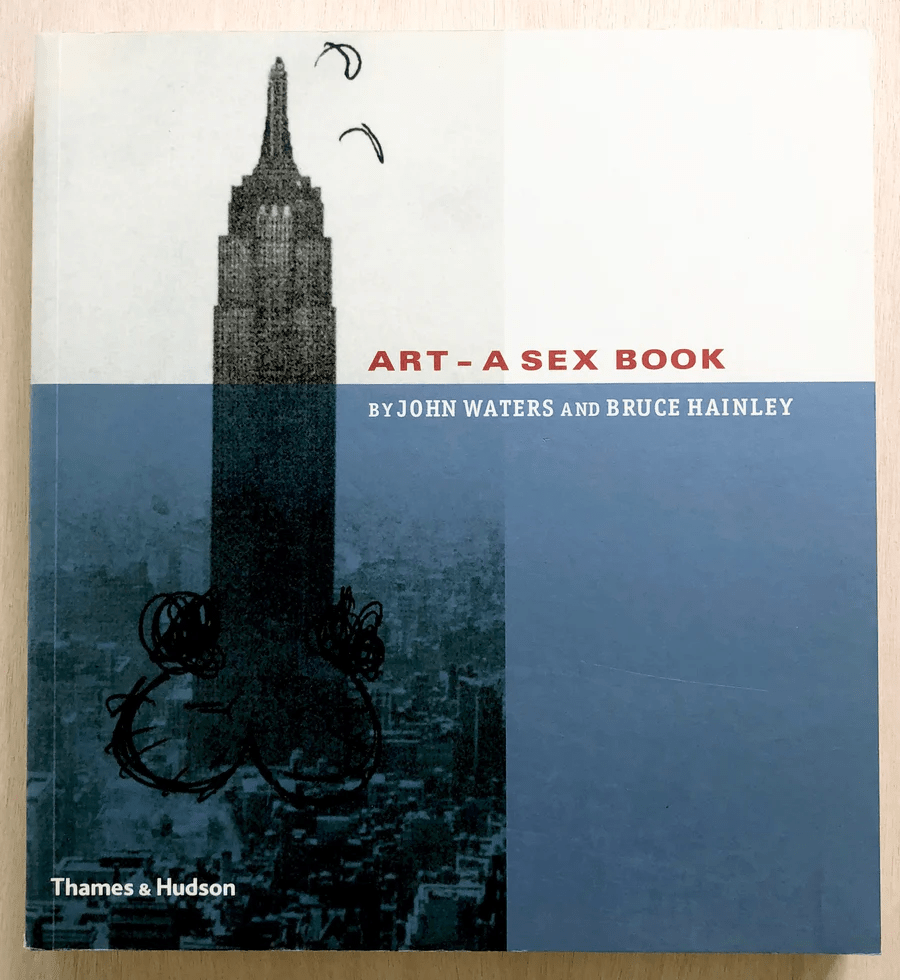
Art: A Sex Book by John Waters and Bruce Hainley

I bought a few copies of this when we had one of several book signings with John Waters at the old Borders Books & Music 043 in Towson. I gave three of them as gifts over the years and still have two signed copies. Probably have a box full of other stuff signed by John as well–DVDs, VHS tapes, other books.

It’s funny to think of an edgy and completely trashy Baltimore film-maker forging a side identity as a collector and modern art sophisticate well-regarded in New York and Paris. But nothing is surprising in John Waters’ career. A few years ago when we were home in the USA it was great fun to browse his substantial and surprising personal collection donated to the Baltimore Museum of Art. Shortly thereafter the museum dedicated a new public restroom in his honor.

After having Art: A Sex Book for more than two decades I finally got around to reading it. I’d looked at the art before but had never tackled the text. The conversations between Waters and his co-exhibitor Bruce Hainley are astute and clever and often as filthy as anything overheard in a high school cafeteria. I laughed out loud several times.

At the end of the book are 20-some artist responses to a list of provocative questions. These range from the silly to the sublime.
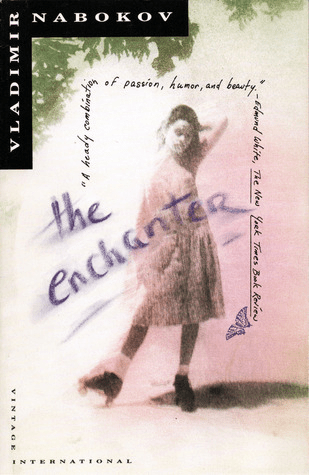
The Enchanter by Vladimir Nabokov

When I was first in grad school in Philadelphia in the early 90s we had a list of novels we were required to read outside of our coursework to ensure we had sufficiently deep knowledge of literature and its icons. On the list were two or three Nabokovs. I read at the time either Pale Fire or Ada, or Ardor–can’t remember which. All I recall from the book is a childhood with lots of butterflies and glimmering grass and trees and lazy summer days. And a sexy sibling or cousin? But the prose was dope. And, of course, I read Lolita.

When I found a stack of Nabokov on my bookshelf I took down The Enchanter knowing nothing about it. A quick read of the prologue and I discovered it was not really a novel at all but rather a novella and that the book was mostly prologue and afterward. The prologue discussed the history of the story and the afterward, by Vladimir’s son and translator, was about the challenges of translating some surreal and salacious images from Russian to English.

The Enchanter turns out to be Nabokov’s first examination and expression of the idea which later became Lolita. His son in the afterward explains the experience of reading The Enchanter as being trapped inside the mind of a sick criminal for 70-odd pages. The entire story is about a man who lusts after a 12-year-old girl and who marries her repulsive mother simply in order to rape the child. So, basically the same idea as Lolita, but without the polish. Humbert Humbert is a disgusting pervert but he’s got style and pinache, and discusses his quarry like a sophisticate who knows cheeses and fine wines. Lolita, despite its criminal main character and dark situation, has a sense of humor. The Enchanter has Nabokov’s delicious prose and characterization but I found the experience of reading it less than enchanting–mostly interesting as a curious sort of literary archaeology rather than as an actual good story. BUT the narrator gets his comeuppance in a satisfying way.
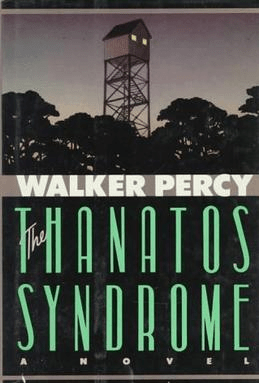
The Thanatos Syndrome by Walker Percy

Way back in the late 1980s I took a course called Psychology and Literature. It was taught by the miraculously brilliant and completely weird Dr. Benjamin McKulik (who I discussed on Gayle Danley’s Classy Podcast a few years back). One of the novels we read in that course was The Second Coming by Walker Percy. I recall being fascinated by a female character in that book who had schizophrenic episodes and who spoke in punning sentences full of double-entendres and layered with multiple potential meanings. I have no recollection of buying Percy’s The Thanatos Syndrome but figure at some point I saw it cheap in a used bookshop and bought it on the strength of the other.

There’s a lot to detest in this book. The narrator’s terrible Louisianna genteel racism and anti-semitism, his painfully neanderthal politics, the absolutely retrograde and bafflingly naive conservative sexuality (doggy-style sex is apparently evidence of a psychological problem and/or brain syndrome, and so is oral sex?). Vivid descriptions of pedophilia uncovered by the hero make stretches of the book truly troubling to get through. But I found myself pulled along nonetheless by the narrative, which is like a Robert Ludlum or Tom Clancy thriller written by a much more literary prose stylist.

The plot is completely ridiculous but at the same time believable–a bunch of hacks funded by the Federal government decide to dump chemicals in the water supply which revert people to “lower” primate behaviors because they hope the local crime rate will go down and math scores will go up due to savant capacities developed by those who drink from the tainted taps. Success! Just like flouride in the water saves teeth, their chemical brew from a local nuclear reactor coolant tower works as intended. A psychiatrist recently released from prison for hawking prescription drugs to truck drivers has about five interactions with people in his town and immediately suspects something is up from their speech patterns and changes in their sexual behavior. His wife suddenly becomes good at bridge and wants doggy-style and oral sex for the first time ever, so there must be a neurological syndrome in town! What is the cause? Well, our intrepid doctor finds out with the help of a weird cast of Southern Gothic characters including a kissing cousin, a mentally ill Catholic priest and wanna-be Nazi who lives in a fire spotting tower, and an uncle who wins duck-call competitions.

Nearly a decade ago the first season of True Detective aired on HBO. I thought it was an absolute hoot and a great example of prestige TV with compelling acting in a gritty setting and a peculiar Lovecraftian underbelly. There are several interesting plot and setting overlaps between that season’s arc and this weird AF novel. I wonder if the show’s writers knew Walker Percy’s last book?

Our Brief Italian Adventure

We moved to France in June 2022. I figured “hey, living in Europe we can really see Europe!” But we’d started a small business. Then, my wife added a non-profit organization. We hired a contractor to do some work, we did some work. The garden in itself is a full-time job.

After a year and half, we hadn’t really seen Europe. We saw some really spectacular France (all within a couple hours’ drive of out place): the Correze of course, Lot, the Dordogne… But we’d had little opportunity to get out and explore new places beyond France. Our three trips since arriving here had been to Tunisia when Patricia got a teaching gig for a week, and two trips back home to the USA.

Then, friends from the International School of Panama got in touch. They were teaching in Croatia and Italy and planned to meet up in Civezzano in the Dolomites. It gave us the excuse we needed to shut down operations for 10 days and hit the road.

First Stop: Turin

Statues of Augustus and his uncle/step dad Julius bookend the Palatine Gate.

I’d heard about Turin as a small child watching the old “In Search of…” TV series with Leonard Nimoy. They did an episode about the Shroud of Turin, and showed monks dutifully tending it in its glass case high up on an altar. There was even a re-enactment of a monk saving it from fire in the 14th century. We went to see the Shroud, but because it is old AF and fragile (and likely also because it has been conclusively proven a fiendishly clever medieval fraud designed to milk cash out of pilgrims and wealthy donors alike), it is not on display any more, but is stored in an enclosed box visible through a glass window with a replica on foam core mounted for the curious. The faithful still come in droves and genuflect, and though I did not actually see the Shroud I did score a truly tacky holographic post card.

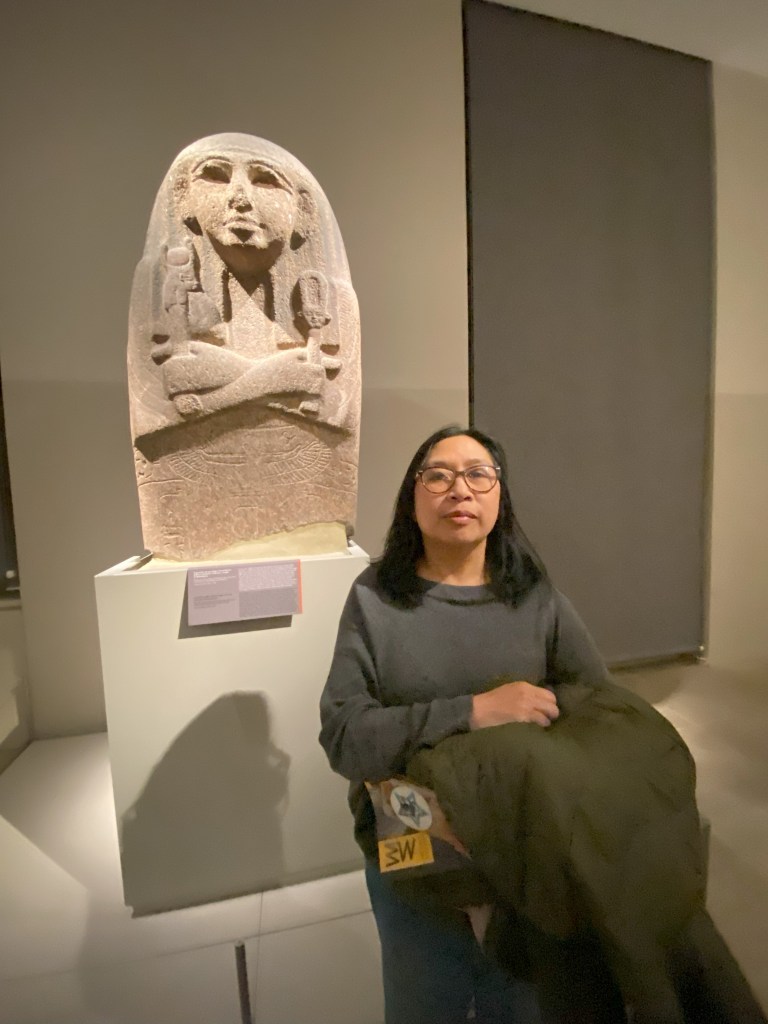
Just next to the cathedral housing the Shroud were some fab Roman ruins. Also nearby was an excellent outdoor market and an indoor multi-vendor restaurant space. Turin has many grand plazas and exquisite architecture spanning centuries and styles. It also has one of the greatest Egyptian museums outside Cairo.

We spent four hours exploring the magnificent Egyptian Museum in Turin.

Stop Two: Milan

We headed over to Milan where we were promptly stopped by the local police. They were very polite about detaining us by the side of the road for twenty minutes and carefully checking our French residence visa cards and passports.

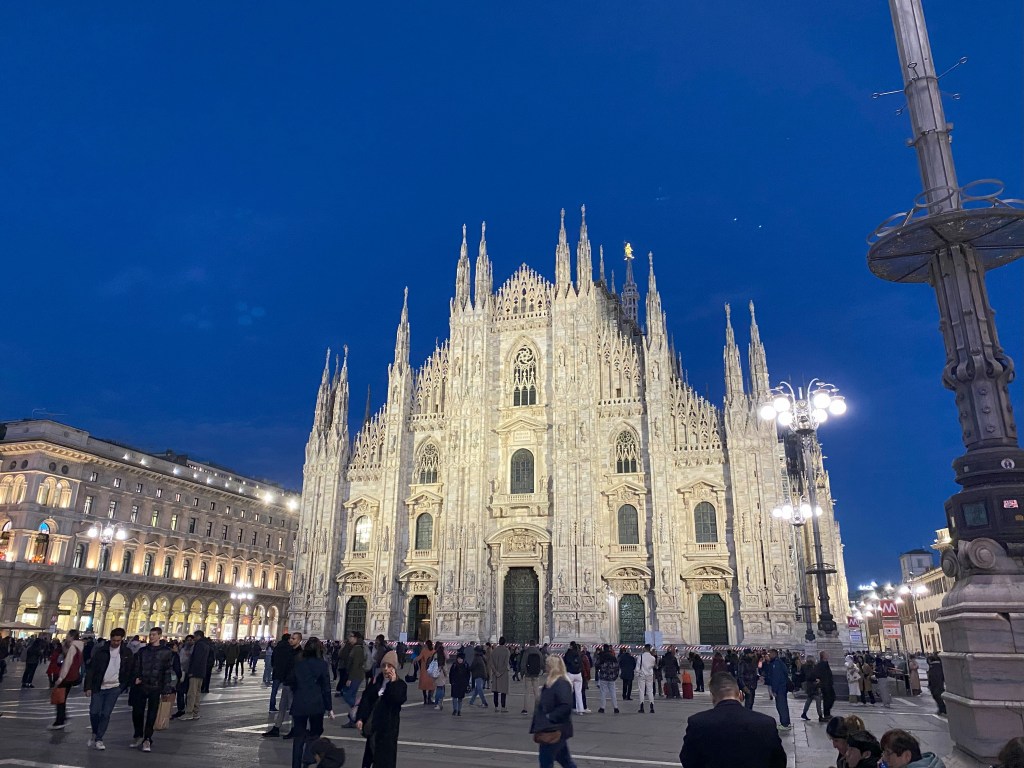
Nobody does outdoor public spaces like the Italians, with their marble paving stones and extraordinary buildings. Walking into the Piazzo del Duomo is quite an experience.

Piazza del Duomo, Milano

I’ve been visiting Europe since the early ’90s. Many things about travel there are far superior and more efficient than in the past. But one truly hateful change is the fact that access to these magnificent old structures is often via paid appointment. Gone are the days when tourists could wander into the Duomo and other nearby monuments with a Bedaeker’s in hand. Now you have to wait in a queue to purchase a ticket, or pre-book online, and travel guides have been replaced by Rick Steves videos and TripAdvisor.

But, totally worth it. I’m more of a Romanesque/Gothique guy, and the Duomo has been Baroqued to death. But it is spectacular and overwhelming. And you can ride a lift to the various roofs. Get up close and personal with those gargoyles!

Spectacular views of Milan and every square meter of the exterior of the Duomo is packed with luscious art. What’s not to like?

Milan is a bustling and vibrant modern city with all the restaurants. Because we live in remote rural France we often crave international foods we can no longer order for delivery–Indian, Thai, Mexican, Vietnamese, Ethiopian, etc. But you can get anything in Milan, and often a lot of food for under 12 euros. We had perhaps the best pizzas we ever tasted for lunch our second day and paid less than 23 euros.

Stop Three: Verona

I was a bit suspicious of Verona because of the whole Juliet’s House thing. Tourists waiting in line to touch the breast of a statue of a teenage girl who exists only in literature? Yeah, whatever. But we managed two days here without Romeo or Juliet interfering at all (I was curious about the museum in Juliet’s house–but we saw plenty of remarkable art in the Castelvecchio, the GAM, and at the Maffei Palace).

And, like Milan and Turin, the city Verona is itself a work of art. Every street and plaza in the old city is lovely. Check out the Roman Arena, stroll Piazza Bra, and head off in any direction at random. There are a handful of remarkable churches to see, in particular the Basilica of Zeno with its bronze doors and crypt to the African saint. I was terribly amused by the centuries of graffiti carved into the 13th century murals: “Hugo was here, 1453,” etc.

If you visit Trento, go to the Tourist Office by the Arena and immediately buy the Verona card, it is TOTALLY worth it if you plan to visit more than a couple museums or sites. We paid 35 euros each for the two-day card and it paid for itself and then some.

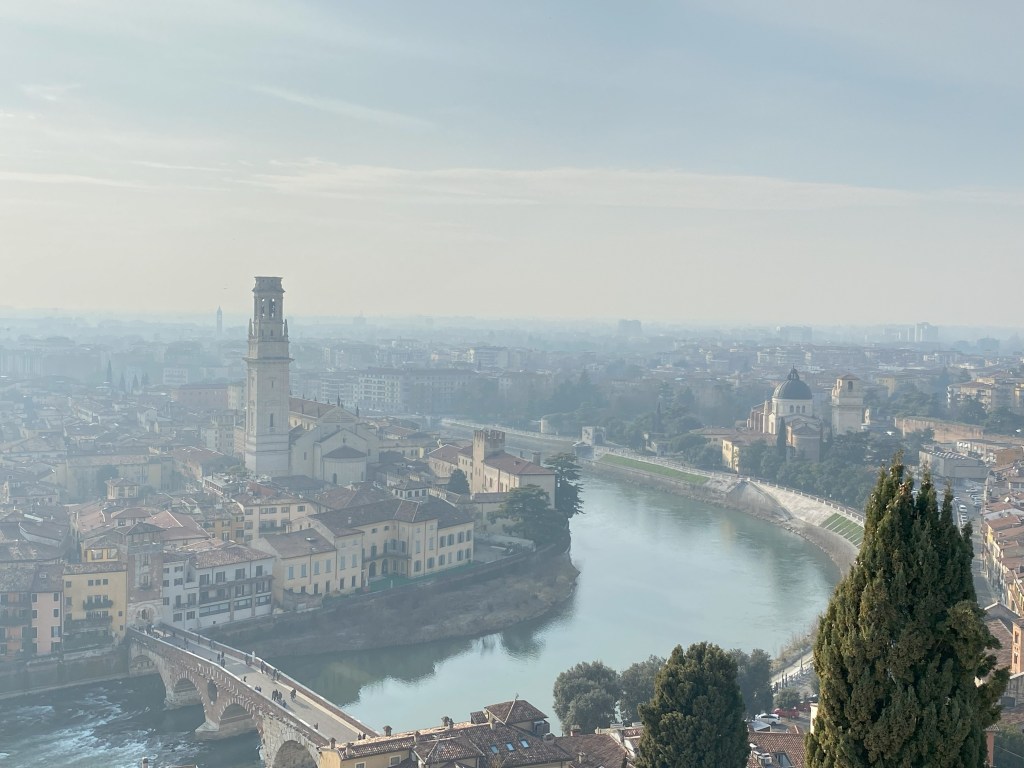
Ride the funicula up to Castel San Pietro for those money-shot pics. Even on a smoggy hazy global warming 70-degree February day it’s a great view of the city.

Stop Four: Trento/Civezzano

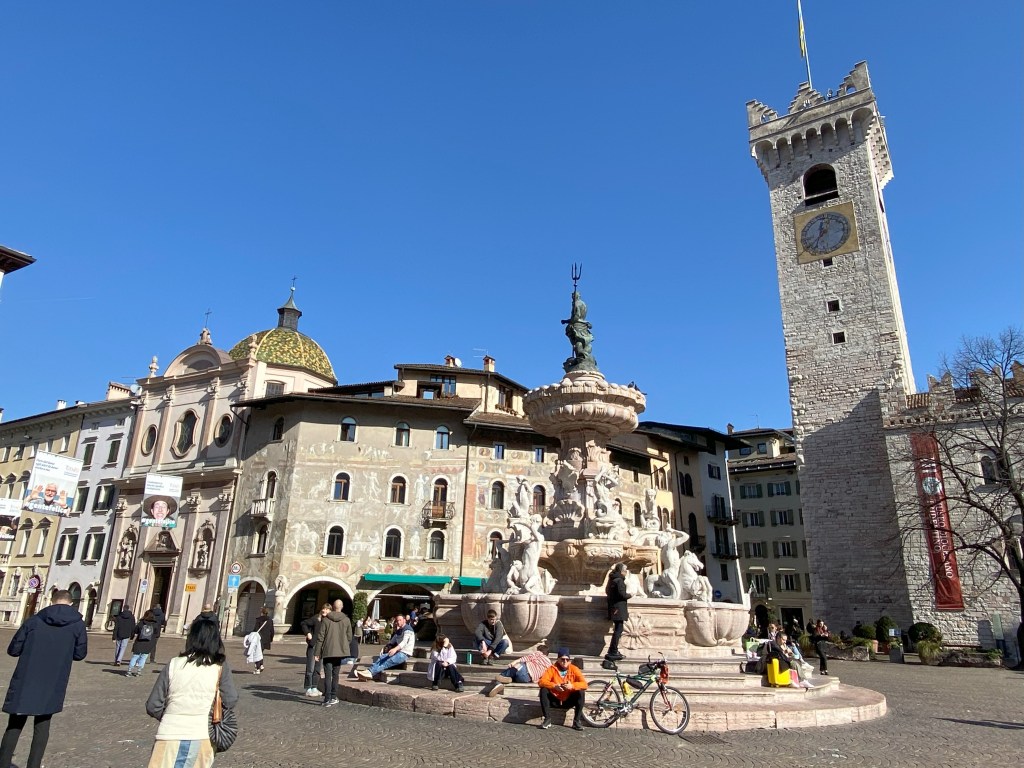
We toured a bit of Trento with friends from ISP in Panama. I said to Chris, who currently lives and teaches in Rome, “no one does public space like the Italians.” He said “it’s true–but good luck finding a park with trees!”

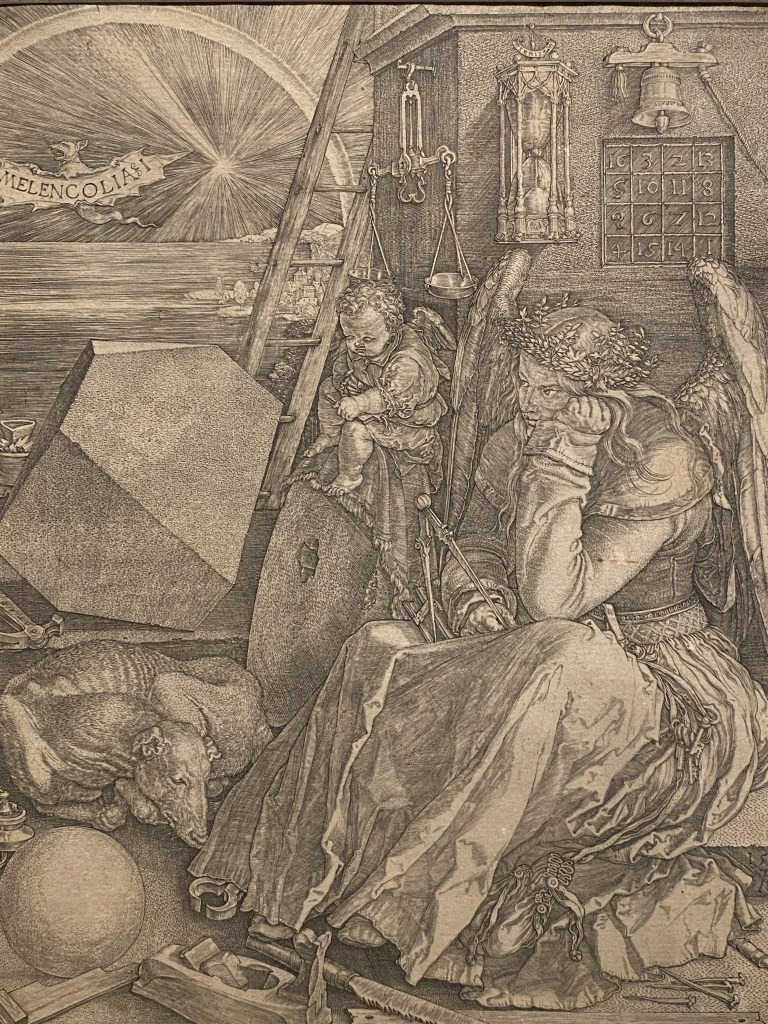
Civezzano, where we met friends and stayed for a couple nights, is a cute little town which functions as a base for skiers, but there was no snow on the surrounding peaks because of draughts and far warmer than typical winters. It has some nice old homes but not much else going on. On our way there we found the MART museum, which is a magnificent facility. And, we had the great luck to see an exhibition centered on melancholy featuring several engravings by Durer and Rembrandt, as well as more modern masters. There was also a massive show of current Chinese painting. The permanent holdings are substantial and definitely worth a stroll, even on aching 20,000 steps a day tourist feet.

Bonus: The MART museum accepts the Verona card for free admission!

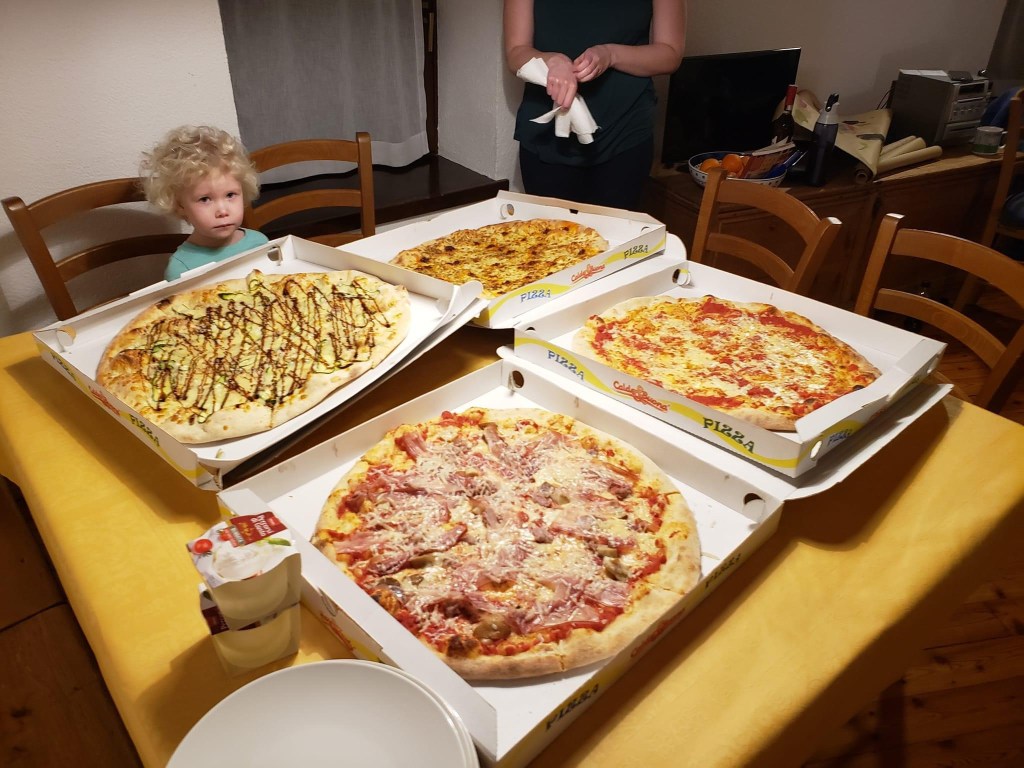
Civezzano has a tiny pizza joint which produces gigantic pizzas. Here is Harper wondering what the rest of us would eat.
Truly a pleasure to get up close and personal with several Durer etchings at MART outside Trento

Stop 5: Bergamo Alto

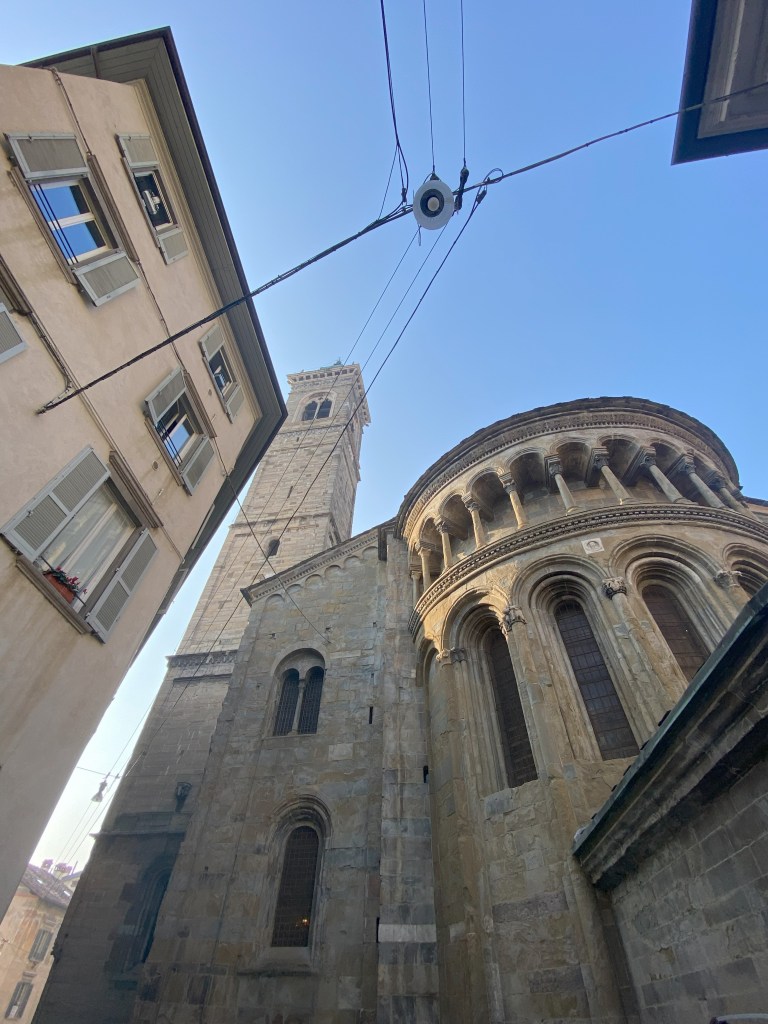
Perhaps the most walkable and warmest of the cities we visited. Magnificent shops and restaurants in centuries-old buildings, public art, more museums, more towers and churches.

Every corner of Bergamo Alto is a treat. Catch it in the late afternoon for that remarkable golden light.
clever marketing to put the Hello Kitty and other cartoon shaped treats at child’s height