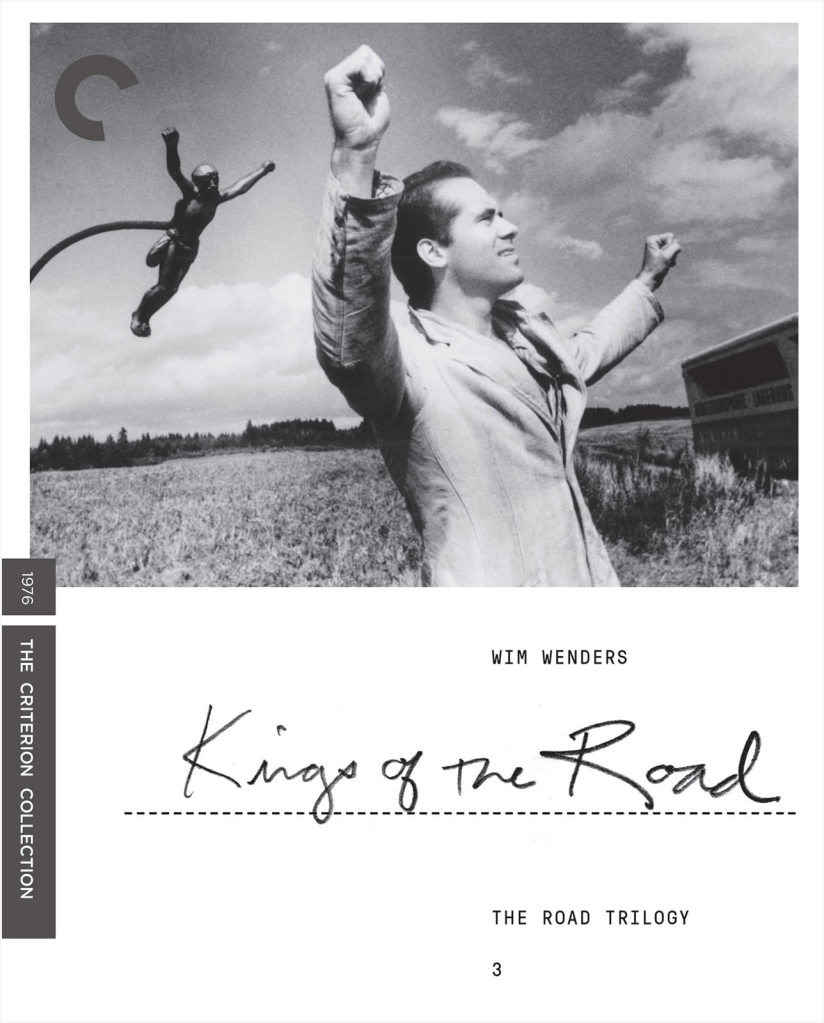
Im Lauf der Zeit (“Kings of the Road”)

I saw Wings of Desire way back when Netflix used to mail DVDs in envelopes. Later I saw Paris, Texas. These are the Wenders films I heard about back when I was first exploring the renowned auteurs of cinema, and I’ve seen them both a few times. Recently I also saw The American Friend.

Kings of the Road is superior to the other Wenders films I’ve seen. It has the loose plotting and crazy energy of the superior Fellini films, but also the rich raw aesthetics of Herzog or Pasolini. Though it clocks in at nearly 3 hours in length, I found it breezy and entirely captivating on multiple levels.

The two main characters are perhaps not the best most noble people, but they are resilient and imaginative and do their best to be kind in a completely mad society. And though the narrative is loose and a bit naive there is some profound meaning in the dialogue and imagery. There is for example a subtle but inisistent critique of US influence in West Germany with as much context and as many exemplars as a good Tony Judt essay.

So it made me feel deep feels, it made me laugh, and it made me think. Someday I’ll be glad to revisit Im Lauf der Zeit.

Gloria

Gena Rowlands passed away in August of this year, and it struck me at the time that I’d only seen one film she’d made with Cassavetes: A Woman Under the Influence. I don’t remember much about it after nearly 30 years, other than bits of Rowland’s searing and uncomfortable portrayal of a woman completely falling apart, and the typically warm Peter Falk playing a jerk.

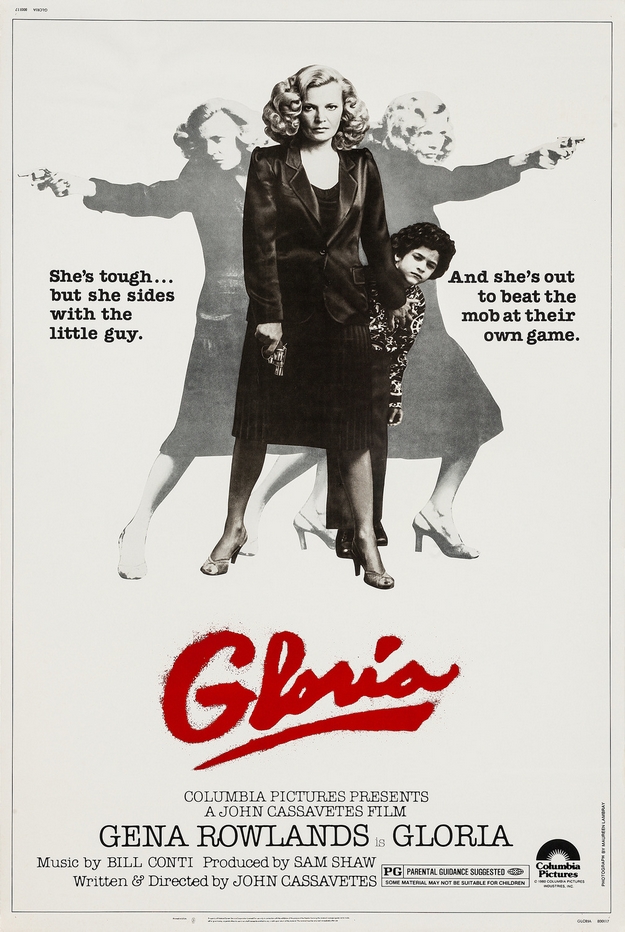
Saw Gloria last evening at a local film club and was impressed by its energy and inventiveness. The plot is ridiculously absurd–a mob accountant has turned informant and has a book recording the dirt about his employers and their businesses. Immediately before getting wacked by a team of goombahs with shotguns and bad suits his wife hands off their 6-year-old son to their neighbor Gloria, giving him the book and telling him to guard it.

What follows is two hours of deleriously entertaining action and farce. When presented with 6-year old Phil, Gloria quips that “I hate kids, and especially yours,” but given the seriousness of the situation she takes him in tow. After some initial rough going between Gloria and her young Puerto Rican charge (played with cute adroitness by John Adames) her maternal instinct is activated and Gloria becomes Dirty Harry, blowing away and confronting gangsters with aplomb and sassy attitude. Despite the silly plot and at times unintentional humor of the action, Rowlands commands the screen and is completely believable. At times she and Adames are like Gable and Davis in a screwball romantic comedy, and the gangsters are Keystone Cops. What fun!

Cassavetes’ use of cruddy late 70s New York is very appealing, and made me nostalgic for the gritty run-down town I used to visit into the late 80s before Times Square became tragically Disney-fied and antiseptic. The sappy and overwrought ending was delicious and there wasn’t a dry eye in the house.

I must further explore Cassavetes’ films and Rowlands’ catalog. There were some die-hard fans of their work, both French and English, at the showing last night, and their enthusiasm was infectious.

Films

I’ve gone to the cinema for the first time here in France, and seen a wonderful Czech film from the 1960s, called Daisies in English and Les Petites Margarites in French.

I found it vastly entertaining, with a sort of relentless anarchic silliness propelling its basic storyline. Two disaffected young ladies decide to humiliate older men out for a roll in the hay, and they have a great time frolicking and pranking their way through the city and eventually the countryside.

The film’s use of color and prismatic effects, its clever montages and collage sequences, its peculiar cuts and crisp photography demonstrate a mastery of technique. Young director Věra Chytilová made a small miracle behind the Iron Curtain. Which, of course, was promptly banned.

While watching Daisies I had to wonder if John Waters saw this film–it features his sort of merciless energetic absurdity. There is a lot of food porn thrown in for good measure.

The film was shown in Uzerche at the Cinema Louis-Jouvet. The theater is sort of like Baltimore’s Charles with its art-house fare mixed in with big release horror and French and Hollywood releases. I had no trouble following the French subtitles except for the word vioc, which occurred twice, and apparently is argot for old dudes.

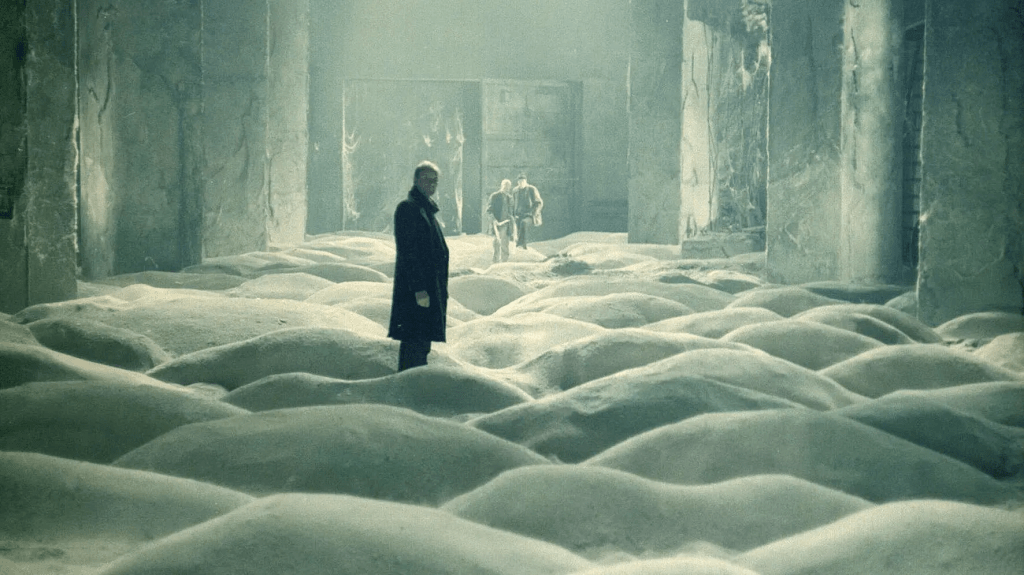
I’ve also watched Stalker on the MosFilm YouTube channel. They have several classic Soviet films and other arthouse fare available on high-quality streams with English subtitles. I was quite happy to note they had several Andrei Tarkovsky films I’d not seen.

Stalker puts the bleak in oblique. It is, like many of this maestro’s titles, a spiritual workout. You’ll feel like you spent a month in Gurdjieff’s labor program after slogging through nearly 3 hours in The Zone. It is harrowing and beautiful. Imagine Estragon, Pozzo, and Lucky no longer waiting for Godot but trying to find him/her/it/they instead.