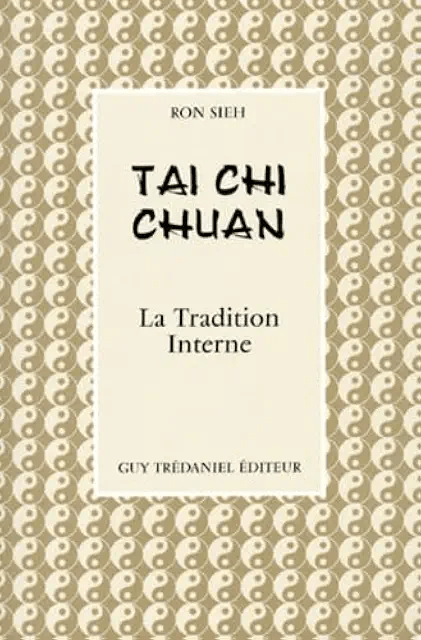
I was quite pleased when we moved to rural France to discover a quality Tai Chi course offered locally and at an astonishingly reasonable price. For the past three years I’ve been working with our instructor on the Yang style long form, and have learned almost the entirety, up to near the end of part 3, “The Sky.”
I’ve found during this time that I’ve become much more limber and more sensible about my movements and my balance. For nearly the entire three years I’ve had as my morning activity a round of Qi Gong followed by the Tai Chi form, outside by the river weather permitting or in our event space. My instructor wanted to push me a bit so he leant me a copy of this book, which was written by an American, but I read the French edition because of course here we are.
It was a good time to read a book about the internal focus of Tai Chi, because due to a few injuries (right knee, right shoulder, a recurrence of a previously repaired umbilical hernia) I’ve not been keeping up with my practice. In fact I’ve not done the form or even any Qi Gong exercises for two months. My body as a consequence feels its age for the first time in ages.
But I have tried nonetheless to bring the internal practice of Tai Chi into my daily life as I heal and get stronger. Sieh’s book is not revelatory or ground-breaking, but it is clear about topics which are often presented in tedious and confounding ways by overly technical writers. While physically sidelined I found it edifying and quite useful, and I hope to bring Sieh’s wisdom to bear when I get back in form.
It’s funny how much of Sieh’s book about the internal practice of Tai Chi relies on training with partners. It’s not easy to find someone to practice push hands with in the middle of nowhere.
I’ve been lax about posting lately; things are chaotic and our schedules have been packed with events and tourist rentals and visitors and animal care, then we went to Spain for a few days. So here are some rapid-fire blurbs about books I’ve read lately.
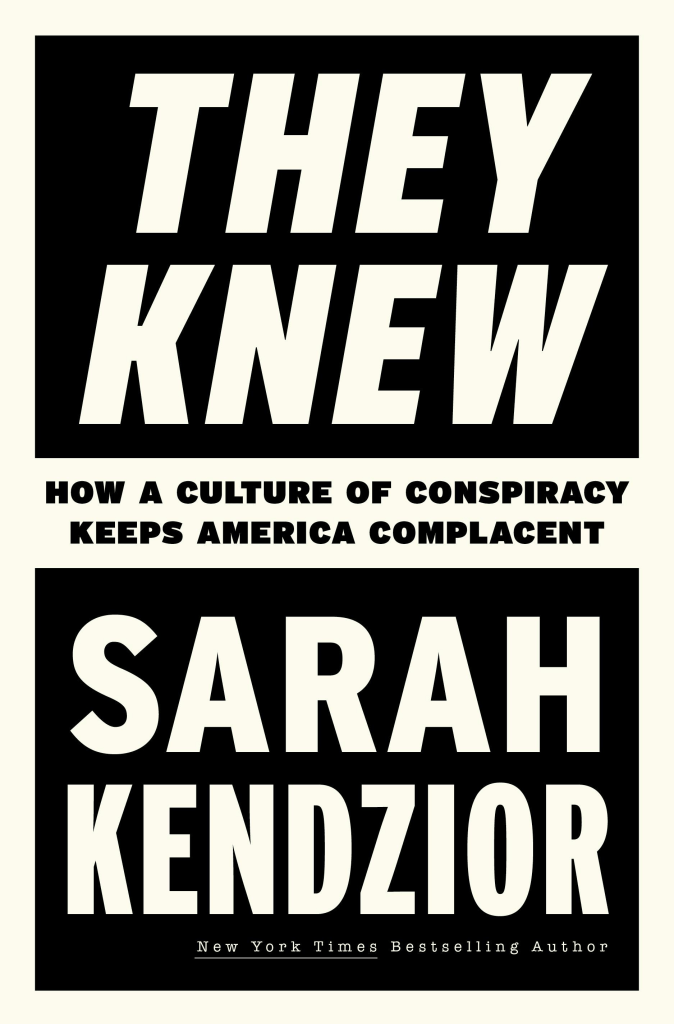
Written in a charged “hair-on-fire” tone, They Knew by Sarah Kendzior will raise your hackles whether you agree with her or not. It’s a book about conspiracy theories which notes that conspiracy theories are quite often true but are labeled conspiracy theories to make them seem crazy or loony and unworthy of your attention. She provides many examples of actually true and demonstrable conspiracies which have been lampooned or ignored in the press, which is guilty of aiding and abetting a long-standing conspiracy by major corporations, billionaire oligarchs, and DC politicians and insiders to undercut the rule of law and drain the USA dry. When your own government has become a self-policing criminal enterprise, what remains to be done? She notes that January 6 was a surprise to no one, and there were warnings from many sectors about its imminence and possible success which were shrugged off by the mainstream media until members of Congress were hiding in locked closets from a rampaging mob of deranged people who had been misled by well-funded conspiracy theories hatched in propaganda labs as part of a vast and ongoing conspiracy to delude Americans. Read it and weep.
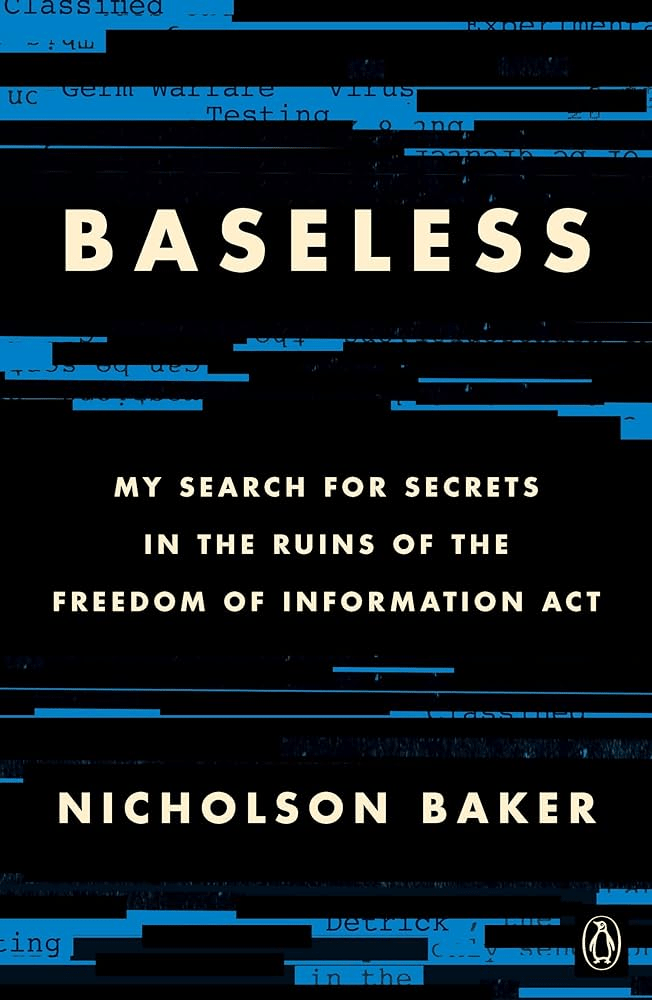
And, speaking of conspiracies…I’ve read and enjoyed a few novels by Nicholson Baker, including the hilarious and randy The Fermata, as well as his breathless Checkpoint, about a conspiracy theorist who is so frightened by the unreal realities of the George W. Bush presidency that he imagines assassinating the then president in all sorts of nutty and creative ways. But this book is not a novel; Baseless delves deeply into the idea that the United States recruited Nazi and Japanese war criminals who helped develop biological weapons which were secretly used against North Korea, and that the intelligence agencies have hidden this history away in classified documents which are rapidly disappearing. Baker shares his frustration with the CIA’s often total disregard of Freedom of Information Act requirements, and he documents documents which have disappeared from their folders and which are redacted to the point of complete insensibility despite legal requirements that they be freely available. His conclusion is that the government is not protecting “sources or methods” but rather high crimes and misdemeanors. Like Sarah Kendzior, Baker notes that people in power and in the media scoffed absolutely at the idea that the USA would ever use dreadful weapons of this sort, and yet from his research and many testimonials it seems that the USA indeed did use them.
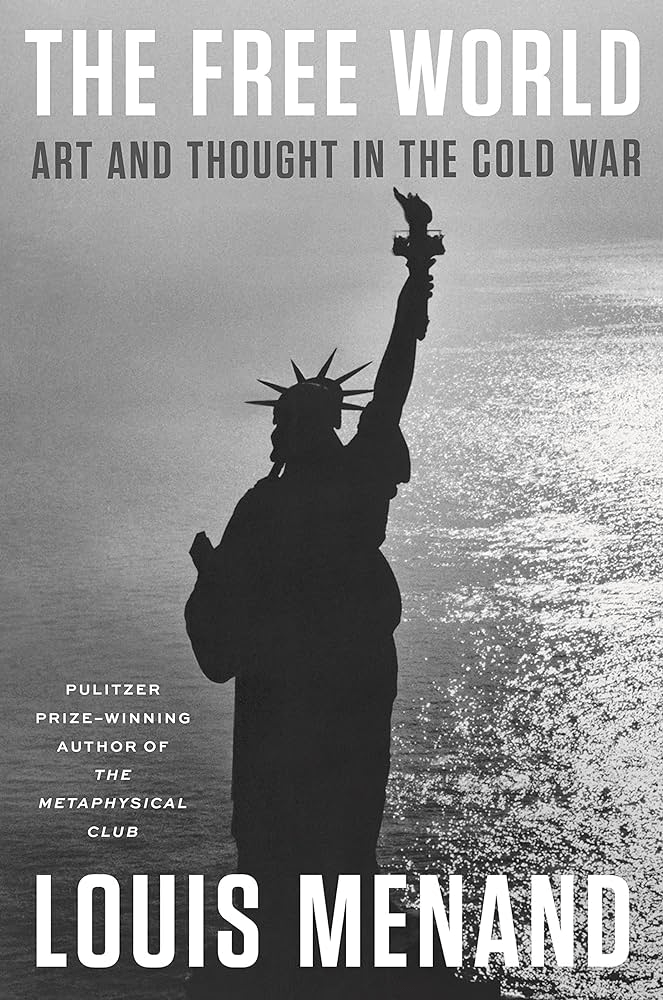
About 30 years ago I remember hosting a book signing and discussion with Mr. Menand at the Borders Books & Music just north of Baltimore in Towson. At the time he had published The Metaphysical Club, and though I never read that book I did attend the discussion. In The Free World, which I read periodically over a half-decade, Menand delves into intellectual, literary, critical, and artsy trends poinging back and forth across the Atlantic between Paris and New York during the height of the Cold War. There are chapters about popular music and trends in visual arts and art criticism, chapters about film, chapters about writers and editors. There are also some revelations about the CIA secretly funding publishers and certain writers and intellectuals and even founding journals, which Menand shrugs off as no big deal, because the Soviets also funded such stuff. But, I’d respond: the West always claimed to be a free marketplace of ideas, not a marketplace where some ideas received covert funding to place them in the forefront of mainstream media coverage and public discussion. Menand shrugs off US interference in elections in France and Italy as part of the game, and his take on Vietnam seems a bit shallow. But I rate this book highly nonetheless as an interesting examination of creative and intellectual trends at a time when many people thought we were going to blow ourselves up.
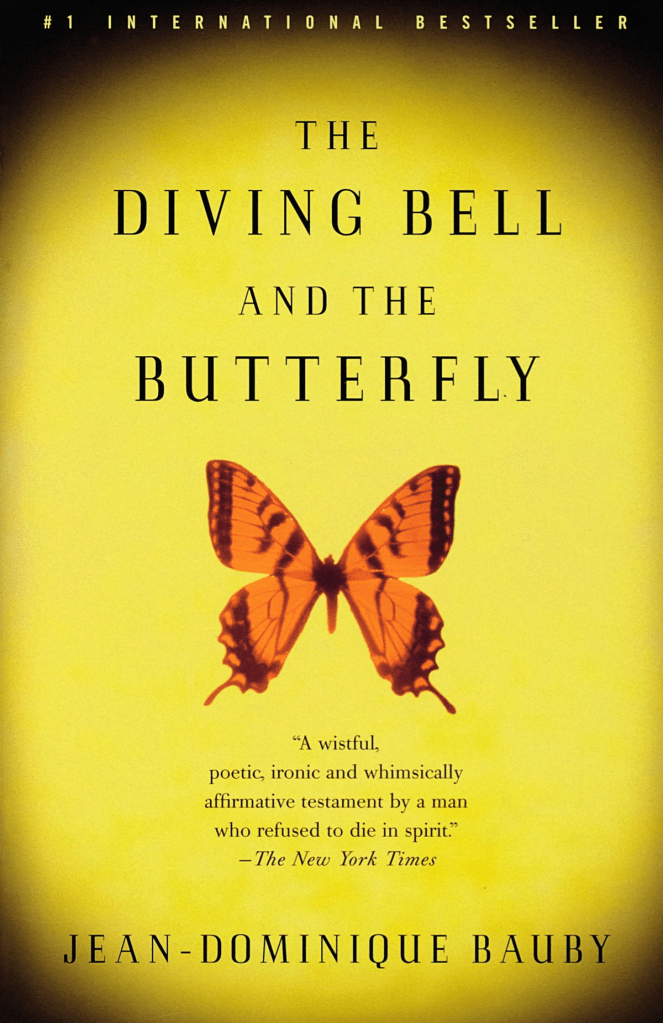
Beautiful, tender, deeply melancholic, and yet also surprisingly funny at times. What happened to Mr. Bauby was simply awful. How he processed his tragedy in this short elegant book, written by blinking his eye a letter at a time as he lay paralyzed in a hospital bed, deserves our awe.

 Mysterium Coniunctionis