The Other

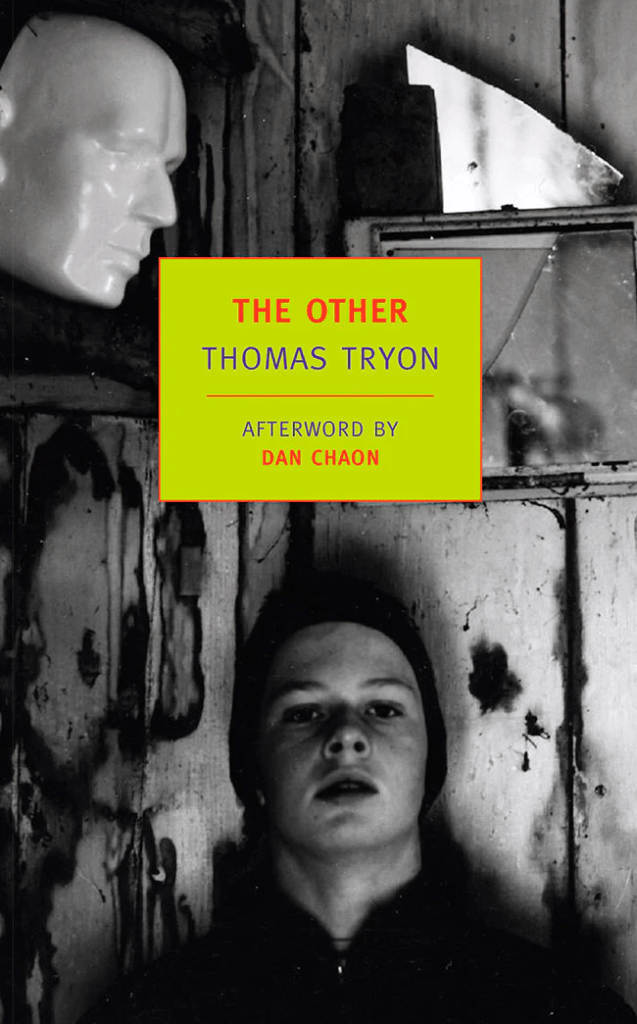
I’d thought as a long-time fan of horror that I was at least aware of all the classics of the genre. Until a few months ago I’d never heard of Thomas Tryon’s The Other, and what I read about it intrigued me sufficiently that when I was able to score a digital version for under 2 bucks I jumped at the chance. The novel was quite an unpleasant surprise.

There’s something particularly disturbing about a child who is pure evil. And when it’s a twin the creepiness is dialed up a few notches.

Niles and Holland Perry lead a bucolic life on a rural estate in New England. They play together and put on dramatic shows and do magic tricks. There’s something off about Holland however; he is more than mischievous, and his behavior descends from adolescent rabble-rousing to cruel and reprehensible acts. Their grandmother Ada is a Russian immigrant who fled the Bolsheviks. She tells them folk tales and bits of family lore from the old country–and introduces them to The Game, which is a sort of hypnotic regression wherein the observer becomes entangled mystically with the observed. Needless to say, The Game comes to have dire consequences for the boys.

Tryon has skills. He writes elegant and sophisticated prose. I’d place him based on this one novel right up with Shirley Jackson and M. R. James as a writer of literary merit beyond genre category. The structure of the novel has a few layers of narrative, and it took a bit of sussing out to realize the clever and unreliable games Tryon was playing. Very Turn of the Screw trickiness afoot here.

But despite its merits as a work of literature, this is still a horror novel, and it delivers the goods. I didn’t see The Twist until it came, which was a great surprise, and I was floored by the utterly appalling climax.

Playground

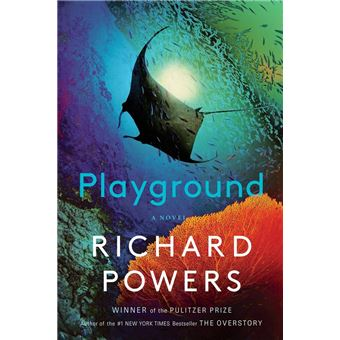
Richard Powers’ latest is another complex and tightly structured novel spanning nearly a century. There are two primary narrative strands woven together like a double helix, one first-person stream relayed by Todd Keane, an early social media and AI innovator from Chicago, and the other a third-person tale focused on Evelyn Beaulieu, a French Canadian whose father develops early deep diving technology and who becomes herself a famous deep sea explorer and renowned scientist. We jump back and forward a bit in time between these two strands as the characters each end up based in California for their work and eventually they find themselves meeting in Makatea, a tiny island in French Polynesia.

It is a credit to Powers’ strengths as a novelist that he can manage to hold all this together geographically and temporally. Despite the weight of its themes and its saturation with multiple branches of scientific inquiry, Playground manages to be a pure delight, an engaging and thoroughly breezy read.

Todd Keanes comes from wealth. His father is a hardscrabble financier and trader who builds a fortune. Todd ends up at the elite Jesuit private school from which his father graduated, and there he meets Rafi Young, a brilliant and militant young Black scholar and poet who won a scholarship endowed by Todd’s father. The first-person narration by Todd is our window on Rafi’s world–his tragic family situation, his financial struggles, his absolutely unique genius. The two challenge each other intellectually and play chess at first and then Go. It is their interest in games and gaming that give Todd the inspiration for his eventual social media platform Playground, which makes him a billionaire. Rafi’s burning creativity provides a lot of the ideation behind Todd’s innovations, and Rafi’s interest in a Russian philosopher who believed humans would inevitably discover or invent a technology of immortality is hugely influential on Todd’s eventual AI push. But as often happens to intense youthful friendships, Todd’s and Rafi’s falls apart as they head off on different paths–Todd to Silicon Valley, Rafi into graduate work in the Humanities. Rafi also meets and falls in love with a young artist from Makatea.

One of Todd’s earliest passions was the ocean, said passion first fired when he read a book by Evelyn Beaulieu called “Clearly it is Ocean.” Evelyn’s story begins when her father tests out a deep diving apparatus by putting her inside of it and throwing her into a deep pool at an engineering facility. After this she begins using his gear to explore the ocean and becomes many firsts: first woman accepted into an exclusive graduate oceanography program, first woman to join a months-long diving expedition, one of the first women to live in an underwater facility run by NASA. Like Jacques Cousteau, she is a lyrical documenter of the deep. And like Richard Attenborough, she sees in her lifetime the dire impact of humans on the environment and creatures she loves. We see her struggle with being a wife and a mother when her primary motive is her work, and how challenging it is to escape the traditional boundaries set on her gender by centuries of patriarchal thinking. It is one of Evelyne’s great realisations through her decades of diving and close observation that sea creatures spend a lot of time playing. Play recurs over and over as a major theme in the book, and for Evelyn and Todd their work is more play or a challenging game than it is drudgery.

I won’t go into the profound final fifth of the novel to avoid spoilers, but there are some surprises and interesting ambiguities. If you’re familiar with Ray Kurzweil a few strange and confounding discrepencies in the novel, nearly along the lines of magical realism, might become more clear. These involve the dates characters died, and whether they are actually alive in a traditional sense of being alive during parts of the story. Also, if you’ve read any Philip K. Dick, particularly the novel Ubik, you may grasp what is implied about some of the characters and indeed the setting of Playground’s climax. Also there are some Doctor Frankenstein allusions when we discover exactly to whom–or to what–Todd Keane has been narrating his tale.

There is some truly gorgeous writing about the ocean in this novel. One sequence about a cuttlefish is particularly lovely. It struck me as familiar, and sure enough Powers lists in his sources Peter Godfrey-Smith’s Other Minds as the genesis of that scene. I read the book a decade back, and can’t recommend it enough. I should also note that this novel is the second I’ve read lately featuring the astonishing development in AI and its ability to defeat the best human players of chess and Go, the first being Benjamin Labutut’s The Maniac. Sign of the times, I guess?

I’m also pleased to note that Playground features a female scientist, as did Powers’ previous masterpiece The Overstory. At a time when dark forces in the USA are insisting that women in leadership or highly skilled professional roles must be “DEI hires,” and that women should focus instead on birthing and raising children and stay at home, it is important that writers continue to show otherwise.

The Rector of Justin

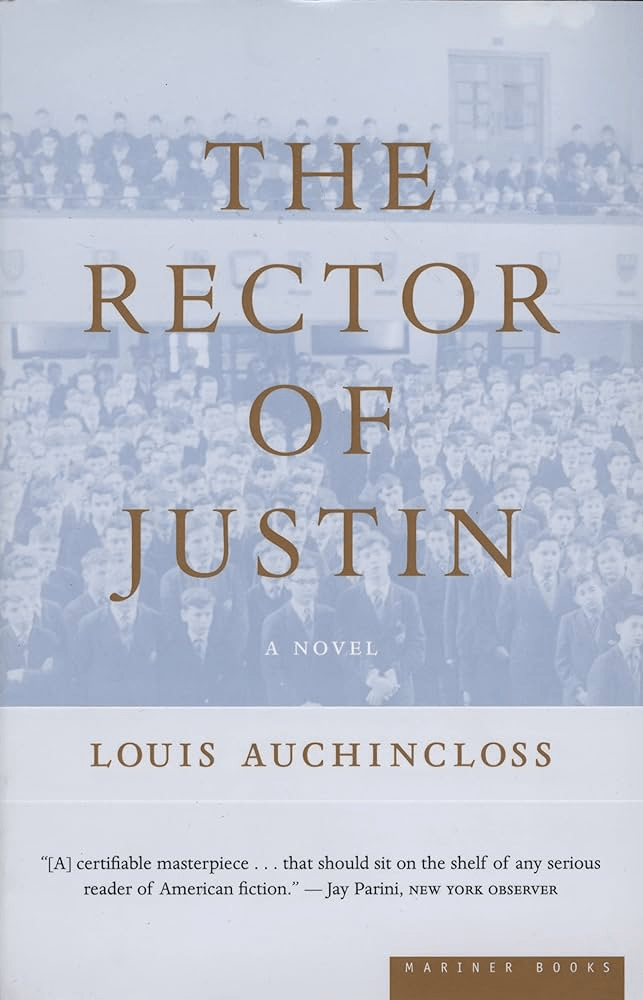
Brian Aspinwall becomes at age 27 a teacher at a prestigious private boys’ school in New England. He is recruited suddenly in 1939 to fill in for a master who has gone off to Canada to enlist in the RAF. It is primarily through Brian’s diary that we learn about the school Justin Martyr and its famous founder Reverend Francis Prescott. Immediately Aspinwall is awestruck by Prescott and comes to admire him and his accomplishments. He seeks to understand what makes Prescott and his world-class upper crust school tick, and The Rector of Justin takes off.

Aspinwall seems surprised to learn that Prescott is an intellectual and a progressive given the focus on sports, strict discipline, and religious tradition at the school. But many more surprises await. As the novel unspools we learn from other sources who come into Aspinwall’s orbit. Eventually Aspinwall is given files and documents by others and he takes on the task of possibly writing Prescott’s biography.

The book is breezy and warmly inviting, despite its substantial and ethically weighty themes. I found it an absolute pleasure. The characters are all interesting, and in particular the Rector himself. There are hints that Justin Martyr was founded out of some dark repressed desires. The WASP identity of the school proves problematic later on as Prescott has an epiphany about the kind of people running the board at his school, and the true values of the wealthy and influential class who send their kids to Justin Martyr. I could in fact trace many of the concerns Reverend Prescott has about his students and their morals down to the ethical catastrophe in current US politics.

Because the novel is from the 60s but set in the 30s and 40s we get groovy stuff intellectuals were into at the time, like Freud. The novel is saturated by Henry James but is not as dense and soupy as The Master’s.

I’d previously read only one other novel by Auchincloss–The Book Class. I remember quite liking that one but nothing about it has stuck with me after 3 decades. I do recall that both novels were given to me by Dan Bouchard in a box of remainders in perhaps ’94? I still have one more book by Auchincloss on the shelf–a collection of short fiction. I look forward to it.

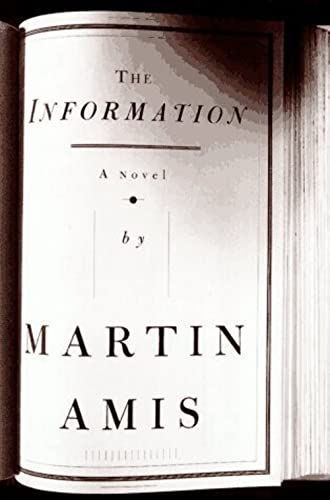
The Information by Martin Amis

It’s been two years since Martin Amis died at age 73, so I figured it was about time I read something of his. He was, after all, one of those writers I was supposed to read back in the ’80s and ’90s, as the conventional wisdom droned on about him capturing the zeitgeist of that time. Somehow I just never got around to reading his novels, though I did see the film version of The Zone of Interest last year.

I had on my shelves The Information, l which I’d received in 1995 when I was running the Literature section of the long-defunct Borders Books & Music just north of Baltimore City. It was a signed first US edition, distributed to promote the work and encourage those of us hand-selling novels to read it and recommend it, and apparently I can get about $50 for it on Abebooks. When we had Christopher Hitchens for an in-store event and discussion of The Missionary Position, I should have asked Hitch about this novel and whether it was worth holding onto and eventually reading. Hitch, like Amis, smoked himself to death, and Martin did his eulogy.

The Information is a seething spite-filled cess pit of self-loathing. The main character Richard Tull is a thinly disguised caricature of Amis himself, and is a most unpleasant bloke to be around for 500 pages. Tull is a pretentious novelist and writes unreadable overly complex books no one cares to understand which pile up unpublished in his study. Meanwhile his best friend Gwyn Barry writes noxious and silly tripe which becomes globally successful and makes him a mint and a celebrity. While Richard is a complete failure who drinks and smokes himself to annhilation, Gwyn is continuously interviewed and photographed and consulted about his opinions. Because Richard regards himself as superior intellectually and artistically to his far more successful friend, he decides to get revenge on Gwyn through a series of demented schemes involving shady underworld stereotypes. All of the schemes however fail and end up bouncing back on their initiator.

All of the characters in this novel are hateful and despicable. Women mostly exist in the book to serve the needs of men and don’t have much depth. The plot is a complete farce and this writer whose works so tapped into the zeitgeist of his time seems now to be as dated as his father Kingsley.

But the prose is gorgeous, scintillatingly so. There are passages of the most delicious and sparkling disdain gloriously served up with malevolent humor. This entire novel encapsulates what it’s like to be an upper-crust twit who feels superior to everyone. It lags in parts and in others is uproariously hilarious and brilliant. As a failure, it’s a rather good one. I might be inclined 20 years from now to pick up another of his books.

Recent Reads

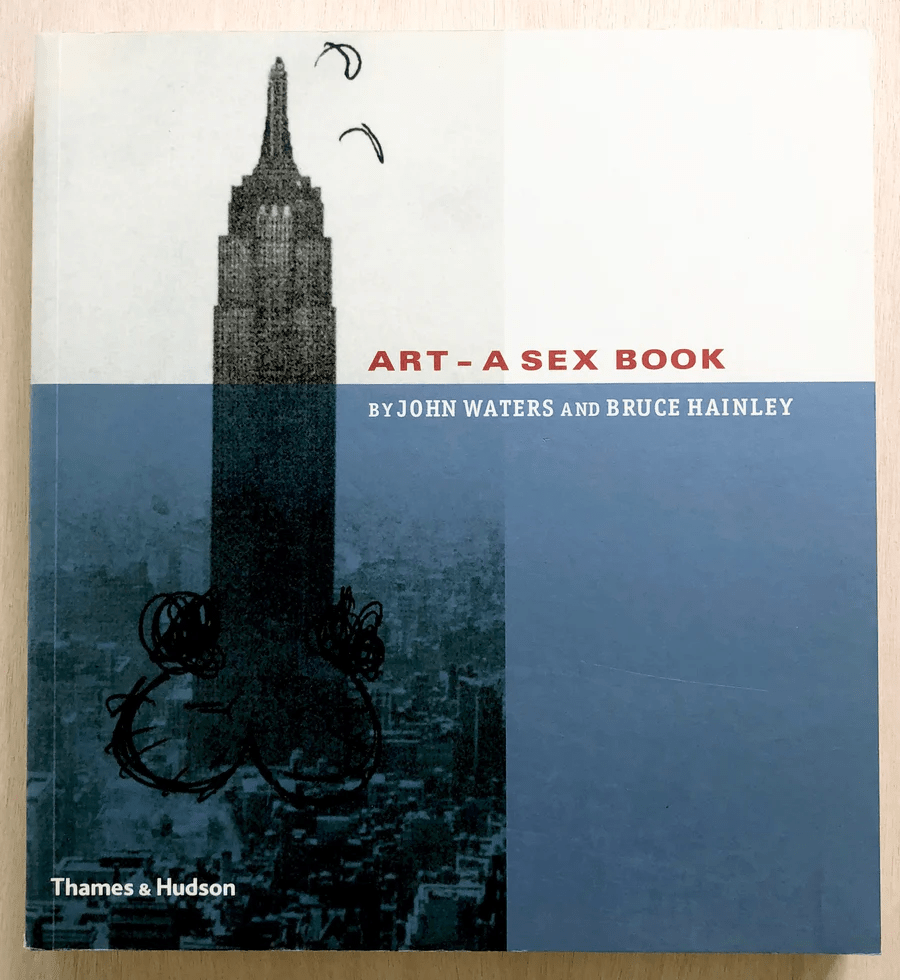
Art: A Sex Book by John Waters and Bruce Hainley

I bought a few copies of this when we had one of several book signings with John Waters at the old Borders Books & Music 043 in Towson. I gave three of them as gifts over the years and still have two signed copies. Probably have a box full of other stuff signed by John as well–DVDs, VHS tapes, other books.

It’s funny to think of an edgy and completely trashy Baltimore film-maker forging a side identity as a collector and modern art sophisticate well-regarded in New York and Paris. But nothing is surprising in John Waters’ career. A few years ago when we were home in the USA it was great fun to browse his substantial and surprising personal collection donated to the Baltimore Museum of Art. Shortly thereafter the museum dedicated a new public restroom in his honor.

After having Art: A Sex Book for more than two decades I finally got around to reading it. I’d looked at the art before but had never tackled the text. The conversations between Waters and his co-exhibitor Bruce Hainley are astute and clever and often as filthy as anything overheard in a high school cafeteria. I laughed out loud several times.

At the end of the book are 20-some artist responses to a list of provocative questions. These range from the silly to the sublime.

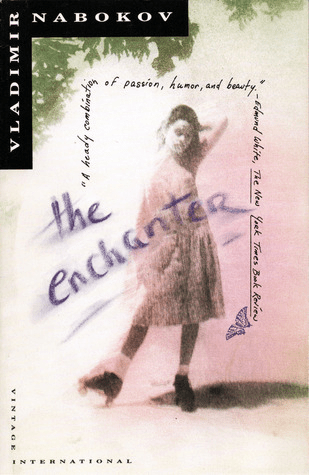
The Enchanter by Vladimir Nabokov

When I was first in grad school in Philadelphia in the early 90s we had a list of novels we were required to read outside of our coursework to ensure we had sufficiently deep knowledge of literature and its icons. On the list were two or three Nabokovs. I read at the time either Pale Fire or Ada, or Ardor–can’t remember which. All I recall from the book is a childhood with lots of butterflies and glimmering grass and trees and lazy summer days. And a sexy sibling or cousin? But the prose was dope. And, of course, I read Lolita.

When I found a stack of Nabokov on my bookshelf I took down The Enchanter knowing nothing about it. A quick read of the prologue and I discovered it was not really a novel at all but rather a novella and that the book was mostly prologue and afterward. The prologue discussed the history of the story and the afterward, by Vladimir’s son and translator, was about the challenges of translating some surreal and salacious images from Russian to English.

The Enchanter turns out to be Nabokov’s first examination and expression of the idea which later became Lolita. His son in the afterward explains the experience of reading The Enchanter as being trapped inside the mind of a sick criminal for 70-odd pages. The entire story is about a man who lusts after a 12-year-old girl and who marries her repulsive mother simply in order to rape the child. So, basically the same idea as Lolita, but without the polish. Humbert Humbert is a disgusting pervert but he’s got style and pinache, and discusses his quarry like a sophisticate who knows cheeses and fine wines. Lolita, despite its criminal main character and dark situation, has a sense of humor. The Enchanter has Nabokov’s delicious prose and characterization but I found the experience of reading it less than enchanting–mostly interesting as a curious sort of literary archaeology rather than as an actual good story. BUT the narrator gets his comeuppance in a satisfying way.

The Thanatos Syndrome by Walker Percy

Way back in the late 1980s I took a course called Psychology and Literature. It was taught by the miraculously brilliant and completely weird Dr. Benjamin McKulik (who I discussed on Gayle Danley’s Classy Podcast a few years back). One of the novels we read in that course was The Second Coming by Walker Percy. I recall being fascinated by a female character in that book who had schizophrenic episodes and who spoke in punning sentences full of double-entendres and layered with multiple potential meanings. I have no recollection of buying Percy’s The Thanatos Syndrome but figure at some point I saw it cheap in a used bookshop and bought it on the strength of the other.

There’s a lot to detest in this book. The narrator’s terrible Louisianna genteel racism and anti-semitism, his painfully neanderthal politics, the absolutely retrograde and bafflingly naive conservative sexuality (doggy-style sex is apparently evidence of a psychological problem and/or brain syndrome, and so is oral sex?). Vivid descriptions of pedophilia uncovered by the hero make stretches of the book truly troubling to get through. But I found myself pulled along nonetheless by the narrative, which is like a Robert Ludlum or Tom Clancy thriller written by a much more literary prose stylist.

The plot is completely ridiculous but at the same time believable–a bunch of hacks funded by the Federal government decide to dump chemicals in the water supply which revert people to “lower” primate behaviors because they hope the local crime rate will go down and math scores will go up due to savant capacities developed by those who drink from the tainted taps. Success! Just like flouride in the water saves teeth, their chemical brew from a local nuclear reactor coolant tower works as intended. A psychiatrist recently released from prison for hawking prescription drugs to truck drivers has about five interactions with people in his town and immediately suspects something is up from their speech patterns and changes in their sexual behavior. His wife suddenly becomes good at bridge and wants doggy-style and oral sex for the first time ever, so there must be a neurological syndrome in town! What is the cause? Well, our intrepid doctor finds out with the help of a weird cast of Southern Gothic characters including a kissing cousin, a mentally ill Catholic priest and wanna-be Nazi who lives in a fire spotting tower, and an uncle who wins duck-call competitions.

Nearly a decade ago the first season of True Detective aired on HBO. I thought it was an absolute hoot and a great example of prestige TV with compelling acting in a gritty setting and a peculiar Lovecraftian underbelly. There are several interesting plot and setting overlaps between that season’s arc and this weird AF novel. I wonder if the show’s writers knew Walker Percy’s last book?

The Sundial

https://bookshop.org/widgets.js

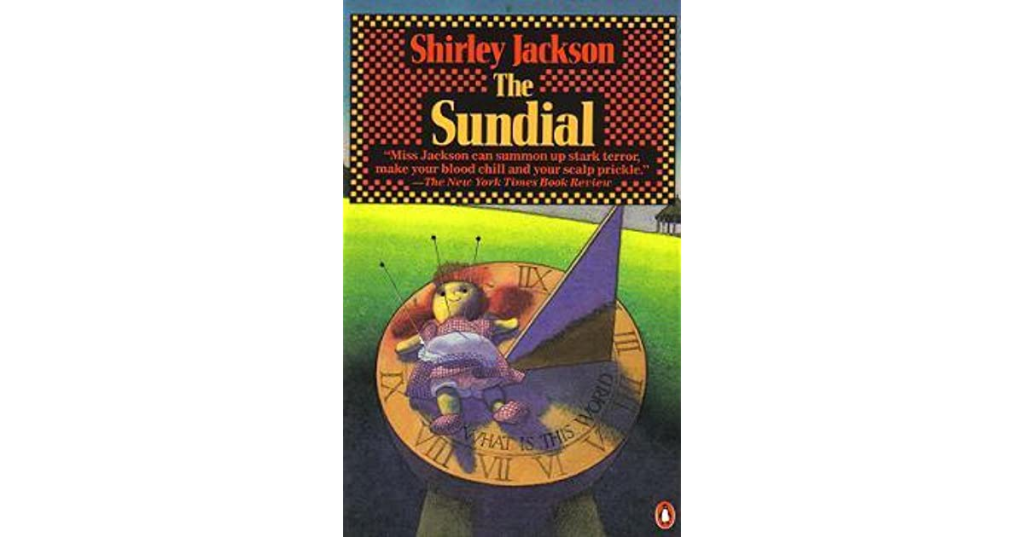
Shirley Jackson has the distinction of having written the novel I’ve re-read the most. As of last January I’ve read The Haunting of Hill House seven times. I’ve also read many of her short stories and the lovely and mysterious novel We Have Always Lived in the Castle as well. But for some reason my 1990s paperback re-issue of The Sundial sat on several shelves in several houses for a few decades before I got around to it this week.

I suppose I needed to wait until the collapse of civilization in order to fully appreciate the book. We’ve had several near collapses since I purchased The Sundial–Y2K, the end of the Mayan Calendar, various planetary alignments, wars, pestilences, George W. Bush elected twice–but something about recent events conjures more serious reflection on the End Times than all those others.

The Sundial is focused on the coming End of the World–or, more exactly, how people respond when they genuinely believe the End is nigh. The setting is a genteel massive manse in a New England town, built a generation previously by some fabulously wealthy businessman and currently inhabited by his two children and his grandson’s widow and daughter. The children are Mr. Halloran, confined to a wheelchair and in evident decline, and his sister Aunt Fanny. Mr. Halloran’s wife is still around as well, and is suspected by the grandson’s widow and granddaughter of having murdered his son by pushing him down the stairs in order to secure her own inheritance of the house.

Aunt Fanny one early morning takes a walk around the gardens she’s known since childhood, becoming somehow lost and suffering a potent vision of her father telling her the end is nigh, but that those inside his house will be saved to repopulate the Earth. What ensues is pure hilarity. Fanny shares her vision and somehow it becomes doctrine with all those trapped inside. They will be Robinson Crusoes and Noahs and Adams and Eves, left stranded to rebuild and repopulate.

As in every Jackson novel the characters are all delightfully awful and are skewered by her sharp sensibilities. The dialogue is funnier and better and more sophisticated than anything in Dorothy Parker, the wit makes Evelyn Waugh seem amateurish, and Dickens himself would have been awed by Jackson’s ability to lampoon class differences so efficiently. What took him 5 or 6 hundred pages takes her much less than 3.

I note that as we pass from Pisces and into Aquarius that the old gods have all lined up to watch our current collapse. The Planet Parade of late February/early March this year showed them all coming back to witness our decline once again into rebirth and renewal, just as the change from Aries to Pisces saw the cratering of all the great Mediterranean civilizations and the birth of new orders. In Jackson’s novel the end doesn’t matter so much as the way people behave anticipating it. And just as she predicted, they behave shamelessly and hilariously so–Buckle up, folks!

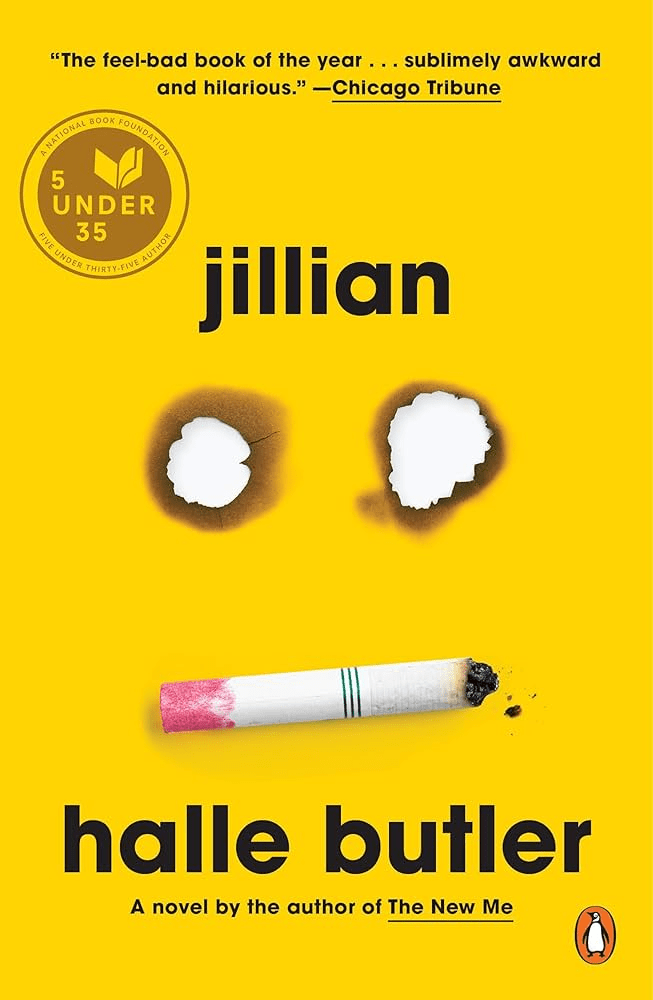
Jillian

This book is awful. When I write that I’m not speaking at all of the quality of the novel–it’s actually quite good and very entertaining. But everything about it is truly terrible. Jillian is a troublingly accurate record of life in the current late-stage neoliberal capitalist hellscape we all inhabit. As such, it’s an abyss of despair, a Nietszchean vortex, a singularly piercing examination of approaching Singularity. I laughed heartily reading it, and cringed each time I laughed, because ‘funny, not funny.’

The novel centers on two characters: Megan, a recent college grad who works in a gastroenterologist’s office. Her job is to look at images of people’s colons all day as she scans the images into their medical files. She is alienated from her labor, but also from her friends, from her boyfriend, from her family, from her society, and from herself. Marx wrote Grundrisse just for Megan. She sees how empty everything is and how difficult it will be to find meaning at all in a life doomed to this sort of work. As a result she gets smashed on canned American beer and smokes too many cigarettes while becoming more and more of an intolerable asshole. Megan is infuriated that nobody else can see how fake everything is and how their successes at their own fake shitty jobs are contemptible.

And then there is Jillian, Megan’s co-worker. Jillian is about a decade older than Megan and because unconsciously Megan sees herself becoming Jillian in ten years, still working at the doctor’s office, still cheerfully scanning poopy intestinal images, she starts to really loathe her coworker and herself. Half the novel is from Jillian’s point of view, half from Megan’s (with brief moments from the POV of a few other scattered characters, including Jillian’s son Adam and from a dog, a bird, a racoon).

Jillian is a total wreck, and drives on a suspended license because she is completely deluded about the state of her world and unable to face the realities of her situation. A single mom who got knocked up after hooking up at a club while high, she has discovered religion and has made a mess of that as well. After drifting thoughtlessly through a red light her car gets impounded, she is arrested and arraigned, and she has to rely on the kindness of a fellow church member to get her kid to daycare every day while she goes to the office. Megan sees through all of Jillian’s bullshit and it makes her totally crazy. She goes home and obsesses about Jillian to the point her boyfriend starts to get annoyed by this obsession.

Meanwhile Jillian has lied to her employer about her car and about an upcoming court date and about her fine for driving on an expired license. And to solve all her problems she adopts a dog because happy families have dogs, right? Then a painkiller addiction makes everything that much better.

In this novel we get to experience the collapse into despair of these miserably entwined people. And what makes it all worse is that Megan, despite being a terrible asshole, is actually correct about the people around her and the society she is in and about her prospects. And she is correct about Jillian and her thin cheerful veneer, the inevitable collapse of which affects not only herself but her child and her dog and Megan and the entire society they are trapped inside. And yet these are the sort of people churned out and crushed by America the Beautiful in the 21st century.