Blood on the Forge

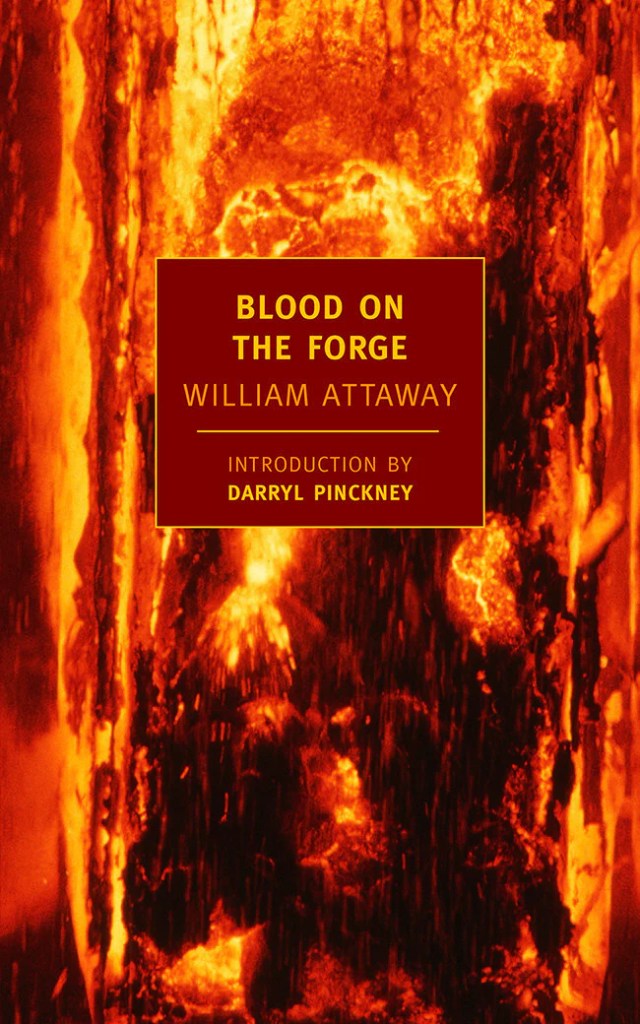
Sometimes going through my own bookcases is like browsing a great used bookshop, and a volume pops out that I didn’t even know I’d purchased. Ironically, William Attaway’s Blood on the Forge was a book I was searching for several years ago without knowing it and I had it all along.

When I was a teacher in Baltimore City Public Schools I was imagining a Great Migration unit starting with an image exploration and analysis using Jacob Lawrence’s Migration series as a starter. It was a fave tactic of mine to start units with images and to teach kids how to make inferences, ask deep questions, interpret, connect to previous knowledge, make predictions, etc before even learning about the topic of the unit. I never wrote that unit, however, because the Lewis Museum in Baltimore had a show of Jacob Lawrence which included works featuring Toussaint L’Ouverture and John Brown and Frederick Douglass and Harriet Tubman. After seeing that show, because I already taught units about Brown and Douglass, I took the Jacob Lawrence idea and tacked it onto those units.

Another reason I decided not to create the Great Migration unit was because I didn’t have a meaty novel-length text to use. And yet I did have the perfect one–and didn’t realize it until I lived in rural France in the 2nd year of not being a teacher. Oh well. There is probably a bit too much prostitution in the novel for 8th graders anyhow!

William Attaway is unfortunately not well-known, though he had a profound cultural impact. Until I read his novel and its fine introduction by Darryl Pinckney I was unaware that Attaway wrote the “Banana Boat Song” for his friend Harry Belafonte. He also influenced Richard Wright and Ralph Ellison, who both knew him and read this searing white-hot novel. (Side note: Darryl Pinckney has a fine article in the current NYRB about the Harlem Renaissance, and Attaway was apparently an indifferent and bored school student until he read a poem by Langston Hughes and found out that Hughes was Black, at which point he devoted himself to writing).

So, Blood on the Forge–talk about going forth and forging in the smithy of his soul the uncreated conscience of his race! This is an incredibly vital document of an important era in US history, the great movement of Black laborers from the South to Northern cities as the industrial revolution took off. Attaway, who was a middle-class son of a teacher and doctor who himself migrated as a child from Mississippi to Chicago, weaves in all the complex societal strands into a short elegant and harrowing story. You’ve got urban/rural, White/Black (Slav/Irish), union/scab, capitalist/socialist, agrarian/industrial, modern/traditional. There is enormous violence and powerful interests interfere in everything to protect what they regard as theirs, and the fates of three sharecropper brothers who are recruited and taken north to Pennsylvania to the steel mills herald prophetically the racial and class tensions to come. HIGHLY recommended.

To A Mountain in Tibet

A friend kindly leant me this. I often refuse to borrow books because I like to read my own copy and put it on a bookshelf for decades after. But I’d read and really enjoyed Shadow of the Silk Road, and I’m a (very) small business owner trying to live more frugally than when I was a lavishly funded public school teacher in the USA (LOL). So I accepted it (and three other excellent books she kindly offered).

Ostensibly, this is a travel book, and it does indeed recount a truly remarkable voyage to a particularly special and demanding destination. But this is actually a book about grief, and it’s the best book about grief I’ve read since Joan Didion’s The Year of Magical Thinking. Though the family members grieved by Thubron are present for less than 10 pages of the 220 in the book, they haunt its passages about Nepal and Tibet like the dakini spirits he describes.

Of course there is no better country than Tibet in which to devote a mournful pilgrimage and to explore loss and impermanence. Turbron describes the destruction by artillery of several ancient monasteries and the smashing of others by hand during the Cultural Revolution. He meets many people who have their own griefs about family and displacement and the Himalayas become a resonator for sorrow. Many practitioners of Tibetan Buddhism have been displaced by state terror or official exile. And yet the Hindu and Bon and Buddhist pilgrims still come and do their circuits of Mount Kailas. Thurbron does his as well, but finds little comfort in the astonishing myth-enshrouded terrain, birthplace of the Earth and abode of the gods and demons for several religions.

Warlock by Oakley Hall

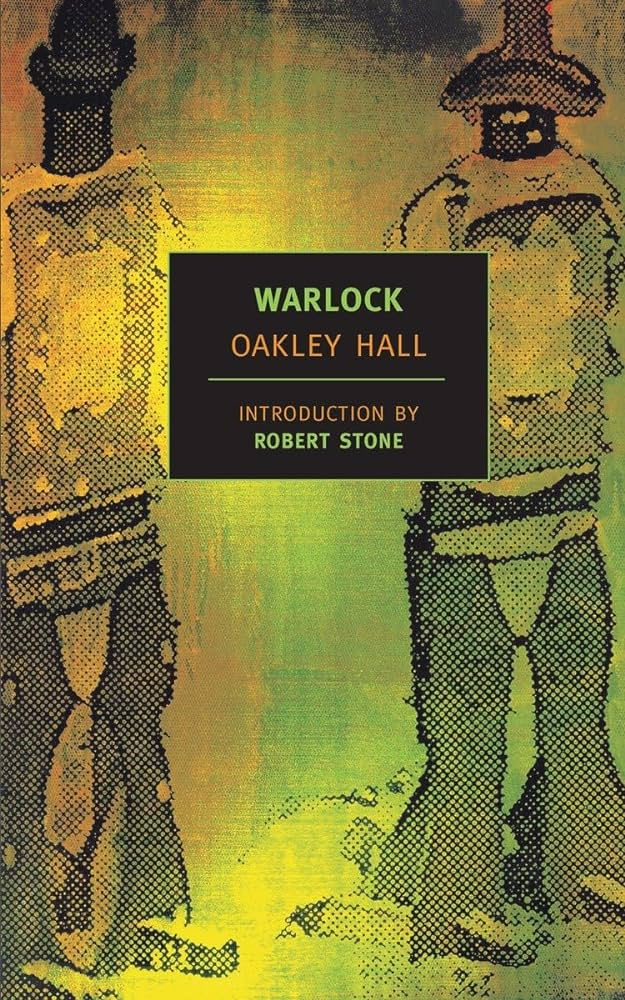
I adore the NYRB re-issues–high quality paperbacks with great cover design and kick-ass introductions

When it comes to fiction genres, I’ve got my faves. As a young dude those were horror, sci-fi, and fantasy. Over the years I drifted away from all of these only to check in now and again on the hot new thang. Occasionally I’ve dabbled in mystery/thriller stuff, but never have I been a reader of Westerns (unless one includes Cormac McCarthy in that category).

I bought a remaindered copy of Warlock probably 20 years back and only just pulled it down off the shelf. Glad I did, because it’s a banger! Like Clint Eastwood’s Unforgiven it’s a rather sophisticated deconstruction of the myths associated with the American West and gunslingers and cowboys. The hero of the story has a morally ambiguous past and when hired to be Marshall of Warlock struggles with the ethics of his situation. Is he a murderer for hire, or a representative of law and order? What is a government other than an agency dictating behavior via the threat extreme violence? Can citizens have a sense of peace and freedom without a killer to back up those ideals? How is a hired gun who kills to keep the peace different from a blackguard who kills to take money from a stagecoach?

The novel features some historical figures and also transposes mythic characters from the OK Corral into thinly disguised avatars. There are IWW prototypes working the mines and rebelling against brutal treatment, there are cross-border skirmishes between cattle rustlers in the US and Mexico, there are Apaches, there is the US Cavalry and a half-crazed senile general. Whores, saloon keepers, merchants, deputies, judges, and rugged outlaws eek out a living in a land where law is dictated by force and mob rule. There is the outlaw turned deputy who, like the hero, tries to do the right thing but cannot always navigate the complexities of the myriad relationships and power struggles. And there is revenge; a LOT of revenge.

The novel surprised me often by subverting standard genre tropes familiar from TV and film. The writing was elegant and Oakley Hall created engaging and multifaceted characters and situated them in an intricately detailed setting.

My one critique involves a love scene which descends into bodice-ripper cliché. But overall I thought Warlock was excellent and it pulled me inevitably to its satisfying conclusion. Thomas Pynchon called it one of America’s greatest novels–it’s certainly better than anything he wrote (excepting perhaps The Crying of Lot 49).

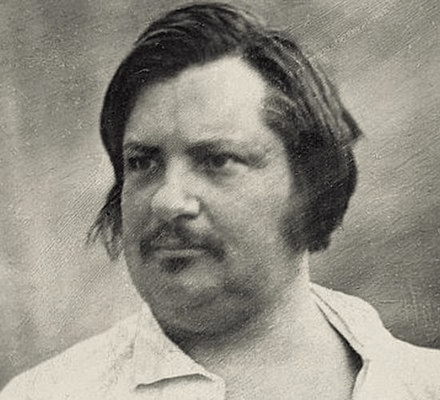
Balzac

Pere Goriot took a while. I started reading it over a year ago as we prepared to move from Panama to France. I felt I needed to brush up my language skills, and had never read a Balzac novel.

The French was challenging at first, and I took it slow, reading a few pages a day. Lots of detailed descriptions, often quite flowery, with unfamiliar adjectives and colloquial expressions. Also, the use of the literary past tense which is not typical in spoken French was a bit difficult at first–I’d forgotten some of those forms.

But the last 20% of the novel I blew through quickly. I think my confidence in French reached a level I’d not had in 20 years, and suddenly I could breeze through pages instead of struggling and looking up multiple words.

It’s strange that when I got my degree in French Lit we did not read Balzac. Pere Goriot is a true masterpiece, a document of Parisian culture, a portrait of class divisions and the morals and ethical complications individuals faced when trying to break into the life of the glittering upper crust, or trying desperately to remain there. It’s difficult to say much without spoiling it–but Rastignac certainly learns a great deal about himself and the woman he ‘loves’ (or at least needs in order to ascend in society).

I would like to continue reading the Comedie Humaine, but must be selective. Perhaps Illusions Perdus and a couple others? I’m at the stage of life where I have to decide carefully what reading I want to accomplish, and what I would like to reread. I likely have a couple decades left and I already have 30 years of books I would like to read or re-read, LOL. And trying to complete reading lists in French and English, while hopefully adding some Spanish into the mix–makes me wonder where I’ll find the time.

And speaking of searching for time, I’d like to tackle Proust in French, and fear that might take up more than I have left!