A friend kindly leant me this. I often refuse to borrow books because I like to read my own copy and put it on a bookshelf for decades after. But I’d read and really enjoyed Shadow of the Silk Road, and I’m a (very) small business owner trying to live more frugally than when I was a lavishly funded public school teacher in the USA (LOL). So I accepted it (and three other excellent books she kindly offered).
Ostensibly, this is a travel book, and it does indeed recount a truly remarkable voyage to a particularly special and demanding destination. But this is actually a book about grief, and it’s the best book about grief I’ve read since Joan Didion’s The Year of Magical Thinking. Though the family members grieved by Thubron are present for less than 10 pages of the 220 in the book, they haunt its passages about Nepal and Tibet like the dakini spirits he describes.
Of course there is no better country than Tibet in which to devote a mournful pilgrimage and to explore loss and impermanence. Turbron describes the destruction by artillery of several ancient monasteries and the smashing of others by hand during the Cultural Revolution. He meets many people who have their own griefs about family and displacement and the Himalayas become a resonator for sorrow. Many practitioners of Tibetan Buddhism have been displaced by state terror or official exile. And yet the Hindu and Bon and Buddhist pilgrims still come and do their circuits of Mount Kailas. Thurbron does his as well, but finds little comfort in the astonishing myth-enshrouded terrain, birthplace of the Earth and abode of the gods and demons for several religions.
It was our great honor to host Marco Lienhard and his student Mark as Taikoza performed in our garden by the river. We’ve known Marco for more than 15 years, and he and musicians touring with him often stayed at our home in Reservoir Hill in Baltimore. To have musicians of this caliber perform in our garden for an audience of 90 people was quite special.
In my introductory remarks (in clumsy French) I tried to express that we host these events to share our garden space with as many people as possible, and hope to curate events which allow artists and audiences to forge connections. We actually met a man who lives in Paris but has a second home in nearby Veix because of this concert. He is French-Vietnamese and is a huge Taiko hobbyist, collecting drums and doing workshops for young people. He was so thrilled that Marco and Taikoza were performing in the Correze that he offered the use of his larger drum, and helped Marco carry it down to the garden and set up. Connection forged!
This was the third garden concert we’ve hosted, and by far the largest. It was the first time we charged admission and were able to give the musicians money, and a local Japanese caterer made and sold lovely Bento boxes which added substantially to the event.
Also, for the first time, we had a substantial number of French attendees–the previous concerts attracted a few but those audiences consisted mostly of Anglo-Saxon expatriates.
The evening was a huge success and we received positive feedback across the board. Excited audience members interacted with Taikoza during and after the show and asked about the drums and several T-shirts and CDs were sold.
Marco also performed on the Shakuhachi. He is an internationally recognized master of the instrument.
I must, however, address some concerns shared the next day by a friend who attended. I’ll preface my response by noting that this is an important topic and that I’m happy to have this conversation.
Concern “White Europeans should not dress in Japanese clothes to do such a performance. This is like white dudes who play the didgeridoo barefoot and think they are woke when they are actually appropriating and exploiting another culture.”
My response In this era it is common to assume that any white person performing music which is not of European or North American origin is appropriating another’s culture. Marco is of Swiss German heritage and his student Mark is American, so I can understand this assumption, and again raising this concern is important.
BUT, it is vital before making snap judgments to at least look at Marco’s biography. A “white dude barefoot playing the didj” likely learned to play the instrument betwixt snapping bong hits and most probably did not travel to Australia to study with an indigenous musician, perhaps deserving a bit of contempt. But Marco went to Japan and learned and toured Japan for 18 years with a famous Taiko group. Further, he attained mastery of various Japanese flutes in the traditional manner by studying in Japan with Japanese masters. He speaks and reads fluent Japanese and is deeply passionate and knowledgeable about the culture and history of these instruments and the music. It is his life-long mission and his career to share his knowledge and expertise of these art forms and this culture. In Japan he tours regularly and is regarded as a master musician and he performs regularly with Japanese musicians and in front of Japanese audiences. Any concerns that he is exploiting another culture are easily dismissed by a glance at his resume. Marco is hardly exploiting these traditions–he is a recognized master of these traditions, and has been a highly regarded teaching artist of these forms for decades with audiences around the world.
As for the costumes, they are a requisite part of the performance, and to perform this music in Western clothes–t-shirts and sweat pants or even suits–would be deeply disrespectful to the tradition and could not be advertised as a Taiko performance. Were Marco to do so it would actually be cultural appropriation.
I asked a Japanese friend who lives in Treignac and who was in attendance if she was worried that Taikoza was exploiting Japanese culture. Her response was simple: “This was a beautiful and authentic performance of Japanese music. I know many Japanese who go to the West and study violin or piano for years, and who perform Beethoven and Mozart around the world in Western dress. This is not stealing another’s culture.”
While it is important to raise these issues and have these conversations, we must not rush to judgment. We also must be cautious not to confuse cultural appropriation with cultural exchange. Artists of different ethnicities, cultures, nationalities have always traded ideas and learned each others’ music and instruments and traditions. They take each others’ art forms and are inspired to create new and evolving forms. Taiko itself owes heavy debts to Chinese art forms, from which it borrowed heavily and eventually evolved. In our quest to avoid exploitation and further colonial degradation, we must not stifle genuine work to promote cultural forms and to share them.
You can find links to Marco’s recordings for sale here
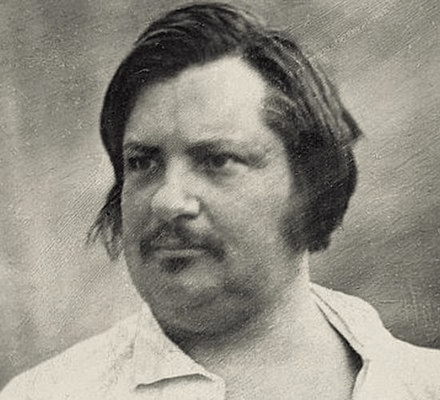
Pere Goriottook a while. I started reading it over a year ago as we prepared to move from Panama to France. I felt I needed to brush up my language skills, and had never read a Balzac novel.
The French was challenging at first, and I took it slow, reading a few pages a day. Lots of detailed descriptions, often quite flowery, with unfamiliar adjectives and colloquial expressions. Also, the use of the literary past tense which is not typical in spoken French was a bit difficult at first–I’d forgotten some of those forms.
But the last 20% of the novel I blew through quickly. I think my confidence in French reached a level I’d not had in 20 years, and suddenly I could breeze through pages instead of struggling and looking up multiple words.
It’s strange that when I got my degree in French Lit we did not read Balzac. Pere Goriot is a true masterpiece, a document of Parisian culture, a portrait of class divisions and the morals and ethical complications individuals faced when trying to break into the life of the glittering upper crust, or trying desperately to remain there. It’s difficult to say much without spoiling it–but Rastignac certainly learns a great deal about himself and the woman he ‘loves’ (or at least needs in order to ascend in society).
I would like to continue reading the Comedie Humaine, but must be selective. Perhaps Illusions Perdusand a couple others? I’m at the stage of life where I have to decide carefully what reading I want to accomplish, and what I would like to reread. I likely have a couple decades left and I already have 30 years of books I would like to read or re-read, LOL. And trying to complete reading lists in French and English, while hopefully adding some Spanish into the mix–makes me wonder where I’ll find the time.
And speaking of searching for time, I’d like to tackle Proust in French, and fear that might take up more than I have left!


 Mysterium Coniunctionis