Halloween approaches

It’s autumn and a young man’s fancy turns to…well I’m too old to remember what young men fancy at any time of year. But I fancy reading horror and ghost stories as Halloween looms.

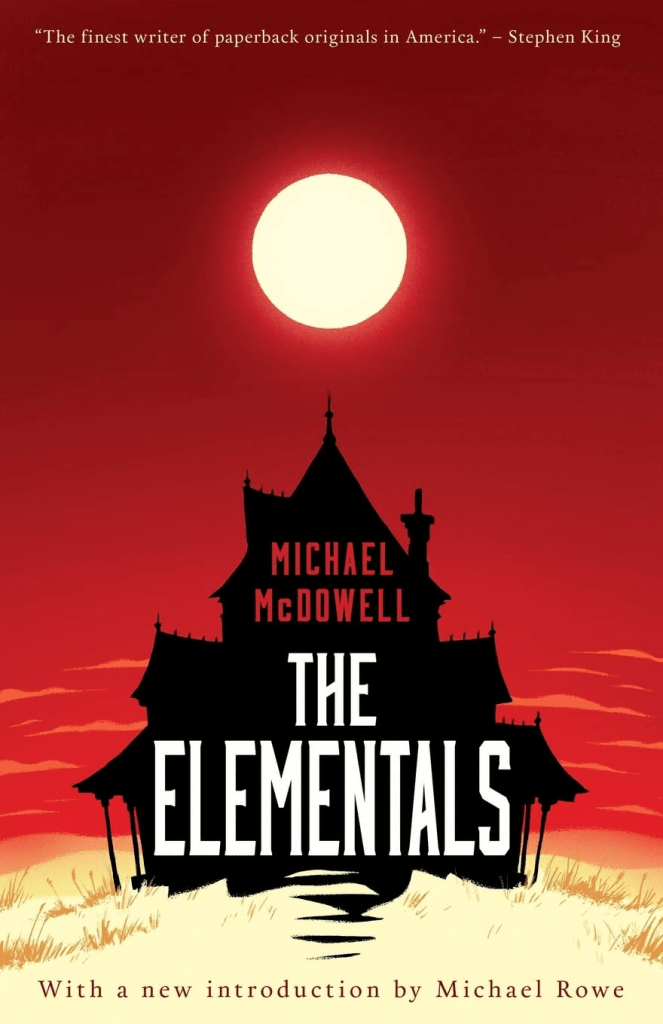
The Elementals is surprisingly well-crafted for an early ’80s mass market horror novel. It’s got a Southern Gothic flair, and without its supernatural elements the book could have succeeded as pop fiction with a literary bent. The families portrayed are Faulknerian, and the individual characters are Flannery O’Connor cute with their humorous quirks and tragic blindnesses. The setting is vivid and swampy and humid, rendered with evocative and stylish description.

The horror however is a bit silly, and didn’t ring true. I prefer subtlety with my haunts and spirits, and the chills here are far too garish and carnivalesque. It’s annoying to see well-rounded and sympathetic characters who do obviously stupid and pointless things contrary to who they are when faced with a crisis. And there is no suspension of disbelief possible with this sort of cartoonish creature. Using a scale likely familiar to those who know Stephen King novels, I’d rate The Elementals as closer in quality to The Tommyknockers than it is to The Dead Zone. But I must also note that McDowell’s prose is superior to King’s.

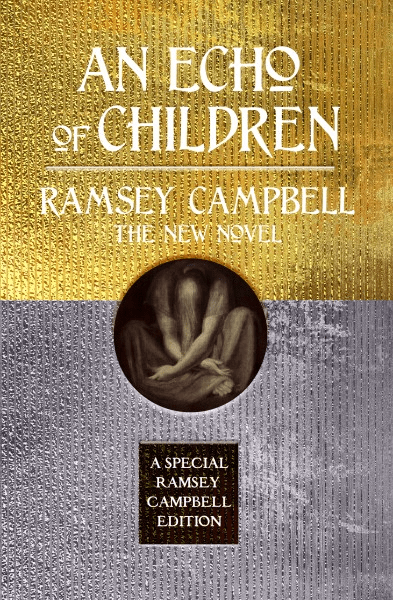
An Echo of Children has similarites with The Elementals, though they were written 45 years apart. Ramsey Campbell’s latest is also primarily a novel about a family in crisis, and its one of his best from the past two decades. Campbell is a personal favorite of mine, but many of the novels from the second half of his career have been interesting failures. I found this one compellkng enough to read nearly straight through.

Allan and Coral Clarendon move with their young son Dean from a crime-ridden neighborhood into a brand new house near the shore. Once they are installed in the new place, both sets of Dean’s grandparents arrive to visit for a weekend. Allan’s parents Jude and Thom note that Dean’s creativity and freedom is severely constrained in ways they find objectionable as parents and former teachers. Dean has an “imaginary” friend called Heady who promises to protect Dean from harm. All four grandparents are charmed by Dean and his friend until Jude and Thom experience Heady’s presence first-hand.

After a few interections with neighbors, a memory Thom has repressed returns, leading Jude to do some internet research. What Jude finds out about the neighborhood’s history, and in particular about Allan and Coral’s house, convinces her that Dean is in immediate danger. There is evidence that Carol and Allan are perhaps doing more than limiting Dean’s potential with helicopter parenting, and have strayed into psychological and physical abuse. They have pulled him from school and begin indoctrinating him with a dour form of Christianity which they’d never followed before. Jude commits herself to rescuing her young grandson, but is what she’s uncovered the truth? Or is her paranoid imagination coupled with senility the source of the horror?

Campbell is a fine writer and perhaps the greatest prose stylist in modern horror. He has the skills to keep the reader on edge as Jude’s potential unreliability competes with the possibility of an actual haunting in the reader’s mind. This one was more to my taste.

The Other

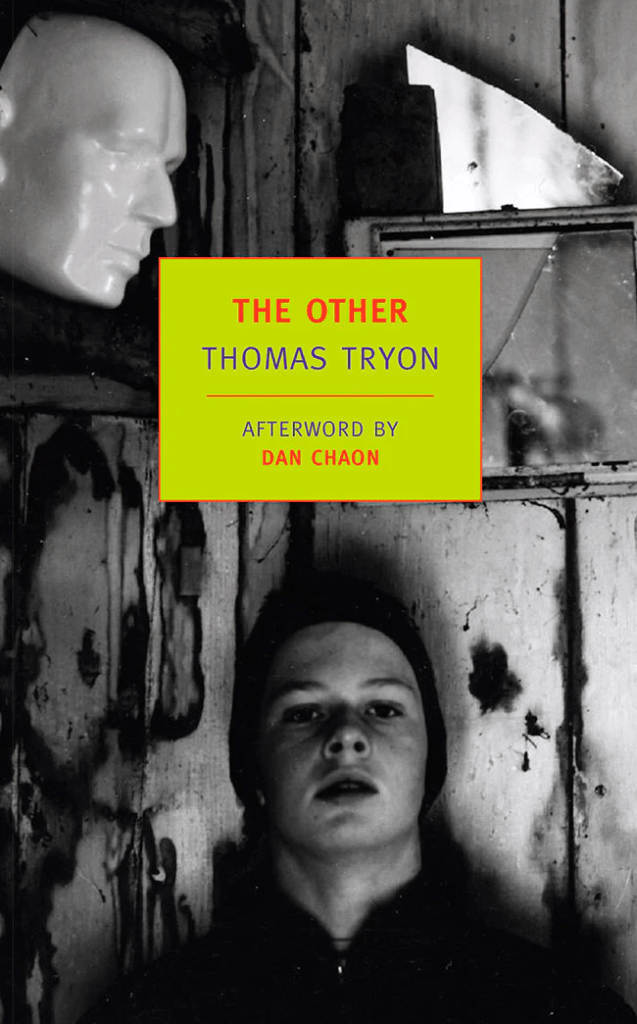
I’d thought as a long-time fan of horror that I was at least aware of all the classics of the genre. Until a few months ago I’d never heard of Thomas Tryon’s The Other, and what I read about it intrigued me sufficiently that when I was able to score a digital version for under 2 bucks I jumped at the chance. The novel was quite an unpleasant surprise.

There’s something particularly disturbing about a child who is pure evil. And when it’s a twin the creepiness is dialed up a few notches.

Niles and Holland Perry lead a bucolic life on a rural estate in New England. They play together and put on dramatic shows and do magic tricks. There’s something off about Holland however; he is more than mischievous, and his behavior descends from adolescent rabble-rousing to cruel and reprehensible acts. Their grandmother Ada is a Russian immigrant who fled the Bolsheviks. She tells them folk tales and bits of family lore from the old country–and introduces them to The Game, which is a sort of hypnotic regression wherein the observer becomes entangled mystically with the observed. Needless to say, The Game comes to have dire consequences for the boys.

Tryon has skills. He writes elegant and sophisticated prose. I’d place him based on this one novel right up with Shirley Jackson and M. R. James as a writer of literary merit beyond genre category. The structure of the novel has a few layers of narrative, and it took a bit of sussing out to realize the clever and unreliable games Tryon was playing. Very Turn of the Screw trickiness afoot here.

But despite its merits as a work of literature, this is still a horror novel, and it delivers the goods. I didn’t see The Twist until it came, which was a great surprise, and I was floored by the utterly appalling climax.

Playground

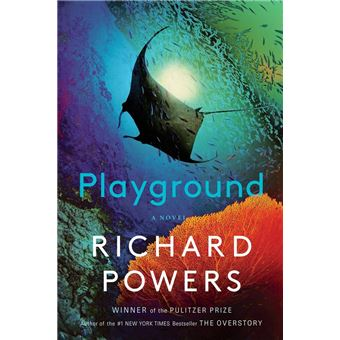
Richard Powers’ latest is another complex and tightly structured novel spanning nearly a century. There are two primary narrative strands woven together like a double helix, one first-person stream relayed by Todd Keane, an early social media and AI innovator from Chicago, and the other a third-person tale focused on Evelyn Beaulieu, a French Canadian whose father develops early deep diving technology and who becomes herself a famous deep sea explorer and renowned scientist. We jump back and forward a bit in time between these two strands as the characters each end up based in California for their work and eventually they find themselves meeting in Makatea, a tiny island in French Polynesia.

It is a credit to Powers’ strengths as a novelist that he can manage to hold all this together geographically and temporally. Despite the weight of its themes and its saturation with multiple branches of scientific inquiry, Playground manages to be a pure delight, an engaging and thoroughly breezy read.

Todd Keanes comes from wealth. His father is a hardscrabble financier and trader who builds a fortune. Todd ends up at the elite Jesuit private school from which his father graduated, and there he meets Rafi Young, a brilliant and militant young Black scholar and poet who won a scholarship endowed by Todd’s father. The first-person narration by Todd is our window on Rafi’s world–his tragic family situation, his financial struggles, his absolutely unique genius. The two challenge each other intellectually and play chess at first and then Go. It is their interest in games and gaming that give Todd the inspiration for his eventual social media platform Playground, which makes him a billionaire. Rafi’s burning creativity provides a lot of the ideation behind Todd’s innovations, and Rafi’s interest in a Russian philosopher who believed humans would inevitably discover or invent a technology of immortality is hugely influential on Todd’s eventual AI push. But as often happens to intense youthful friendships, Todd’s and Rafi’s falls apart as they head off on different paths–Todd to Silicon Valley, Rafi into graduate work in the Humanities. Rafi also meets and falls in love with a young artist from Makatea.

One of Todd’s earliest passions was the ocean, said passion first fired when he read a book by Evelyn Beaulieu called “Clearly it is Ocean.” Evelyn’s story begins when her father tests out a deep diving apparatus by putting her inside of it and throwing her into a deep pool at an engineering facility. After this she begins using his gear to explore the ocean and becomes many firsts: first woman accepted into an exclusive graduate oceanography program, first woman to join a months-long diving expedition, one of the first women to live in an underwater facility run by NASA. Like Jacques Cousteau, she is a lyrical documenter of the deep. And like Richard Attenborough, she sees in her lifetime the dire impact of humans on the environment and creatures she loves. We see her struggle with being a wife and a mother when her primary motive is her work, and how challenging it is to escape the traditional boundaries set on her gender by centuries of patriarchal thinking. It is one of Evelyne’s great realisations through her decades of diving and close observation that sea creatures spend a lot of time playing. Play recurs over and over as a major theme in the book, and for Evelyn and Todd their work is more play or a challenging game than it is drudgery.

I won’t go into the profound final fifth of the novel to avoid spoilers, but there are some surprises and interesting ambiguities. If you’re familiar with Ray Kurzweil a few strange and confounding discrepencies in the novel, nearly along the lines of magical realism, might become more clear. These involve the dates characters died, and whether they are actually alive in a traditional sense of being alive during parts of the story. Also, if you’ve read any Philip K. Dick, particularly the novel Ubik, you may grasp what is implied about some of the characters and indeed the setting of Playground’s climax. Also there are some Doctor Frankenstein allusions when we discover exactly to whom–or to what–Todd Keane has been narrating his tale.

There is some truly gorgeous writing about the ocean in this novel. One sequence about a cuttlefish is particularly lovely. It struck me as familiar, and sure enough Powers lists in his sources Peter Godfrey-Smith’s Other Minds as the genesis of that scene. I read the book a decade back, and can’t recommend it enough. I should also note that this novel is the second I’ve read lately featuring the astonishing development in AI and its ability to defeat the best human players of chess and Go, the first being Benjamin Labutut’s The Maniac. Sign of the times, I guess?

I’m also pleased to note that Playground features a female scientist, as did Powers’ previous masterpiece The Overstory. At a time when dark forces in the USA are insisting that women in leadership or highly skilled professional roles must be “DEI hires,” and that women should focus instead on birthing and raising children and stay at home, it is important that writers continue to show otherwise.

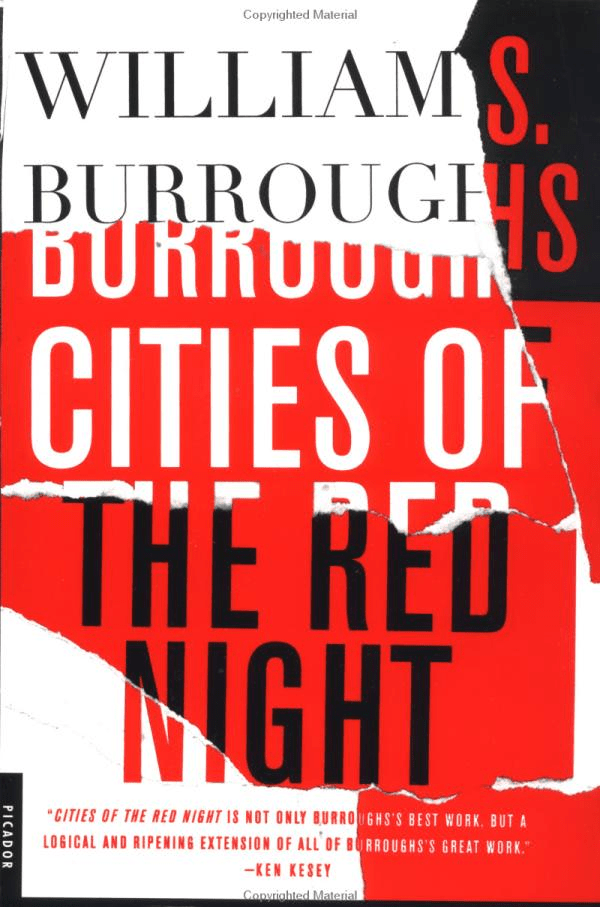
Cities of the Red Night

I’ve read a handful of Burroughs novels and also Casey Rae’s entertaining and informative William S. Burroughs and the Cult of Rock ‘n Roll. I think this is easily my favorite novel by the Beat icon. It is ridiculous, absurd, wholly pointless, unrepentently filthy, and a great deal of fun.

In Casey Rae’s examination of Burroughs I learned about his “cut-up” method of creation, splicing and collaging multiple texts and ideas together from disparate sources to forge something new. Cities of the Red Night samples deep cuts from across the 20th century: we get Crowley sex magic, pulp noir and sci-fi and horror, Mexican archaeology, chasms of time and ancient gods and civilizations borrowed from H.P. Lovecraft, political chicanary and revolutionary rhetoric, lots of guns and cannons and far-out weaponry, drugs, viruses, and oodles of hot gay sex featuring an asphyxiation fetish.

What is the novel about? Well, there is a doctor fighting a viral outbreak, and then a private dick investigating the disappearance of a young lad whose head ends up in a crate bound for Peru, a pirate revolution in Colombia and Panama, a war between humans and mutants in ancient vanished cities, conspiring conspirators doing conspiracies…it’s about so much it’s practically about nothing. Some of the characters shift from modern era New York to thousands of years ago and then to the jungles of 18th century South America before suddenly getting onto a starship in the distant future. At one point a main character wakes up in a rehab clinic and it appears the entire novel was a hallucination; but it might actually be that he could access actual reality in his comatose state and he’s only waking up into the shared illusion we call reality.

I mean it doesn’t matter what it means or if it means anything at all. Enjoy the ride!

I will note that I’ve likely read a couple thousand novels, and that this one has more ejaculations than all of the other novels I’ve read combined. And that includes a couple long books by the Marquis de Sade, so it’s an impressive number of money shots. So the novel could perhaps be classed as a sort of cartoonish pornography. Keep that in mind if you choose to read it.

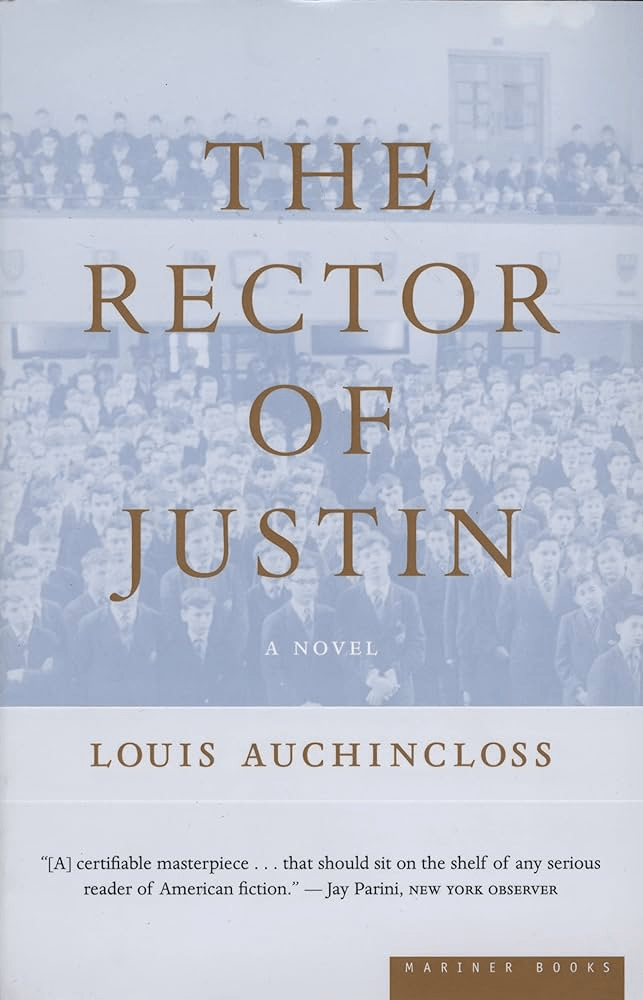
The Rector of Justin

Brian Aspinwall becomes at age 27 a teacher at a prestigious private boys’ school in New England. He is recruited suddenly in 1939 to fill in for a master who has gone off to Canada to enlist in the RAF. It is primarily through Brian’s diary that we learn about the school Justin Martyr and its famous founder Reverend Francis Prescott. Immediately Aspinwall is awestruck by Prescott and comes to admire him and his accomplishments. He seeks to understand what makes Prescott and his world-class upper crust school tick, and The Rector of Justin takes off.

Aspinwall seems surprised to learn that Prescott is an intellectual and a progressive given the focus on sports, strict discipline, and religious tradition at the school. But many more surprises await. As the novel unspools we learn from other sources who come into Aspinwall’s orbit. Eventually Aspinwall is given files and documents by others and he takes on the task of possibly writing Prescott’s biography.

The book is breezy and warmly inviting, despite its substantial and ethically weighty themes. I found it an absolute pleasure. The characters are all interesting, and in particular the Rector himself. There are hints that Justin Martyr was founded out of some dark repressed desires. The WASP identity of the school proves problematic later on as Prescott has an epiphany about the kind of people running the board at his school, and the true values of the wealthy and influential class who send their kids to Justin Martyr. I could in fact trace many of the concerns Reverend Prescott has about his students and their morals down to the ethical catastrophe in current US politics.

Because the novel is from the 60s but set in the 30s and 40s we get groovy stuff intellectuals were into at the time, like Freud. The novel is saturated by Henry James but is not as dense and soupy as The Master’s.

I’d previously read only one other novel by Auchincloss–The Book Class. I remember quite liking that one but nothing about it has stuck with me after 3 decades. I do recall that both novels were given to me by Dan Bouchard in a box of remainders in perhaps ’94? I still have one more book by Auchincloss on the shelf–a collection of short fiction. I look forward to it.

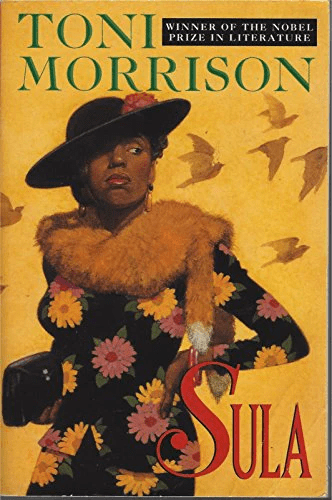
Sula

Sula is a magnificent read, a short novel but a richly realized world. We spend almost a century in Bottom, the Black neighborhood of Medallion, Ohio. Two families entwine in the narrative–one-legged Eva Peace serves as matriarch of one. She manages a thriving bungalow of sorts, a chaotic and haphazard structure akin to the Winchester House in complexity. There are family members, hangers-on, boarders, mountain people, addicts, crooks, working people and feral kids in the Peace home. Eva’s daughter Hannah raises her kids amidst the tumult. One of her kids is Sula.

The other family is Helene Wright’s–Helene was raised by her grandmother. Her mother was a prostitute in New Orleans and granny pulled her out of that drama and brought her up. Helene’s household is calm and organized and there is a sheen of middle class respectability. Her daughter Nel is raised in a tidy and peaceful environment and has adopted the virtues and social mores of the community.

Sula and Nel become best friends. Sula is adamant that she will never be bound in any way by the constraints of her community or its judgments and expectations. She will be free and her self will be unimpeded in its development and evolution by anyone or anything. Nel on the other hand is willing to tow the line and to do what’s right. They have a relationship where one is centripital and the other centrifugal, forces working together to flesh out a beautiful and adventurous childhood.

I recall a scene in Henry James’s The Turn of the Screw when well-mannered Flora is playing in the dirt and makes sexually suggestive gestures with sticks–shortly afterward the Governess has her first encounter with the apparition of Miss Jessel. There’s a similar scene in Sula where Sula and Nel are playing in the dirt and digging holes and burying things in the holes and the girls are frustrated and dis-satisfied in their game but manage somehow to conjure up a horrible event in an almost magical ritual. The reactions of each girl to this event have lasting impacts on the course of their lives.

Eventually Nel does what one is supposed to do in Bottom; she gets married and starts a family and focuses her energies on her children, her husband, and their home. On the day of Nel’s wedding Sula leaves town for ten years. When she returns she will be judged and scape-goated for the sins of her town and its inhabitants.

But what are morals and virtues if they simply hide hypocrisy? What are the consequences to true human freedom when small-town values are oppressive and retrograde? Sula, through her refusal to conform and to follow the niceties, becomes for Bottom an easy target for projection–she absorbs all the guilt and hostility and judgments of the town’s inhabitants. But is Nel really superior to Sula morally? What does genuine friendship entail? What are the costs of motherhood and are they compatible with true freedom? Is a life sacrificed for the benefit of others a worthy life? Bottom learns a lot about itself through Sula’s sad fate, and pays a heavy karmic debt.

Recent Reads

I’d read 100 Years of Solitude about 30 years ago and was absolutely flabbergasted by it. Immediately one of my life goals became “get your Spanish into adequate shape to read more Garcia Marquez but in the original language.” I managed to have some conversations with locals in Spanish on a couple trips to Colombia, but alas never got my skills up to reading novels.

So I caved in and read Love in the Time of Cholera in English. I was a bit concerned with the high bar set by the other novel that this would disappoint–quite the contrary. I think it’s superior. Where 100 Years is a bit of a “loose, baggy monster,” Cholera is fit and trim. The magical realism is dialed down substantially but not the magic of the description, characters, settings…such a dense and humid world to inhabit for too short a time. A rich, sweaty, mournfully sexy book. It truly captures the decayed glamor of old South American colonial cities and the rich mix of cultures and classes. Exquisite!

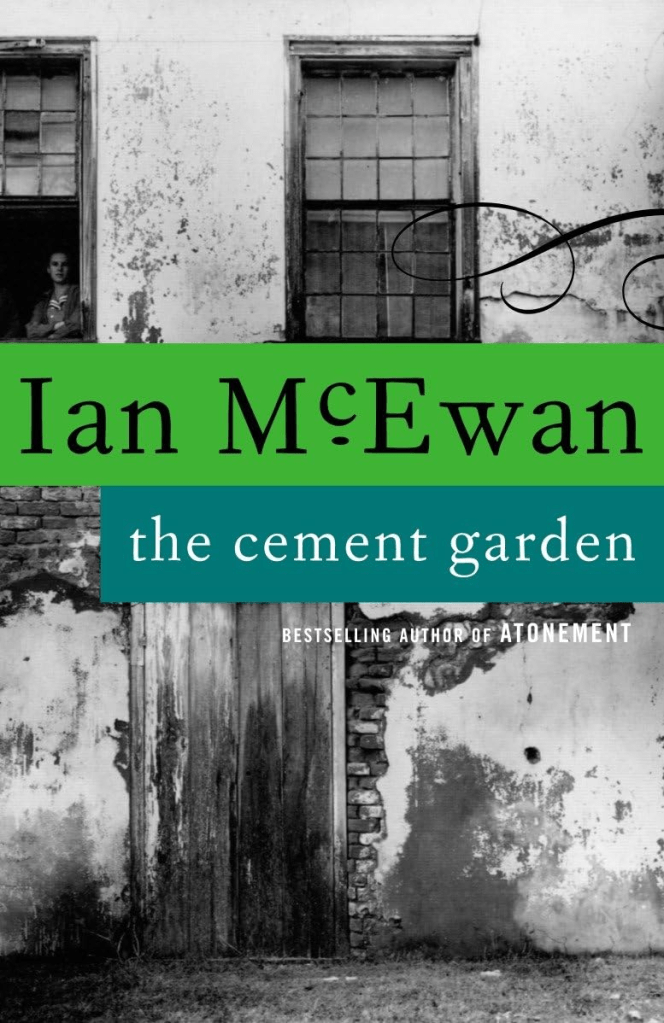
Aw, it’s nice to revisit those care free days of childhood–distant, aloof parents, perverse games, pointless wasted hours at school, the challenge of disposing of corpses…

Not sure how to categorize this one. A bit of Shirley Jackson’s We Have Always Lived in the Castle, a bit of Poe’s Fall of the House of Usher, a bit of 90s pornography.

Four siblings are left alone in a strange castle-like house in the midst of an abandoned urban tower block development when their parents die in quick succession. Instead of the lush natural setting of Eden (or the isle from Lord of the Flies) they inhabit an unnatural cement garden, where only stinging nettles force their way up through cracked concrete to bake in the sun. Without the internet or even TV there is not much to do except go feral.

McKewan can write, and this short gloomfest is arresting and disturbing in equal measure. It probably says something about me to admit that I found it somewhat humorous, the way Rober Coover’s story The Babysitter is humorous. Kids left to their own devices act like adults–and are equally fucked up.

I recently read an article in the NY Review of Books about Ford Madox Ford. Had previously only read The Good Soldier, which is astonishingly good. Thought I should perhaps tackle another of his, but didn’t feel quite up to Parade’s End, which has sat its fat self on my shelves since 1994 without being opened.

So I decided to search the author’s name and pick up whatever book the owlgorithms first suggested. Owltimately it was The Brown Owl, which proved an entertaining little owlegory. Though written for kids it has a sophistication and wit about it which owlevates the book above mere “young adult” fiction.

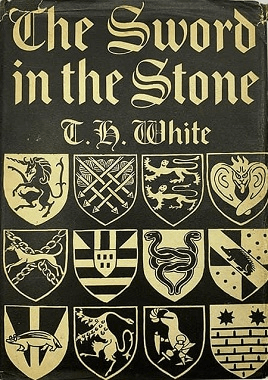
Read earlier this year an analysis of the Arthurian myths by Emma Jung and Marie Louise von Franz, followed in short order by H is for Hawk. H is for Hawk is a memoir of dealing with the death of a parent while training a hawk and reading T H White’s memoir about training a hawk. All of this brought me round to the realization that I’d never read White’s Once and Future King novels. So I started with The Sword in the Stone. Didn’t much like it. Merlin is too ridiculous, the story is too silly, everything is far too cute. I can see why Disney made a film out it, because it’s tailor made for them.

Despite not enjoying the first volume, I plowed ahead into volume 2 of The Once and Future King. Didn’t like this one even less. Guess I’m too old. I prefer dour, profound old Tolkien to this stuff.

Exit Music

John Rebus is close to retirement. In fact, only days away from turning in his warrant card. A dissident Russian poet is found bludgeoned to death and Rebus and his partner Siobhan Clarke are off to find the killer. As a result they explore the underworld of early 21st century global politics. Big banks are in collusion with Labor and Nationalist politicians and local gangsters to milk Russian oligarchs of their cash. Scotland is aching for independence and the oligarchs find it an attractive place to avoid possibly drinking radioactive tea or falling mysteriously from a high window onto a Moscow street.

Rebus wonders what counts as corruption and illegality when the entire economic and political system is shady. As he tries to unravel the case he ponders his own ethically questionable past doings and wonders if he’ll simply spend retirement in the pub gradually softening himself with malt.

Another murder complicates things. Rebus and Clarke are now no longer detectives in a local precinct police squad; they are George Smileys working in the shadows to uncover an international conspiracy.

Or perhaps not? Maybe there is less there there than appearances suggest. As they work the case Rebus begins the process of handing the reins over to Siobhan as much as possible. She is at once frustrated by his tactics and deeply saddened to be losing his wisdom and experience, but finds herself ready to take over the team.

I jumped into this 17-novel series at book 15 and only read that one and the final volume, but enjoyed them thoroughly. Good pop lit with a cracking plot and sufficient depth and complexity to keep me intrigued. The characters are not one-dimensional types but are fully fleshed out. And Mr. Rankin can indeed write a good sentence. If detective novels and police procedurals are your thing you might want to read these.

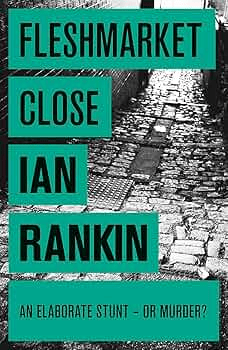
Fleshmarket Close

We were sitting at the local watering hole a few weeks back and mentioned to friends from the UK that we were going to visit Edinburgh this summer for the first time. Immediately one said “Oh, you must read Ian Rankin before you go. I’ll lend you a couple!” Sure enough a day or two later her significant other dropped off two novels at our front door on his way home from work. Fast service!

I’ve not read many detective novels or police procedurals or mysteries–I’ve dabbled in noir now and again, and did read the first Simenon Maigret novel in French last year. But I figured it would be an interesting way to get a taste of Edinburgh in advance without relying on Rick Steves for once, so I dived right into Fleshmarket Close.

I was a bit concerned to begin reading a series at about volume 23 or 24, but the novel stands alone quite well. The detective central to the story is John Rebus, who is being pushed aside by his superiors and sent off to pasture in a shoddy department in a squalid neighborhood. Rebus is an attractive type, familiar from the genre–a gutsy guy, tough-minded, unsophisticated in his tastes and not academically inclined, but eclectic. He likes an enormous variety of niche music from jazz and folk to punk and techno. He likes a pint and a malt perhaps too much, and has an ex-wife and estranged daughter who probably featured prominently in earlier volumes. He’s read Dostoevsky. He tends to intuit things other detectives miss, and instead of thinking linearly about a crime he builds up a huge amount of context and finds all sorts of intricate leads to trace. This frustrates his superiors but he gets results.

In Fleshmarket Close the murder of an immigrant leads to a thriving underworld of criminality involving drugs, Irish milita, human trafficking, slumlords, racism, salacious and carnivalesque right-wing media, celebrity lawyers, and pornography. Rebus and his younger partner Siobhan Clark eventually piece together a vast conspiracy. It’s quite satisfying, and Edinbugh is a character in the story just as much as Baltimore is a character in The Wire. In fact, this novel has some substantial similarities to The Wire Season 2. And, I’d note, Edinburgh as portrayed in this novel has some similarities to Baltimore.

It’s fun to see Detective Rebus struggling with “woke” culture as it began to accelerate, and to note his adapting to “new” tech like laptops and mobile phones and DNA tests. And of course it’s interesting to read a pre-Brexit UK novel which shows a lot of the media agitation which led to anti-immigrant and anti-EU sentiment. Rebus comes from Polish immigrant stock himself and he is not pleased by where he sees Scotland and the UK headed. I’d certainly recommend this to fans of the genre, who might perhaps prefer to start with the first novel instead of one of the last? But also to those who don’t really read this sort of novel as an interesting look at the dark underbelly of a famous tourist destination.

The Information by Martin Amis

It’s been two years since Martin Amis died at age 73, so I figured it was about time I read something of his. He was, after all, one of those writers I was supposed to read back in the ’80s and ’90s, as the conventional wisdom droned on about him capturing the zeitgeist of that time. Somehow I just never got around to reading his novels, though I did see the film version of The Zone of Interest last year.

I had on my shelves The Information, l which I’d received in 1995 when I was running the Literature section of the long-defunct Borders Books & Music just north of Baltimore City. It was a signed first US edition, distributed to promote the work and encourage those of us hand-selling novels to read it and recommend it, and apparently I can get about $50 for it on Abebooks. When we had Christopher Hitchens for an in-store event and discussion of The Missionary Position, I should have asked Hitch about this novel and whether it was worth holding onto and eventually reading. Hitch, like Amis, smoked himself to death, and Martin did his eulogy.

The Information is a seething spite-filled cess pit of self-loathing. The main character Richard Tull is a thinly disguised caricature of Amis himself, and is a most unpleasant bloke to be around for 500 pages. Tull is a pretentious novelist and writes unreadable overly complex books no one cares to understand which pile up unpublished in his study. Meanwhile his best friend Gwyn Barry writes noxious and silly tripe which becomes globally successful and makes him a mint and a celebrity. While Richard is a complete failure who drinks and smokes himself to annhilation, Gwyn is continuously interviewed and photographed and consulted about his opinions. Because Richard regards himself as superior intellectually and artistically to his far more successful friend, he decides to get revenge on Gwyn through a series of demented schemes involving shady underworld stereotypes. All of the schemes however fail and end up bouncing back on their initiator.

All of the characters in this novel are hateful and despicable. Women mostly exist in the book to serve the needs of men and don’t have much depth. The plot is a complete farce and this writer whose works so tapped into the zeitgeist of his time seems now to be as dated as his father Kingsley.

But the prose is gorgeous, scintillatingly so. There are passages of the most delicious and sparkling disdain gloriously served up with malevolent humor. This entire novel encapsulates what it’s like to be an upper-crust twit who feels superior to everyone. It lags in parts and in others is uproariously hilarious and brilliant. As a failure, it’s a rather good one. I might be inclined 20 years from now to pick up another of his books.