It’s been two years since Martin Amis died at age 73, so I figured it was about time I read something of his. He was, after all, one of those writers I was supposed to read back in the ’80s and ’90s, as the conventional wisdom droned on about him capturing the zeitgeist of that time. Somehow I just never got around to reading his novels, though I did see the film version of The Zone of Interest last year.
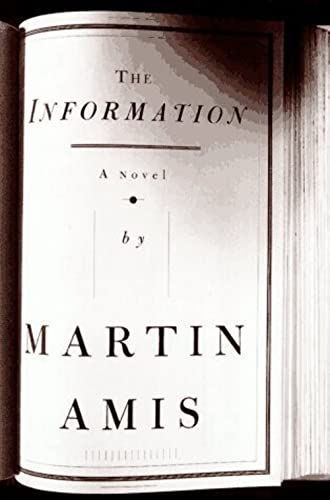
I had on my shelves The Information, l which I’d received in 1995 when I was running the Literature section of the long-defunct Borders Books & Music just north of Baltimore City. It was a signed first US edition, distributed to promote the work and encourage those of us hand-selling novels to read it and recommend it, and apparently I can get about $50 for it on Abebooks. When we had Christopher Hitchens for an in-store event and discussion of The Missionary Position, I should have asked Hitch about this novel and whether it was worth holding onto and eventually reading. Hitch, like Amis, smoked himself to death, and Martin did his eulogy.
The Information is a seething spite-filled cess pit of self-loathing. The main character Richard Tull is a thinly disguised caricature of Amis himself, and is a most unpleasant bloke to be around for 500 pages. Tull is a pretentious novelist and writes unreadable overly complex books no one cares to understand which pile up unpublished in his study. Meanwhile his best friend Gwyn Barry writes noxious and silly tripe which becomes globally successful and makes him a mint and a celebrity. While Richard is a complete failure who drinks and smokes himself to annhilation, Gwyn is continuously interviewed and photographed and consulted about his opinions. Because Richard regards himself as superior intellectually and artistically to his far more successful friend, he decides to get revenge on Gwyn through a series of demented schemes involving shady underworld stereotypes. All of the schemes however fail and end up bouncing back on their initiator.
All of the characters in this novel are hateful and despicable. Women mostly exist in the book to serve the needs of men and don’t have much depth. The plot is a complete farce and this writer whose works so tapped into the zeitgeist of his time seems now to be as dated as his father Kingsley.
But the prose is gorgeous, scintillatingly so. There are passages of the most delicious and sparkling disdain gloriously served up with malevolent humor. This entire novel encapsulates what it’s like to be an upper-crust twit who feels superior to everyone. It lags in parts and in others is uproariously hilarious and brilliant. As a failure, it’s a rather good one. I might be inclined 20 years from now to pick up another of his books.
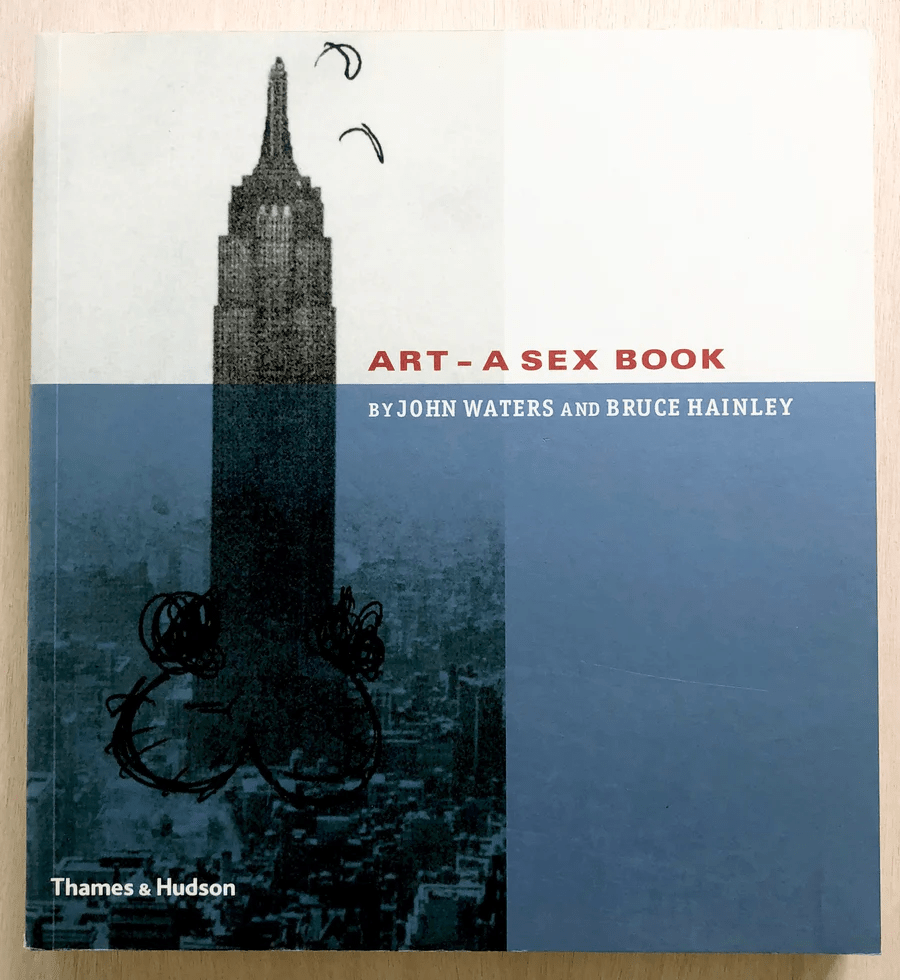
I bought a few copies of this when we had one of several book signings with John Waters at the old Borders Books & Music 043 in Towson. I gave three of them as gifts over the years and still have two signed copies. Probably have a box full of other stuff signed by John as well–DVDs, VHS tapes, other books.
It’s funny to think of an edgy and completely trashy Baltimore film-maker forging a side identity as a collector and modern art sophisticate well-regarded in New York and Paris. But nothing is surprising in John Waters’ career. A few years ago when we were home in the USA it was great fun to browse his substantial and surprising personal collection donated to the Baltimore Museum of Art. Shortly thereafter the museum dedicated a new public restroom in his honor.
After having Art: A Sex Book for more than two decades I finally got around to reading it. I’d looked at the art before but had never tackled the text. The conversations between Waters and his co-exhibitor Bruce Hainley are astute and clever and often as filthy as anything overheard in a high school cafeteria. I laughed out loud several times.
At the end of the book are 20-some artist responses to a list of provocative questions. These range from the silly to the sublime.
When I was first in grad school in Philadelphia in the early 90s we had a list of novels we were required to read outside of our coursework to ensure we had sufficiently deep knowledge of literature and its icons. On the list were two or three Nabokovs. I read at the time either Pale Fire or Ada, or Ardor–can’t remember which. All I recall from the book is a childhood with lots of butterflies and glimmering grass and trees and lazy summer days. And a sexy sibling or cousin? But the prose was dope. And, of course, I read Lolita.
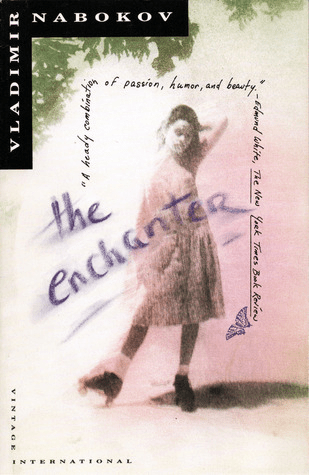
When I found a stack of Nabokov on my bookshelf I took down The Enchanter knowing nothing about it. A quick read of the prologue and I discovered it was not really a novel at all but rather a novella and that the book was mostly prologue and afterward. The prologue discussed the history of the story and the afterward, by Vladimir’s son and translator, was about the challenges of translating some surreal and salacious images from Russian to English.
The Enchanter turns out to be Nabokov’s first examination and expression of the idea which later became Lolita. His son in the afterward explains the experience of reading The Enchanter as being trapped inside the mind of a sick criminal for 70-odd pages. The entire story is about a man who lusts after a 12-year-old girl and who marries her repulsive mother simply in order to rape the child. So, basically the same idea as Lolita, but without the polish. Humbert Humbert is a disgusting pervert but he’s got style and pinache, and discusses his quarry like a sophisticate who knows cheeses and fine wines. Lolita, despite its criminal main character and dark situation, has a sense of humor. The Enchanter has Nabokov’s delicious prose and characterization but I found the experience of reading it less than enchanting–mostly interesting as a curious sort of literary archaeology rather than as an actual good story. BUT the narrator gets his comeuppance in a satisfying way.
Way back in the late 1980s I took a course called Psychology and Literature. It was taught by the miraculously brilliant and completely weird Dr. Benjamin McKulik (who I discussed on Gayle Danley’s Classy Podcast a few years back). One of the novels we read in that course was The Second Coming by Walker Percy. I recall being fascinated by a female character in that book who had schizophrenic episodes and who spoke in punning sentences full of double-entendres and layered with multiple potential meanings. I have no recollection of buying Percy’s The Thanatos Syndrome but figure at some point I saw it cheap in a used bookshop and bought it on the strength of the other.
There’s a lot to detest in this book. The narrator’s terrible Louisianna genteel racism and anti-semitism, his painfully neanderthal politics, the absolutely retrograde and bafflingly naive conservative sexuality (doggy-style sex is apparently evidence of a psychological problem and/or brain syndrome, and so is oral sex?). Vivid descriptions of pedophilia uncovered by the hero make stretches of the book truly troubling to get through. But I found myself pulled along nonetheless by the narrative, which is like a Robert Ludlum or Tom Clancy thriller written by a much more literary prose stylist.
The plot is completely ridiculous but at the same time believable–a bunch of hacks funded by the Federal government decide to dump chemicals in the water supply which revert people to “lower” primate behaviors because they hope the local crime rate will go down and math scores will go up due to savant capacities developed by those who drink from the tainted taps. Success! Just like flouride in the water saves teeth, their chemical brew from a local nuclear reactor coolant tower works as intended. A psychiatrist recently released from prison for hawking prescription drugs to truck drivers has about five interactions with people in his town and immediately suspects something is up from their speech patterns and changes in their sexual behavior. His wife suddenly becomes good at bridge and wants doggy-style and oral sex for the first time ever, so there must be a neurological syndrome in town! What is the cause? Well, our intrepid doctor finds out with the help of a weird cast of Southern Gothic characters including a kissing cousin, a mentally ill Catholic priest and wanna-be Nazi who lives in a fire spotting tower, and an uncle who wins duck-call competitions.
Nearly a decade ago the first season of True Detective aired on HBO. I thought it was an absolute hoot and a great example of prestige TV with compelling acting in a gritty setting and a peculiar Lovecraftian underbelly. There are several interesting plot and setting overlaps between that season’s arc and this weird AF novel. I wonder if the show’s writers knew Walker Percy’s last book?
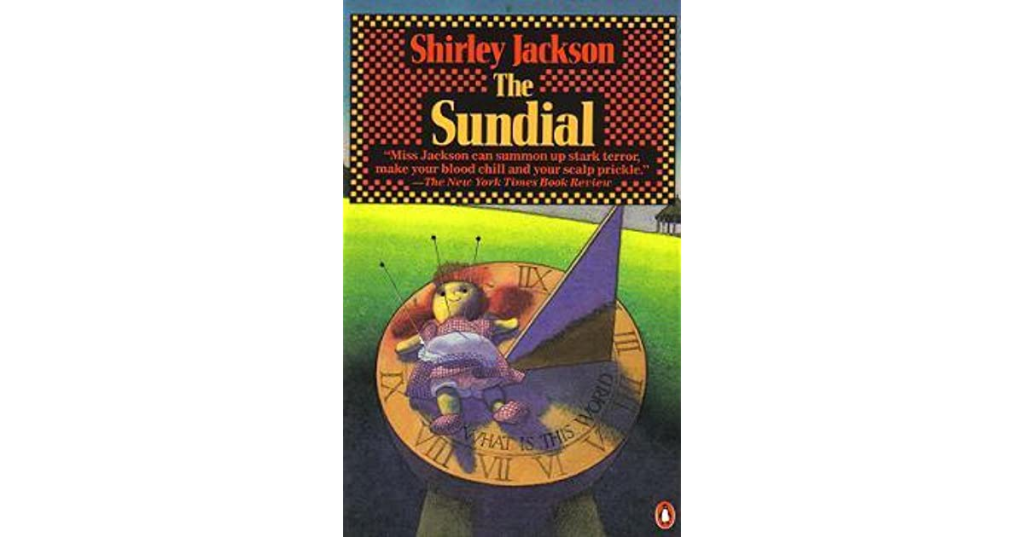
Shirley Jackson has the distinction of having written the novel I’ve re-read the most. As of last January I’ve read The Haunting of Hill House seven times. I’ve also read many of her short stories and the lovely and mysterious novel We Have Always Lived in the Castle as well. But for some reason my 1990s paperback re-issue of The Sundial sat on several shelves in several houses for a few decades before I got around to it this week.
I suppose I needed to wait until the collapse of civilization in order to fully appreciate the book. We’ve had several near collapses since I purchased The Sundial–Y2K, the end of the Mayan Calendar, various planetary alignments, wars, pestilences, George W. Bush elected twice–but something about recent events conjures more serious reflection on the End Times than all those others.
The Sundial is focused on the coming End of the World–or, more exactly, how people respond when they genuinely believe the End is nigh. The setting is a genteel massive manse in a New England town, built a generation previously by some fabulously wealthy businessman and currently inhabited by his two children and his grandson’s widow and daughter. The children are Mr. Halloran, confined to a wheelchair and in evident decline, and his sister Aunt Fanny. Mr. Halloran’s wife is still around as well, and is suspected by the grandson’s widow and granddaughter of having murdered his son by pushing him down the stairs in order to secure her own inheritance of the house.
Aunt Fanny one early morning takes a walk around the gardens she’s known since childhood, becoming somehow lost and suffering a potent vision of her father telling her the end is nigh, but that those inside his house will be saved to repopulate the Earth. What ensues is pure hilarity. Fanny shares her vision and somehow it becomes doctrine with all those trapped inside. They will be Robinson Crusoes and Noahs and Adams and Eves, left stranded to rebuild and repopulate.
As in every Jackson novel the characters are all delightfully awful and are skewered by her sharp sensibilities. The dialogue is funnier and better and more sophisticated than anything in Dorothy Parker, the wit makes Evelyn Waugh seem amateurish, and Dickens himself would have been awed by Jackson’s ability to lampoon class differences so efficiently. What took him 5 or 6 hundred pages takes her much less than 3.
I note that as we pass from Pisces and into Aquarius that the old gods have all lined up to watch our current collapse. The Planet Parade of late February/early March this year showed them all coming back to witness our decline once again into rebirth and renewal, just as the change from Aries to Pisces saw the cratering of all the great Mediterranean civilizations and the birth of new orders. In Jackson’s novel the end doesn’t matter so much as the way people behave anticipating it. And just as she predicted, they behave shamelessly and hilariously so–Buckle up, folks!
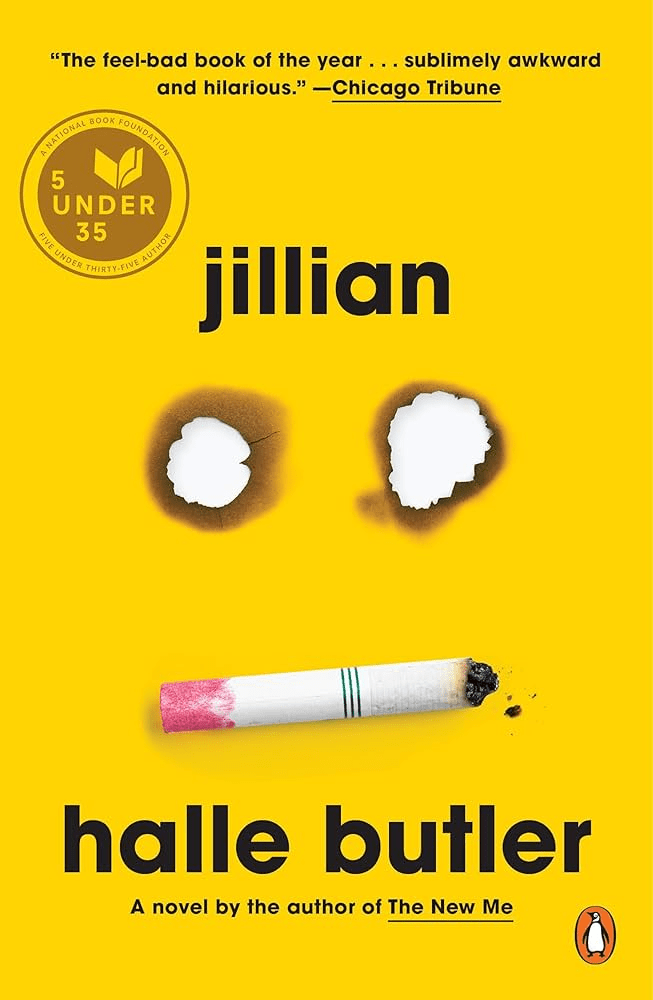
This book is awful. When I write that I’m not speaking at all of the quality of the novel–it’s actually quite good and very entertaining. But everything about it is truly terrible. Jillian is a troublingly accurate record of life in the current late-stage neoliberal capitalist hellscape we all inhabit. As such, it’s an abyss of despair, a Nietszchean vortex, a singularly piercing examination of approaching Singularity. I laughed heartily reading it, and cringed each time I laughed, because ‘funny, not funny.’
The novel centers on two characters: Megan, a recent college grad who works in a gastroenterologist’s office. Her job is to look at images of people’s colons all day as she scans the images into their medical files. She is alienated from her labor, but also from her friends, from her boyfriend, from her family, from her society, and from herself. Marx wrote Grundrisse just for Megan. She sees how empty everything is and how difficult it will be to find meaning at all in a life doomed to this sort of work. As a result she gets smashed on canned American beer and smokes too many cigarettes while becoming more and more of an intolerable asshole. Megan is infuriated that nobody else can see how fake everything is and how their successes at their own fake shitty jobs are contemptible.
And then there is Jillian, Megan’s co-worker. Jillian is about a decade older than Megan and because unconsciously Megan sees herself becoming Jillian in ten years, still working at the doctor’s office, still cheerfully scanning poopy intestinal images, she starts to really loathe her coworker and herself. Half the novel is from Jillian’s point of view, half from Megan’s (with brief moments from the POV of a few other scattered characters, including Jillian’s son Adam and from a dog, a bird, a racoon).
Jillian is a total wreck, and drives on a suspended license because she is completely deluded about the state of her world and unable to face the realities of her situation. A single mom who got knocked up after hooking up at a club while high, she has discovered religion and has made a mess of that as well. After drifting thoughtlessly through a red light her car gets impounded, she is arrested and arraigned, and she has to rely on the kindness of a fellow church member to get her kid to daycare every day while she goes to the office. Megan sees through all of Jillian’s bullshit and it makes her totally crazy. She goes home and obsesses about Jillian to the point her boyfriend starts to get annoyed by this obsession.
Meanwhile Jillian has lied to her employer about her car and about an upcoming court date and about her fine for driving on an expired license. And to solve all her problems she adopts a dog because happy families have dogs, right? Then a painkiller addiction makes everything that much better.
In this novel we get to experience the collapse into despair of these miserably entwined people. And what makes it all worse is that Megan, despite being a terrible asshole, is actually correct about the people around her and the society she is in and about her prospects. And she is correct about Jillian and her thin cheerful veneer, the inevitable collapse of which affects not only herself but her child and her dog and Megan and the entire society they are trapped inside. And yet these are the sort of people churned out and crushed by America the Beautiful in the 21st century.
I’ve not been pushing myself to read French lately, and it is absolutely vital that I continue to work on the language so that I sound less like an adolescent speaking when I interact with locals here in the Correze and particularly with business clients who arrive from cities like Toulouse, Bourdeaux, and Lyon. When Ernaux won the Nobel Prize in 2022 I picked up a couple of her books, one of which was La Place.
Surprisingly the French is quite clear and simple-stylistically I’d compare Ernaux’s writing to Hemingway, with crisp, short declarative sentences. Technically La Place is a novel, but it is also a memoir or autobiographical novel, and her style is very objective and is comparable to Joan Didion’s dispassionate journalism. I was pleased to only need a dictionary a couple dozen times throughout, and mostly for colloquial phrases.
The idea for the novel arose when Ernaux was processing the death of her father, and focuses on him and her family in a small town in Normandy through WW2 and into the 1970s. Her father was raised working on a farm with a quite limited education and his parents were not literate. Through his hard work and survival of the war to working in a factory and rising through the ranks and eventually buying and running a small cafe/epicerie with his wife we can see how the family pulled itself up from poverty to a comfortable middle-class existence. Ernaux’s descriptions of her family’s sensitivity to class and how they tried to hide their rural hick upbringing in front of clients by changing their speech and feigning a more sophisticated vernacular were quite touching. Reflecting on the difficulties her parents faced and her father’s challenges in particular was obviously difficult for Ernaux but she never wavers from her stylistic choices to keep her emotions out of the prose. Sometimes what she describes or recounts make her involvement and her feelings evident, however–there are photographs she finds and events she narrates which are dense with the weight of emotional memory.
Ernaux’s father is never called by his name, only by “him” or “he.” He is adamant that Ernaux continue her education but at the same time he can’t resist pointing out that her life in books is not the real life he lives with his hands in the dirt of the garden or in the till of his business. He is however enormously proud of her accomplishments when she becomes a professor and moves away to start a family of her own. Ernaux winning the Nobel Prize is even more remarkable given the family history recounted here. I look forward to reading more of her work.
Melville first entered my consciousness the way much of history and culture did when I was a wee tot–via cartoons. I think my first encounter was a Tom and Jerry cartoon featuring Moby Dick but renamed Dicky Moe? And of course I likely encountered the film version directed by John Huston in a butchered and pan-and-scanned version on television.
I did not read Melville until much later. I recall in 8th or 9th grade English class that there were twin girls whose grandparents owned a sailboat, and that after a summer floating around the Chesapeake Bay the girls returned, one having read Omoo and the other Typee while sailing. They dutifully presented book reports to the class with accompanying illustrations. I remember one of the twins declaring in her report that Melville was mostly known during his lifetime for writing adventure novels, but that later he morphed into a creator of SERIOUS LITERATURE.
As an undergrad at Loyola College in Baltimore I was assigned Billy Budd, Sailor and I thoroughly enjoyed it. We had a most excellent discussion of its merits and its Biblical allusions in class, but also a rowdy debate about the ethics of military justice and Billy Budd’s sad fate. Then in grad school I was assigned Bartleby, the Scrivener. I was confounded by that tale, and saw immediately the SERIOUS LITERATURE of which Melville was capable. I reread Billy Budd and Bartleby several times and eventually taught both stories to Freshmen and Juniors in different courses at Towson University.
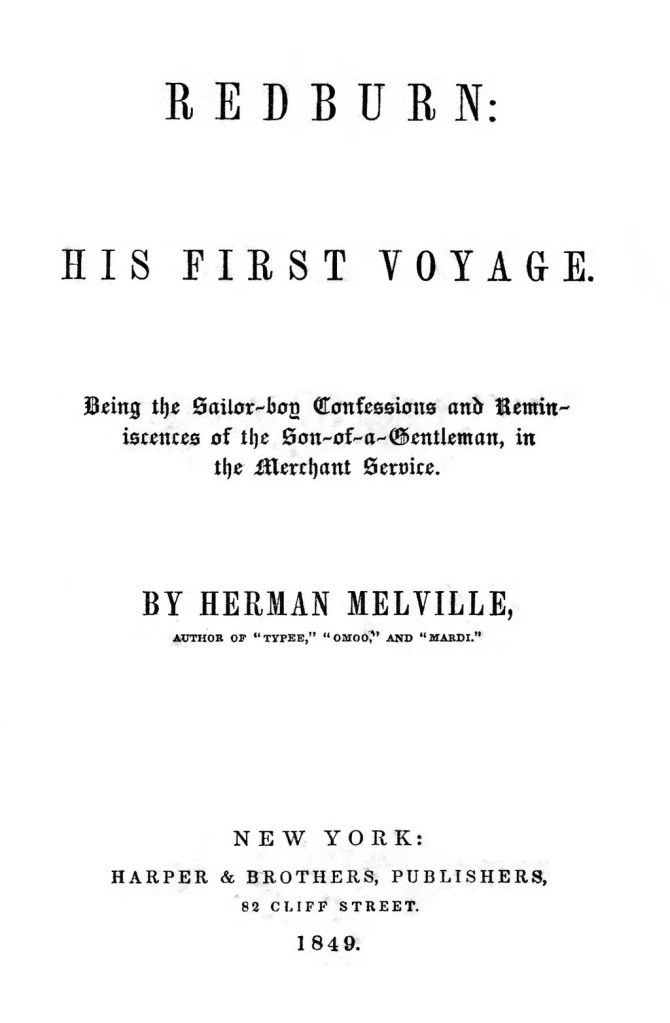
Then, I resolved despite having heard that it was a brutal slog, to read Moby-Dick, or The Whale. Contrary to rumor the novel proved endlessly entertaining and quite breezy despite its psychological depth and dense symbolism. I in fact had recently resolved to re-read it when I noticed Redburn, His First Voyage on the shelf and took it down on a whim. After a cursory skim of the first page I found myself fully engaged and could not put it down.
Redburn is a poor chap from a once wealthy and influential family. His father was a businessman engaged in international trade before the family went bankrupt, and young Redburn’s imagination was fired by journals and books about his father’s travels. As a result, he signed up as a novice sailor on a boat headed for Liverpool, and we accompany the young naif on his journey “there and back again.”
The cast of characters is large and each is ably portrayed with wit and charm. Redburn’s experiences are vividly and expertly recounted by Melville who of course was himself a similar young chap setting out on the sea at one point. I thought the book as good as anything by Dickens, in particular the scenes of squalor in Liverpool which brought to mind many pathetic and pitiable characters in the works of Charles D.
If you are considering testing the waters of Melville, but you are perhaps not ready for the full-on engagement of Moby-Dick, Redburn might be the place to start your voyage.
I made another trip down to the public events space in our building where most of my books are currently housed and pulled a half-dozen unread titles off the shelves. The book I intended to read first I placed on the coffee table, then went off to complete some errands and returned to find my wife 10 pages in and engrossed. So I grabbed another off the pile.
Exit Ghost is the last of Roth’s Zuckerman novels. Nathan has lost his mojo literally after a bout with prostate cancer. Impotent and incontinent, he has retreated to the Berkshires and lived in isolation for 11 years–part of this history was recounted in The Human Stain. While living in his cabin by a swampy pond Zuckerman has focused entirely on his work and further cemented his reputation as a literary master. He doesn’t watch the news, doesn’t read the paper, doesn’t use the internet–he’s become completely detached from the world. But the promise of a medical procedure which might fix his urinary incontinence draws him back to the New York he’d abandoned. A chance encounter with a woman he knew briefly decades before, compounded by the mistake of buying the current New York Review of Books and seeing an intriguing advert in the the Classifieds section threatens to involve Zuckerman in a literary controversy involving his favorite writer. After more than a decade out of the game, Zuckerman finds himself unwillingly pulled back into an imbroglio.
Like Ishiguro’s The Buried Giant, Exit Ghost is an exploration of history and memory. What should be recorded for posterity, and what can remain unsaid and unmemorialized? Who is a reliable recorder of events? How fallable exactly is memory and how biased? And as one ages, these questions become more immediate and profound.
Nathan Zuckerman of course served as the fictional alter-ego to Roth through several novels across several decades. The early works were full of intense and zesty voice and delighted in experience and the savors of life. The later works develop in craft and profundity and seriousness and serve as powerful documents and indictments of various eras in US political and cultural history.
Exit Ghost is not Roth at the height of his powers. He is putting to rest and tying up the world his alter-ego inhabits, and giving us a glimpse of his own writerly process along the way, as Zuckerman notes his own rapidly failing memory and tries desperately to record his conversations and then to create fictional dialogues using them. An author renowned for his breathless writing about sex and desire finds himself droopily noodling around young women he can no longer seduce because of his age and decaying physique.
I enjoyed the novel a great deal mostly because I could see a lot of myself in its pages. I’ve stopped reading news almost entirely after a life devoted to being informed. I’ve become cantankerous about the internet and social media and refuse to use AI programs (though I’m aware AI is now powering and manipulating other platforms I’ve used for years). I live in an old factory in a rural area and hope to have time at some point to do more reading and writing and serious study. After decades of glorious city living I find cities exhausting for more than a day or two, and prefer a quiet sedate life to the continuous glamor of going out multiple times a week. Hopefully I avoid the other problems Zuckerman experiences, but as my mother says when I tell her about knee or neck or back problems: “All of that just gets worse.”
Another enjoyable aspect of the novel is to read Zuckerman/Roth thinking about writers who were important: Dostoevsky, Hardy, the Bronte sisters, Conrad, Plimpton, Mailer. Zuckerman and some older characters bemoan the state of the world for mercilessly finding fault with Faulkner and Hemingway and banishing their work from the canon for personal failings. Young characters are keen to find those faults in previous generations and expose their sins. Zuckerman exits an exasperated ghost indeed.
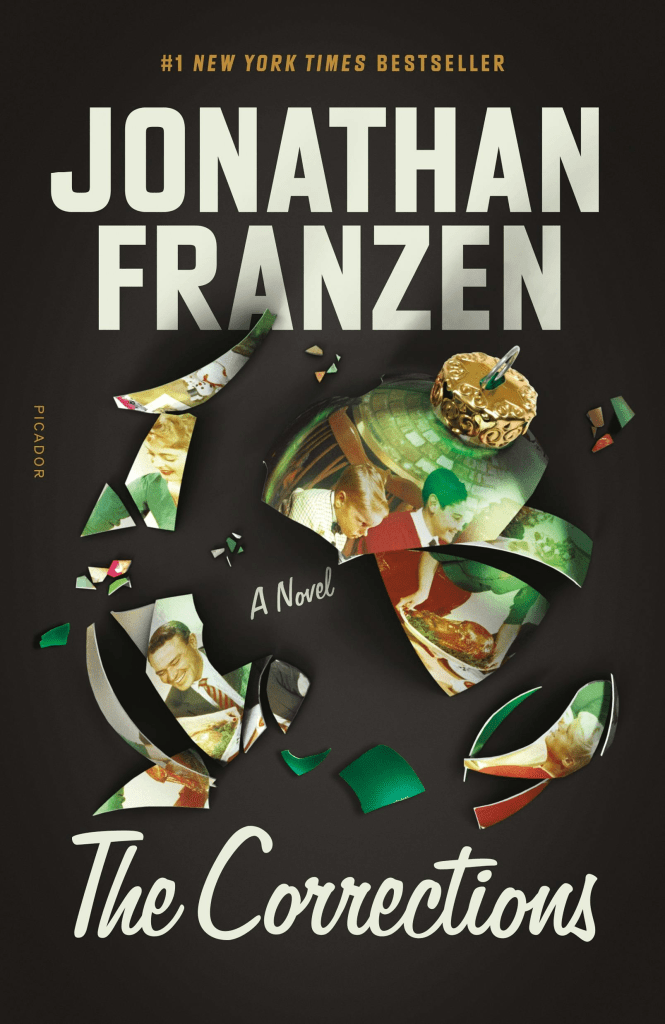
Here’s another novel from the recent NY Times List of “Greatest Books of the 21st Century.” It’s almost 600 pages long, and, given how weighty and dense and serious it is as a work of fiction I was surprised to find the writing quite breezy. I laughed heartily several times and regretted my decision 20-odd years ago to classify Jonathan Franzen as merely one of a crop of young writers at the time whose voices and themes and styles all seemed indistinguishable to me: Safran-Foer, Lethem, Chabon, Schteyngart, etc. I thoroughly enjoyed The Corrections.
I must however admit that the family at the center of the novel is deeply troubling. Most of the characters are eminently likeable and relatable–I found much in the family interactions which was all-too-familiar from my own experiences. And yet every character does hateful, despicable, awful things. Again, pretty typical of my experience not only of my own family but also of others I know well. This is where the sophistication of the book lies: documenting a time period in US/world history via the lives of a single midwestern family teetering on the brink of total and utter disarray and giving us a full picture of why across three generations. Franzen’s book shows us lovable people who we want to care for despite how truly terribly they behave–and given where American society has gone since its publication there is a bit of prescience in his vision. The entire nation these days feels like a dysfunctional family full of badly behaving people who are at heart decent and reasonable but whose unpredictable, selfish, and greedy behavior makes them despicable.
This morning I read an essay by Wallace Shawn in the NY Review of Books. The essay, called The End of a Village, will serve as the introduction to a newly re-issued book about the Vietnam War. Shawn was a college pal of the author Jonathan Schell, and manages to paint an evocative portrait of his friend and what he hoped to achieve through reporting on The Village of Ben Suc. Schell observed the complete and utter destruction of a peasant village by US forces, and tried to portray both the victims of this assault and the perpetrators with as much objectivity as he could muster. Having just finished The Corrections, I was struck when Shawn wrote this about Schell: “He generally seemed to like the military men he encountered. It’s just that what they were doing was appalling.”
This of course leads us to Hannah Arendt in The New Yorker 50-some years ago and her “banality of evil” (Wallace Shawn’s dad was managing editor of The New Yorker at the time). Shawn makes the connection, stating “If one accepts the idea that the ugliest of crimes can by perpetrated by people who aren’t ugly criminals, then the possibility seems to arise that even reasonably nice people might be at times involved in evil.”
The characters in The Corrections do horrible things as their family dangles by a frayed thread over the abyss of the 21st century. But at different parts of the novel, told from their different perspectives, I found myself rooting for each of them and caring deeply about their situations despite the decisions they made. And if individuals can do horrible things despite being “good” people, then so of course can societies and nations.
So we all make poor decisions and we all allow questionable motivations to drive us now and again. But how do we fix things after? When we go catastrophically awry and cause catastrophe, what is the means of repair? The word corrections has a lush ambiguity because the word has so many applications. A teacher corrects her student’s work. Parents correct their children (well, ideally). Some behavior is considered correct, and society drills us in the niceties of acceptable interactions. A captain who discovers her ship is off course will make corrections, a market which is overheated will face an inevitable correction. All of these senses of the word have a similar basis but different nuances. Every generation goes through a reaction to what was considered correct by the previous, now aging members of a family or civilization. So what is correct can be in flux, and those doing the correcting can be wrong or misled or mal-informed. When everything is called into question, when religion, government, the media, when public institutions previously held in high regard, when family itself all face skeptical and factual analysis and are thereby doubted and eventually shorn of their importance, and when much of the traditional underpinnings of a society and its very history are demonstrated as false and hypocritical, what is left? Where can we turn for guidance and support? How do we rebuild? I guess we’ll find out together.
Way back in the day–early ’90s–I was earning my first master’s degree at Temple U. Ostensibly a creative writing program, Temple also required some rather rigorous literary work. There was, for example, an enormous list of “books you should read before your 2 years here is up.” On that list were three books by Coetzee: Disgrace, The Life & Times of Michael K, and Waiting for the Barbarians. I was floored by these novels, how simple and elegant they seemed, but there was so much artful architecture supporting and obscuring dense layers of meaning. One of the courses I took assigned Coetzee alongside the short fiction of Nadime Gordimer.
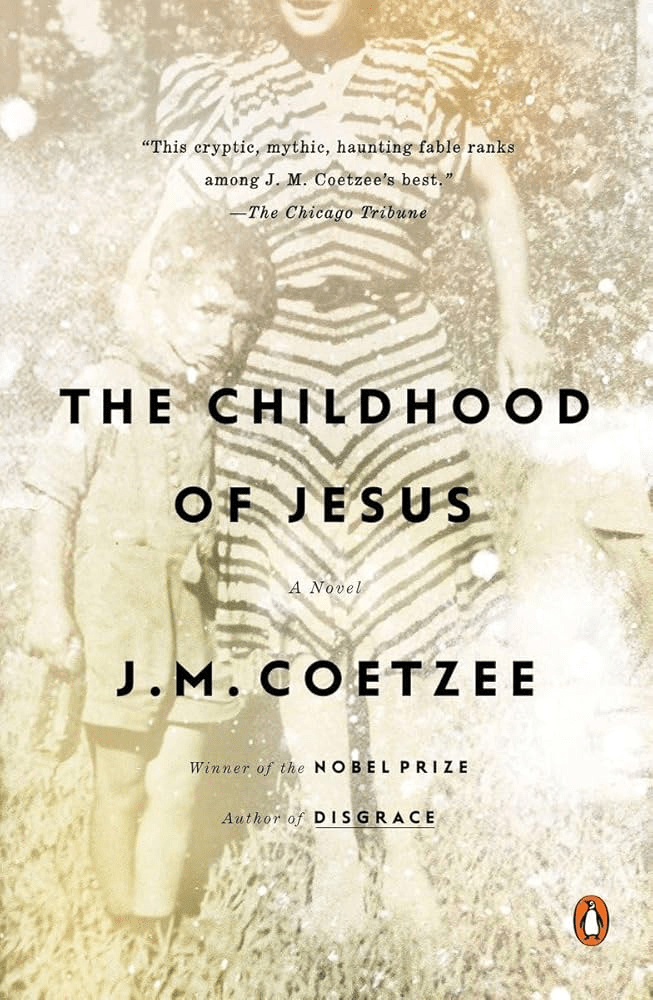
And then, for more than 30 years, I kept my eye on Coetzee and often thought I should pick up something again–I even bought a couple of his novels and put them on the shelf. I think I bought The Childhood of Jesus more than 6 years ago before I finally read it. It was worth the wait.
When I had writerly aspirations as a youth and I’d get stuck in the glue trap of writer’s block, I’d think of a myth or fable or religious story I’d learned as a kid and re-tell it in a different time and setting. Coetzee’s novel reminded me of that useful trick as it retells the story of Christ’s early years but with migrants entering an unnamed Latin country to start a new life. The child David is of uncertain heritage and receives the name David from authorities in his new home. He is guarded by Simon, who took care of David after he lost a letter explaining his presence on a passenger boat, and who resolves to find David’s mother in their new land. Later on other familiar characters emerge but with different names: Ines is the virgin mother, Juan is the Baptist, Magdalene and Anne and other saints and apostles emerge, drop hints about their roles, and disappear.
David speaks and writes his own language, has his own ideas about how the world should work, and struggles with authority and limits on freedom. He learns to read from a child’s version of Don Quixote’s adventures, and cannot abide the idea that Quixote’s story is only in Quixote’s head, and that others around him see the same events in different and more mundane ways. He has mystical visions about numbers and their true meaning and sees people as tiny insects trying to be visible to him as he soars above the world. There are hints that Coetzee wants to underline the merging of early Christian thought and Greek philosophy and the knowledge and symbology of esoteric wisdom schools (for example, a Micky Mouse cartoon features Plato instead of Pluto as Micky’s canine companion). David’s revolutionary pedigree is underlined by his own dog’s name: Bolivar.
The expectations of the society in which David finds himself are too constraining and when the authorities determine he should be placed in a reform school the family of David flee to start a new life.
I enjoyed it so much that now I’m bound to read the rest of the Trilogy (or is it a Trinity?). Of course, it may take me another 30 years to get to the next volume.
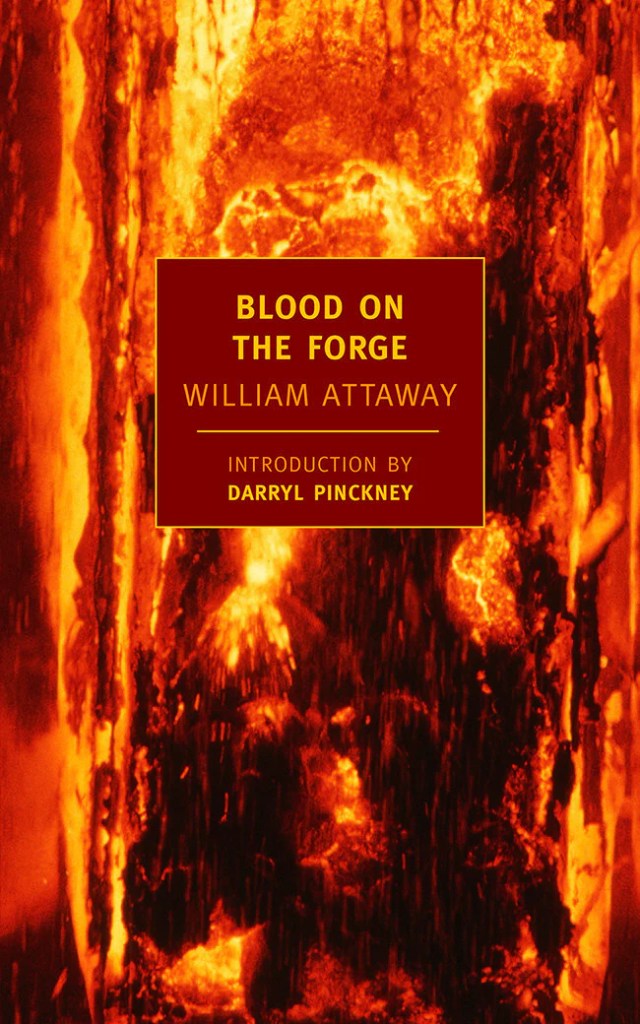
Sometimes going through my own bookcases is like browsing a great used bookshop, and a volume pops out that I didn’t even know I’d purchased. Ironically, William Attaway’s Blood on the Forge was a book I was searching for several years ago without knowing it and I had it all along.
When I was a teacher in Baltimore City Public Schools I was imagining a Great Migration unit starting with an image exploration and analysis using Jacob Lawrence’s Migration series as a starter. It was a fave tactic of mine to start units with images and to teach kids how to make inferences, ask deep questions, interpret, connect to previous knowledge, make predictions, etc before even learning about the topic of the unit. I never wrote that unit, however, because the Lewis Museum in Baltimore had a show of Jacob Lawrence which included works featuring Toussaint L’Ouverture and John Brown and Frederick Douglass and Harriet Tubman. After seeing that show, because I already taught units about Brown and Douglass, I took the Jacob Lawrence idea and tacked it onto those units.
Another reason I decided not to create the Great Migration unit was because I didn’t have a meaty novel-length text to use. And yet I did have the perfect one–and didn’t realize it until I lived in rural France in the 2nd year of not being a teacher. Oh well. There is probably a bit too much prostitution in the novel for 8th graders anyhow!
William Attaway is unfortunately not well-known, though he had a profound cultural impact. Until I read his novel and its fine introduction by Darryl Pinckney I was unaware that Attaway wrote the “Banana Boat Song” for his friend Harry Belafonte. He also influenced Richard Wright and Ralph Ellison, who both knew him and read this searing white-hot novel. (Side note: Darryl Pinckney has a fine article in the current NYRB about the Harlem Renaissance, and Attaway was apparently an indifferent and bored school student until he read a poem by Langston Hughes and found out that Hughes was Black, at which point he devoted himself to writing).
So, Blood on the Forge–talk about going forth and forging in the smithy of his soul the uncreated conscience of his race! This is an incredibly vital document of an important era in US history, the great movement of Black laborers from the South to Northern cities as the industrial revolution took off. Attaway, who was a middle-class son of a teacher and doctor who himself migrated as a child from Mississippi to Chicago, weaves in all the complex societal strands into a short elegant and harrowing story. You’ve got urban/rural, White/Black (Slav/Irish), union/scab, capitalist/socialist, agrarian/industrial, modern/traditional. There is enormous violence and powerful interests interfere in everything to protect what they regard as theirs, and the fates of three sharecropper brothers who are recruited and taken north to Pennsylvania to the steel mills herald prophetically the racial and class tensions to come. HIGHLY recommended.




 Mysterium Coniunctionis