
The Book of Ebenezer Le Page

The town where I grew up in the 1970s was still, in many ways, actually in the 1950s. In Stewartstown, PA The Beatles were long-haired hippy freaks who hated Jesus, anyone to the left of Barry Goldwater was a Communist, and guys still hung out in their denim overalls by a potbelly stove in the feed store. My grandfather, who was almost totally bald, walked two blocks to the barber’s to get his “ears lowered” and hung out with the gents there for a couple hours. Our neighbor one house south of us on Main St was Mrs. Hersey.

Mrs. Hersey wore dark blue or black dresses which covered all the way to her neck, to her wrists, and to her ankles. The dresses were finely made and very austere, but there was elaborate white lace at the neck and on the sleeves. She also covered her hair in the traditional manner of churchwomen in that region at the time when she was outside or when she was hosting company. She would summon me to the fence between our yards when I was four or five years old. “Master Godfrey how do you fare today?” She always referred to me as “Master” followed by my last name, and addressed Christmas cards to me in the same manner (I think I still have one of those). After a bit of conversation she would hand me a small paper bag of chestnuts.

Mrs. Hersey didn’t have a living room like everyone else, she had a parlor. But the parlor to my at the time little mind just seemed like an old-timey living room. There were glass oil lamps with globes and wicks which had been converted to electric lamps. The glass was infused with different colors like mauve or mint green, often swirled with white foamy glass and sparkle flakes. Her parlor reminded me of the interiors in old western movies. There were doilies under everything: hard candy dish full of root beer barrels, the lamps, family pictures. And every table was covered with a cloth to boot, as were the chairs, which also had lace at the top and on the arms.

In Stewartstown I had the freedom to go anywhere unsupervised, and my friends and I did so. Favorite haunt was the old town cemetery directly behind our house, but we roamed widely and often for hours at a time without adults or elder siblings. We had this freedom because of the old ladies in town, who knew everyone and everyone’s brood and everyone’s business. From their front porches and from chairs hidden behind front window curtains they somehow divined all the latest gossip. But the old ladies kept an eye on us, took us in when we tumbled by on the sidewalk, came out with Band-Aids when someone fell, and in certain circumstances might deliver a stern lecture, a warning to call our moms, and occasionally, dealt us a smack.

I used to love visiting with the old ladies. They were all born around the turn of the 20th century and had seen so much–imagine they’d all had horses and horse carts when they were teenagers? They told wonderful stories and told me about my grandparents and father when they were all young people. When my parents got divorced and my mom and sister and I moved in with my maternal grandparents in a different small Pennsylvania town, I continued the tradition of visiting old ladies. My grandma would give me a sack of veggies from her garden and say “Take this up to old Mrs. Kent and tell her $1.20 please.” I’d tie the plastic bag to my bike handlebars and ride off. Mrs. Kent had more hair on her chin than on top of her head, and wore simple house dresses with a full body apron as she sat in her rocker and told me about the photos on her tables, or about her knick-knacks, or about that one time she got a train to Baltimore, or about her long-gone husband. Then she’d give me some shoefly pie and $1.20 in coins to take back with me.

All of this as prologue to show I’ve often delighted in the company of old people, and truly treasure my opportunities to do so when I was a very young lad. And this novel by G. B. Edwards reminded me so much of my visits with old folk back in the 1970s and early 1980s that I felt a profound nostalgia, despite never having been to Guernsey Island.

The Book of Ebenezer Le Page came to my attention recently as I was scanning my bookshelves and planning future reads. I’d read a couple articles lately about Guernsey Island and some controversies about its time under German occupation and what exactly happened in the labor camps there. I picked it up to read as a secondary novel (I typically have a primary novel and a secondary going at the same time (and also a primary non-fiction and fiction going at the same time (and routinely a primary novel in French as well))) and with regular 6-8 page chapters finished it off in a couple months.

What a pleasant and interesting old chap Ebenezer Le Page turned out to be. And what a lens through which to see the changes in an island culture over the early 2/3rds of the 20th century. Ebenezer of course is not an old man throughout the novel, but the novel is told by old Ebenezer who is writing his memoirs. If you are a fan of plot and excitement, this is not a novel for you. If you like to visit old folk and set a piece and hear what they have to say–you may well enjoy this book. I particularly enjoyed Ebenezer’s run-ins with Liza and actually laughed out loud reading them. But we get his entire life story and his interactions with friends and family as the island where he lives moves from the 19th century and into the 20th and through the world wars.

Surprisingly, there are gay characters in the book and it’s interesting to note Ebenezer’s mindset and reactions to them. And Ebenezer remembers some details of the Nazi occupation of Guernsey which continue to be controversial. I particularly enjoyed learning about the patois of the island with its mixture of French and English cultures and languages. There is a useful dictionary in the back!

I was genuinely sad to reach the end of this novel–that rarely happens in life, even when you read a lot of great stuff.

Tongue Tied

Photo by Skylar Kang on Pexels.com

After 13 months in France my confidence with the spoken tongue has developed reasonably well. I try to push myself to read French daily, to read literary French and also news media French. But I should listen more to the radio and watch television and films in French because my ear needs work–sometimes I simply don’t hear things correctly, and I need much more facility with he idioms and also the shortcuts French speakers use, their means of simplifying and contracting and making musical the language.

Also–I need to speak French more regularly with locals. I do speak to clients often but these are formal and simple interactions, well-rehearsed host-client stuff, typically very basic. Occasionally a client will have more complex questions, or will venture into questions about my origins or accent or how we ended up in remote rural France from the USA, and I’ll get to push my French a bit. Often I end up in these situations trying to remember the subjunctive form of a verb and stalling out. Nobody cares, however, about the subjunctive and I should simply throw the verb out in any form because the sense will be understood and that’s what matters more than grammatical exactitude and precision. I need the confidence to say something incorrectly rather than the confidence to speak fluently.

I was outside last week speaking to a gite client from England and a small white van pulled over. The driver said something to my guest but he did not understand, and waved me over. There was a woman at the passenger window nearest me. The driver asked from over her shoulder “Is there a store in this town which sells paint and paint supplies?”

I replied, in French, “Yes, there is a store called Brico, and it is about 800 meters up the road on the left at the circle.” The driver of the van looked at me and was a bit confused. Then I realized he had asked the question in SPANISH, not French, so I replied in Spanish as best I could and he smiled and waved and drove off.

It was a weird experience to understand his question and how to answer but to have not realized which language it was. For a moment I was in that zone where instead of thinking about language and response I was simply doing it. But in the wrong tongue!

Recently I’ve caught myself mixing Spanish into French again. At a local flea market yesterday a French woman asked how I was doing (“tous va bien?”) and I replied “Muy bien,” which made her laugh. I’ve also been saying “y” instead of “et” for and regularly–not sure why!

The quest for speaking and listening fluency I suppose will last as long as I’m here. I want to learn some German or Italian also to make things worse.

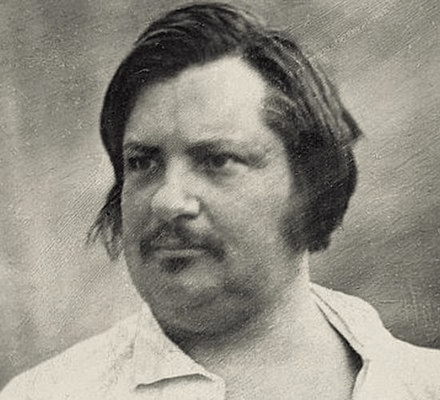
Balzac

Pere Goriot took a while. I started reading it over a year ago as we prepared to move from Panama to France. I felt I needed to brush up my language skills, and had never read a Balzac novel.

The French was challenging at first, and I took it slow, reading a few pages a day. Lots of detailed descriptions, often quite flowery, with unfamiliar adjectives and colloquial expressions. Also, the use of the literary past tense which is not typical in spoken French was a bit difficult at first–I’d forgotten some of those forms.

But the last 20% of the novel I blew through quickly. I think my confidence in French reached a level I’d not had in 20 years, and suddenly I could breeze through pages instead of struggling and looking up multiple words.

It’s strange that when I got my degree in French Lit we did not read Balzac. Pere Goriot is a true masterpiece, a document of Parisian culture, a portrait of class divisions and the morals and ethical complications individuals faced when trying to break into the life of the glittering upper crust, or trying desperately to remain there. It’s difficult to say much without spoiling it–but Rastignac certainly learns a great deal about himself and the woman he ‘loves’ (or at least needs in order to ascend in society).

I would like to continue reading the Comedie Humaine, but must be selective. Perhaps Illusions Perdus and a couple others? I’m at the stage of life where I have to decide carefully what reading I want to accomplish, and what I would like to reread. I likely have a couple decades left and I already have 30 years of books I would like to read or re-read, LOL. And trying to complete reading lists in French and English, while hopefully adding some Spanish into the mix–makes me wonder where I’ll find the time.

And speaking of searching for time, I’d like to tackle Proust in French, and fear that might take up more than I have left!

Living in Another Language

In the USA there is an unfortunately large group of people who are absolutely intolerant of anyone who speaks other than English. These people often get exasperated and even violent when they hear others speaking Spanish on the street, or when a shop or restaurant is playing the TV or radio in another tongue. Spanish of course was spoken in large areas of what is now the USA LONG before English…

But any American who has had the experience of living abroad in a place where English is not the primary language understands immediately how difficult and how taxing it is to become comfortable in another tongue.

We lived in Panama for four years. I never got my Spanish up to snuff while living there. We worked for an international school and all teaching and learning was required to happen in English, we gravitated socially to staff and expats who spoke English, we were in lockdown for almost an entire year during covid–there are lots of excuses I can make. On top of these reasons, the Spanish in Panama is quite ‘gummy’ and difficult for an untrained ear. Words are lopped off casually and crammed together. The pace is rapid but the articulation is laconic. It’s beautiful to listen to but challenging to comprehend. Nevertheless, I was able to navigate my way through basic conversations by the end, to feel confident in restaurants and shops, and I even got through a hospital admittance process when I had to get a hernia operation, totally in Spanish. But my Spanish remained at the level of an early elementary student’s.

When we travelled to Colombia or Mexico, however, I could comprehend the Spanish much more easily. Every consonant and syllable was carefully articulated. Riding in a hired car from Medellin to Guatape I had a 3-hour conversation with the driver. I noted his name was Alain which was not a Spanish but a French name, and he told me his mother was a fan of the French actor Alain Delon and his mysterious green eyes. I told Alain how much more easily I understood his Spanish than the Panamanian Spanish and he said ‘they speak that soft Caribbean Spanish over there.’ Others we encountered said that Panama was full of hicks and was regarded as the equivalent of Texas in Colombia, with its own peculiar language.

When we left Panama we flew directly to France and spent a couple nights in Toulouse to adjust to the time difference. French felt easy and after struggling for four years in Spanish I was immediately much more confident in a language I’d studied extensively as a young man. When we arrived at the house we were buying the owner had set it up so we could stay in the gite apartments for a couple days before settlement. He gave me long, detailed tours of the house and instructions about the systems and how things worked. Then, we went through the notary process and the purchase. I was surprised at how quickly French returned after 2 decades of under-use. But it was EXHAUSTING. I wasn’t thinking in French, I was translating in my head. I became so tired and frustrated after a few days that I wanted simply to sleep for a week.

But we had clients in one apartment the very first day–no rest for the weary!

I still have great difficulty listening to French radio or watching movies. I read much better than I hear! Subtitles for films are necessary but the colloquialisms and slang phrases are beyond my ken. I work on trying to improve daily by revisiting old text books I used before ( French for Reading currently is helping a lot). I also subscribe to and read a couple journals and try to go beyond the “quick tour” of apartments with clients and to engage in a bit of conversation with them. And: novels. Balzac you are killing me!

There are many people here in town who are native English speakers, most of whom have lived in France for more than a decade. The majority of them speak almost no French at all. An Australian friend who moved here last year got a phone call when we were out to dinner and immediately thrust his phone at me because the speaker was French–it was a real estate agent calling about a property he’d seen. When I handled this fairly simple phone transaction our Aussie mates thought I was some kind of wizard.

Most French people, even out here in the rural Correze, are quite patient with those who can’t speak French. I wish folks back home could be like that: don’t judge someone for not speaking your language. Be empathetic and compassionate with them. It’s really difficult to pick up another tongue. Try it and you’ll see.