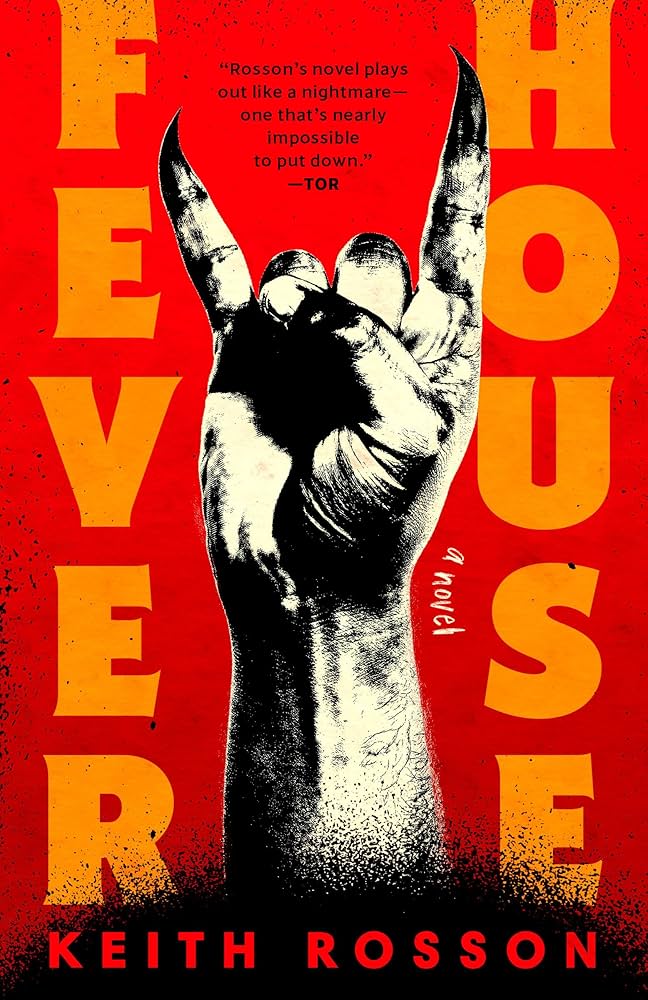
It was just over a year ago that I read Rosson’s Fever House. I really enjoyed that novel and the way it reformatted the familiar zombie apocalypse trope.
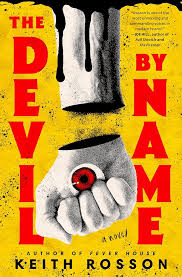
I’m sad to report however that volume 2 of the duology is less satisfying. The Devil by Name mostly moves characters around in order to get them in the right place at the right time for the climax. And the climax is sort of Clive Barker rewriting The Stand. Lots of gothic horror and special effects, but a bit rote and too tidy a means of tying up multiple loose ends.
If you read the Game of Thrones novels, you may recall that the fifth novel felt as though Mr. Martin had lost the plot, and was sort of moving an enormous cast of characters around aimlessly as he tried to figure out how to resolve the enormous series of events he’d unfolded, while introducing new characters, cultures, and armies along the way. I think a lack of resolution is in some cases better, and Fever House could have stood alone.
That said, I will read more of Keith Rosson. He’s got skills, and won the Shirley Jackson award for a short fiction collection which sounds right up my alley.
Back before Halloween I bumped into a list of recommended recent horror–probably on the NYTimes website. Of the 7 or 8 titles listed I chose a couple to add to my To Read pile.
The first I read from the list was barely OK. Too derivative of a Stephen King novel, and too many clichés from current horror movies (unnatural smiling, kids crawling on the ceiling, animals behaving strangely like humans–yawn). The writing lacked King’s folksy warmth and humor as well, and was more like Tom Clancy’s stiff and uninteresting prose. The characters were not atypical of genre fiction–types rather than people, and the dialogue reminded me of the old Superfriends cartoons popular when I was a kid, where the superheroes would explain what they were doing while doing it as if the audience were too stupid to see what was happening (example: Aquaman would have circles shooting out of his forehead and would intone “I’m using my powers to summon fish friends,” and Superman would have red beams coming out of his eyes while saying “I’m using my infrared heat vision to burn the villain’s shoes off.”). I read Mean Spirited on a flight from Paris to the US and it whiled away the time, but I prefer more profound fare. The ending had an unexpected twist which nearly made it worth getting through.
But the second I read from the list was a knock-out. I’ve seen many zombie films, and have been an enthusiastic fan of the genre since I fist saw Romero’s initial trilogy back in the day. What I like about zombie stuff is how the genre moved from its racist origins to really incisive and often quite witty social commentary.
Fever House is the first zombie novel I’ve read–and it is excellent. There are actual fleshed-out and fully developed human beings involved, and I was on the edge of my seat as the familiar tropes of the zombie apocalypse were delivered with a new and clever backstory. I’d love to go into detail about the novel’s critiques of the hypercapitalist USA and its intelligence apparatus and the military industrial complex, but inevitably I would spoil the experience of finding out for yourself.
Rosson can write–which is atypical of authors in modern horror. Ramsey Campbell is by far the most literary and stylish current writer in the genre, but Rosson can craft sentences and structure a novel at an exceptionally high level. This book is a Slayer album redone as literary fiction. I burned through it in a day and half, and now must give myself a break from the walking dead before jumping into the second volume of the duology.
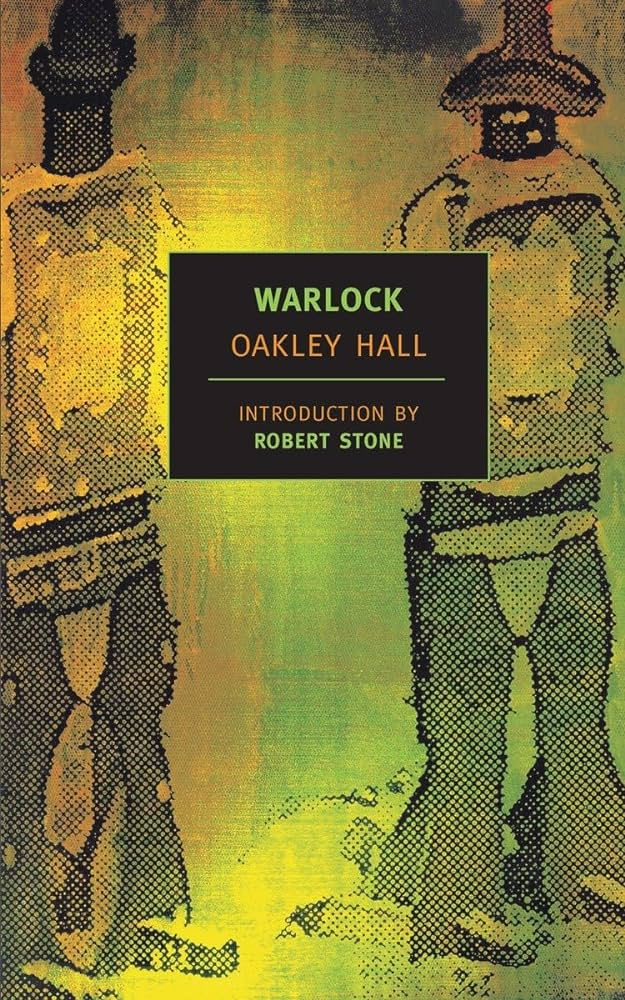
I adore the NYRB re-issues–high quality paperbacks with great cover design and kick-ass introductions
When it comes to fiction genres, I’ve got my faves. As a young dude those were horror, sci-fi, and fantasy. Over the years I drifted away from all of these only to check in now and again on the hot new thang. Occasionally I’ve dabbled in mystery/thriller stuff, but never have I been a reader of Westerns (unless one includes Cormac McCarthy in that category).
I bought a remaindered copy of Warlock probably 20 years back and only just pulled it down off the shelf. Glad I did, because it’s a banger! Like Clint Eastwood’s Unforgiven it’s a rather sophisticated deconstruction of the myths associated with the American West and gunslingers and cowboys. The hero of the story has a morally ambiguous past and when hired to be Marshall of Warlock struggles with the ethics of his situation. Is he a murderer for hire, or a representative of law and order? What is a government other than an agency dictating behavior via the threat extreme violence? Can citizens have a sense of peace and freedom without a killer to back up those ideals? How is a hired gun who kills to keep the peace different from a blackguard who kills to take money from a stagecoach?
The novel features some historical figures and also transposes mythic characters from the OK Corral into thinly disguised avatars. There are IWW prototypes working the mines and rebelling against brutal treatment, there are cross-border skirmishes between cattle rustlers in the US and Mexico, there are Apaches, there is the US Cavalry and a half-crazed senile general. Whores, saloon keepers, merchants, deputies, judges, and rugged outlaws eek out a living in a land where law is dictated by force and mob rule. There is the outlaw turned deputy who, like the hero, tries to do the right thing but cannot always navigate the complexities of the myriad relationships and power struggles. And there is revenge; a LOT of revenge.
The novel surprised me often by subverting standard genre tropes familiar from TV and film. The writing was elegant and Oakley Hall created engaging and multifaceted characters and situated them in an intricately detailed setting.
My one critique involves a love scene which descends into bodice-ripper cliché. But overall I thought Warlock was excellent and it pulled me inevitably to its satisfying conclusion. Thomas Pynchon called it one of America’s greatest novels–it’s certainly better than anything he wrote (excepting perhaps The Crying of Lot 49).

 Mysterium Coniunctionis