Notre Dame du Nil

Back when I was young and energetic I spent a couple decades working a full-time job, a part-time job, and going to university full-time. At some point in this burst of insanity I was working in the Cook Library at Towson University, while teaching in the English Department, and still working at Borders Books & Music, while pursuing a degree in French Literature and also taking courses necessary to become a public school teacher. At that time I’d already earned a Bachelor’s Degree and a Master’s Degree–but it was never enough, LOL.

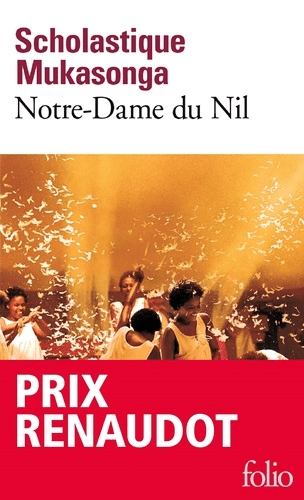
During that burst I took a really brilliant class with Dr. Lena Ampadu focused on literature in English coming out of post-colonial Africa, and also took a delicious class in French with Dr. Katia Sainson focused on postcolonial lit. So a couple decades later when an algorithm suggested Notre Dame du Nil on sale I purchased it while living in an oceanside apartment in a high-rise in Panama. I desperately wanted to improve my Spanish but also wanted to keep my French alive. Six years later I finally got around to reading it.

It was worth the wait. Ostensibly a memoir novel set in an all-girl’s school in Rwanda in the early 1970s, it is actually a densely layered critique of colonialism. Imagine Mean Girls if Franz Fanon dropped in as script advisor.

The French was not too difficult, and I needed to consult a dictionary only a few times each chapter. The characters are engaging and I found much of the novel quite interesting and at times hilarious. The girls at Notre Dame du Nil are all Rwandans who are being groomed for elite roles–they are daughters of wealthy merchant families, of diplomats, of government figures or military officers. Many come from small rural villages and of course “elite” grooming requires the learning of European languages, European traditions, European religion, European manners…The Europeans teaching in the school are hapless and ridiculous and deserve the mocking they receive. The Catholics in charge of the institution are just as bad. The school has as its setting one of the furthest away sources of the Nile river, hence the designation in the title. The bits about Rwandan culture, including a fascinating sequence when two students visit a rain-making shaman to purchase a love spell-were excellent. And the fishy Catholic priest in charge of the school who bestows nice garments on girls but only if they try them on in front of him? Classic.

One tangent of the plot involves a European man who lives on an old coffee plantation and has a bizarre theory that Tutsis are descended from Pharoahs–he abducts a student and then begins painting her and using her in a film he’s making. Another involves a visit to campus by the Queen of Belgium.

But the novel slowly simmers and builds a truly dark and disturbing undercurrent as the typical mean teen girl drama reveals roots deeply entwined in Hutu and Tutsi history, with absolutely catastrophic results. What at first seems like surly teen sniping eventually develops an undercurrent of tribal hatreds and it becomes clear that the parents of several students are encouraging the cataclysmic outcome. “It’s not lies, it’s politics,” says a ringleader who happens to be the daughter of the President of Rwanda. One student, who is half Tutsi and half Hutu, does her best to straddle two worlds and attempts to insinuate herself into the dominant group but redeems herself to a degree when the crisis comes.I shan’t say more to avoid spoilers.
La Place

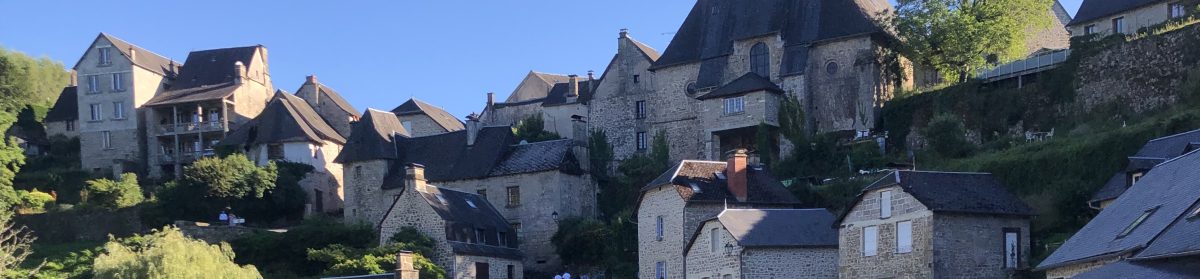
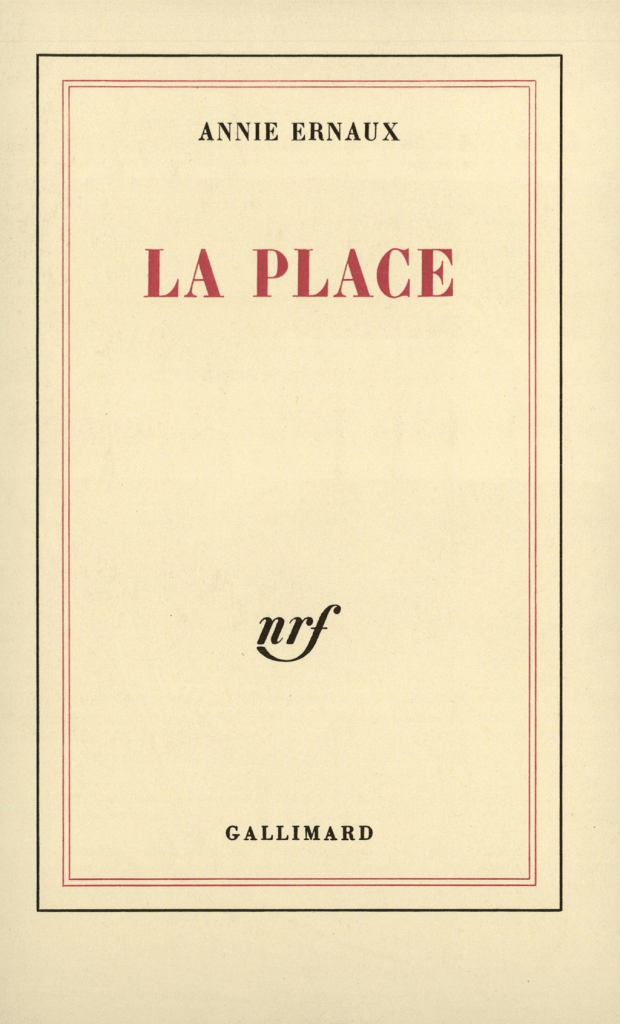
I’ve not been pushing myself to read French lately, and it is absolutely vital that I continue to work on the language so that I sound less like an adolescent speaking when I interact with locals here in the Correze and particularly with business clients who arrive from cities like Toulouse, Bourdeaux, and Lyon. When Ernaux won the Nobel Prize in 2022 I picked up a couple of her books, one of which was La Place.

Surprisingly the French is quite clear and simple-stylistically I’d compare Ernaux’s writing to Hemingway, with crisp, short declarative sentences. Technically La Place is a novel, but it is also a memoir or autobiographical novel, and her style is very objective and is comparable to Joan Didion’s dispassionate journalism. I was pleased to only need a dictionary a couple dozen times throughout, and mostly for colloquial phrases.

The idea for the novel arose when Ernaux was processing the death of her father, and focuses on him and her family in a small town in Normandy through WW2 and into the 1970s. Her father was raised working on a farm with a quite limited education and his parents were not literate. Through his hard work and survival of the war to working in a factory and rising through the ranks and eventually buying and running a small cafe/epicerie with his wife we can see how the family pulled itself up from poverty to a comfortable middle-class existence. Ernaux’s descriptions of her family’s sensitivity to class and how they tried to hide their rural hick upbringing in front of clients by changing their speech and feigning a more sophisticated vernacular were quite touching. Reflecting on the difficulties her parents faced and her father’s challenges in particular was obviously difficult for Ernaux but she never wavers from her stylistic choices to keep her emotions out of the prose. Sometimes what she describes or recounts make her involvement and her feelings evident, however–there are photographs she finds and events she narrates which are dense with the weight of emotional memory.

Ernaux’s father is never called by his name, only by “him” or “he.” He is adamant that Ernaux continue her education but at the same time he can’t resist pointing out that her life in books is not the real life he lives with his hands in the dirt of the garden or in the till of his business. He is however enormously proud of her accomplishments when she becomes a professor and moves away to start a family of her own. Ernaux winning the Nobel Prize is even more remarkable given the family history recounted here. I look forward to reading more of her work.

The Book of Ebenezer Le Page

The town where I grew up in the 1970s was still, in many ways, actually in the 1950s. In Stewartstown, PA The Beatles were long-haired hippy freaks who hated Jesus, anyone to the left of Barry Goldwater was a Communist, and guys still hung out in their denim overalls by a potbelly stove in the feed store. My grandfather, who was almost totally bald, walked two blocks to the barber’s to get his “ears lowered” and hung out with the gents there for a couple hours. Our neighbor one house south of us on Main St was Mrs. Hersey.

Mrs. Hersey wore dark blue or black dresses which covered all the way to her neck, to her wrists, and to her ankles. The dresses were finely made and very austere, but there was elaborate white lace at the neck and on the sleeves. She also covered her hair in the traditional manner of churchwomen in that region at the time when she was outside or when she was hosting company. She would summon me to the fence between our yards when I was four or five years old. “Master Godfrey how do you fare today?” She always referred to me as “Master” followed by my last name, and addressed Christmas cards to me in the same manner (I think I still have one of those). After a bit of conversation she would hand me a small paper bag of chestnuts.

Mrs. Hersey didn’t have a living room like everyone else, she had a parlor. But the parlor to my at the time little mind just seemed like an old-timey living room. There were glass oil lamps with globes and wicks which had been converted to electric lamps. The glass was infused with different colors like mauve or mint green, often swirled with white foamy glass and sparkle flakes. Her parlor reminded me of the interiors in old western movies. There were doilies under everything: hard candy dish full of root beer barrels, the lamps, family pictures. And every table was covered with a cloth to boot, as were the chairs, which also had lace at the top and on the arms.

In Stewartstown I had the freedom to go anywhere unsupervised, and my friends and I did so. Favorite haunt was the old town cemetery directly behind our house, but we roamed widely and often for hours at a time without adults or elder siblings. We had this freedom because of the old ladies in town, who knew everyone and everyone’s brood and everyone’s business. From their front porches and from chairs hidden behind front window curtains they somehow divined all the latest gossip. But the old ladies kept an eye on us, took us in when we tumbled by on the sidewalk, came out with Band-Aids when someone fell, and in certain circumstances might deliver a stern lecture, a warning to call our moms, and occasionally, dealt us a smack.

I used to love visiting with the old ladies. They were all born around the turn of the 20th century and had seen so much–imagine they’d all had horses and horse carts when they were teenagers? They told wonderful stories and told me about my grandparents and father when they were all young people. When my parents got divorced and my mom and sister and I moved in with my maternal grandparents in a different small Pennsylvania town, I continued the tradition of visiting old ladies. My grandma would give me a sack of veggies from her garden and say “Take this up to old Mrs. Kent and tell her $1.20 please.” I’d tie the plastic bag to my bike handlebars and ride off. Mrs. Kent had more hair on her chin than on top of her head, and wore simple house dresses with a full body apron as she sat in her rocker and told me about the photos on her tables, or about her knick-knacks, or about that one time she got a train to Baltimore, or about her long-gone husband. Then she’d give me some shoefly pie and $1.20 in coins to take back with me.

All of this as prologue to show I’ve often delighted in the company of old people, and truly treasure my opportunities to do so when I was a very young lad. And this novel by G. B. Edwards reminded me so much of my visits with old folk back in the 1970s and early 1980s that I felt a profound nostalgia, despite never having been to Guernsey Island.

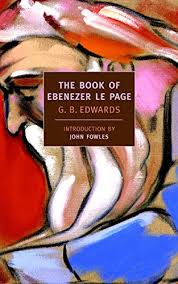
The Book of Ebenezer Le Page came to my attention recently as I was scanning my bookshelves and planning future reads. I’d read a couple articles lately about Guernsey Island and some controversies about its time under German occupation and what exactly happened in the labor camps there. I picked it up to read as a secondary novel (I typically have a primary novel and a secondary going at the same time (and also a primary non-fiction and fiction going at the same time (and routinely a primary novel in French as well))) and with regular 6-8 page chapters finished it off in a couple months.

What a pleasant and interesting old chap Ebenezer Le Page turned out to be. And what a lens through which to see the changes in an island culture over the early 2/3rds of the 20th century. Ebenezer of course is not an old man throughout the novel, but the novel is told by old Ebenezer who is writing his memoirs. If you are a fan of plot and excitement, this is not a novel for you. If you like to visit old folk and set a piece and hear what they have to say–you may well enjoy this book. I particularly enjoyed Ebenezer’s run-ins with Liza and actually laughed out loud reading them. But we get his entire life story and his interactions with friends and family as the island where he lives moves from the 19th century and into the 20th and through the world wars.

Surprisingly, there are gay characters in the book and it’s interesting to note Ebenezer’s mindset and reactions to them. And Ebenezer remembers some details of the Nazi occupation of Guernsey which continue to be controversial. I particularly enjoyed learning about the patois of the island with its mixture of French and English cultures and languages. There is a useful dictionary in the back!

I was genuinely sad to reach the end of this novel–that rarely happens in life, even when you read a lot of great stuff.

Recent Books

I’ve been lax about posting lately; things are chaotic and our schedules have been packed with events and tourist rentals and visitors and animal care, then we went to Spain for a few days. So here are some rapid-fire blurbs about books I’ve read lately.

Written in a charged “hair-on-fire” tone, They Knew by Sarah Kendzior will raise your hackles whether you agree with her or not. It’s a book about conspiracy theories which notes that conspiracy theories are quite often true but are labeled conspiracy theories to make them seem crazy or loony and unworthy of your attention. She provides many examples of actually true and demonstrable conspiracies which have been lampooned or ignored in the press, which is guilty of aiding and abetting a long-standing conspiracy by major corporations, billionaire oligarchs, and DC politicians and insiders to undercut the rule of law and drain the USA dry. When your own government has become a self-policing criminal enterprise, what remains to be done? She notes that January 6 was a surprise to no one, and there were warnings from many sectors about its imminence and possible success which were shrugged off by the mainstream media until members of Congress were hiding in locked closets from a rampaging mob of deranged people who had been misled by well-funded conspiracy theories hatched in propaganda labs as part of a vast and ongoing conspiracy to delude Americans. Read it and weep.


And, speaking of conspiracies…I’ve read and enjoyed a few novels by Nicholson Baker, including the hilarious and randy The Fermata, as well as his breathless Checkpoint, about a conspiracy theorist who is so frightened by the unreal realities of the George W. Bush presidency that he imagines assassinating the then president in all sorts of nutty and creative ways. But this book is not a novel; Baseless delves deeply into the idea that the United States recruited Nazi and Japanese war criminals who helped develop biological weapons which were secretly used against North Korea, and that the intelligence agencies have hidden this history away in classified documents which are rapidly disappearing. Baker shares his frustration with the CIA’s often total disregard of Freedom of Information Act requirements, and he documents documents which have disappeared from their folders and which are redacted to the point of complete insensibility despite legal requirements that they be freely available. His conclusion is that the government is not protecting “sources or methods” but rather high crimes and misdemeanors. Like Sarah Kendzior, Baker notes that people in power and in the media scoffed absolutely at the idea that the USA would ever use dreadful weapons of this sort, and yet from his research and many testimonials it seems that the USA indeed did use them.

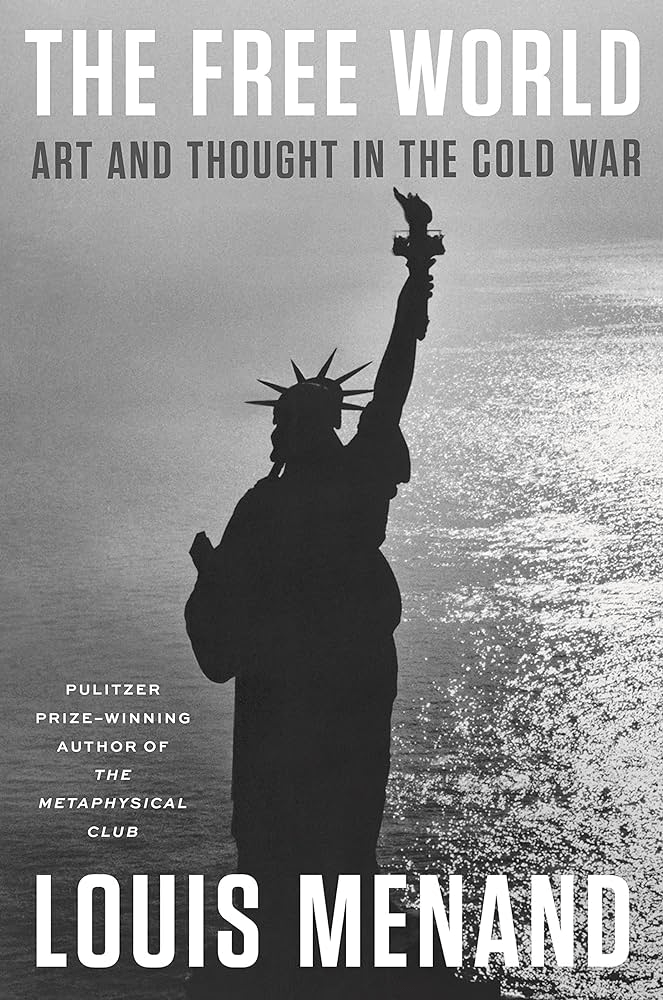
About 30 years ago I remember hosting a book signing and discussion with Mr. Menand at the Borders Books & Music just north of Baltimore in Towson. At the time he had published The Metaphysical Club, and though I never read that book I did attend the discussion. In The Free World, which I read periodically over a half-decade, Menand delves into intellectual, literary, critical, and artsy trends poinging back and forth across the Atlantic between Paris and New York during the height of the Cold War. There are chapters about popular music and trends in visual arts and art criticism, chapters about film, chapters about writers and editors. There are also some revelations about the CIA secretly funding publishers and certain writers and intellectuals and even founding journals, which Menand shrugs off as no big deal, because the Soviets also funded such stuff. But, I’d respond: the West always claimed to be a free marketplace of ideas, not a marketplace where some ideas received covert funding to place them in the forefront of mainstream media coverage and public discussion. Menand shrugs off US interference in elections in France and Italy as part of the game, and his take on Vietnam seems a bit shallow. But I rate this book highly nonetheless as an interesting examination of creative and intellectual trends at a time when many people thought we were going to blow ourselves up.

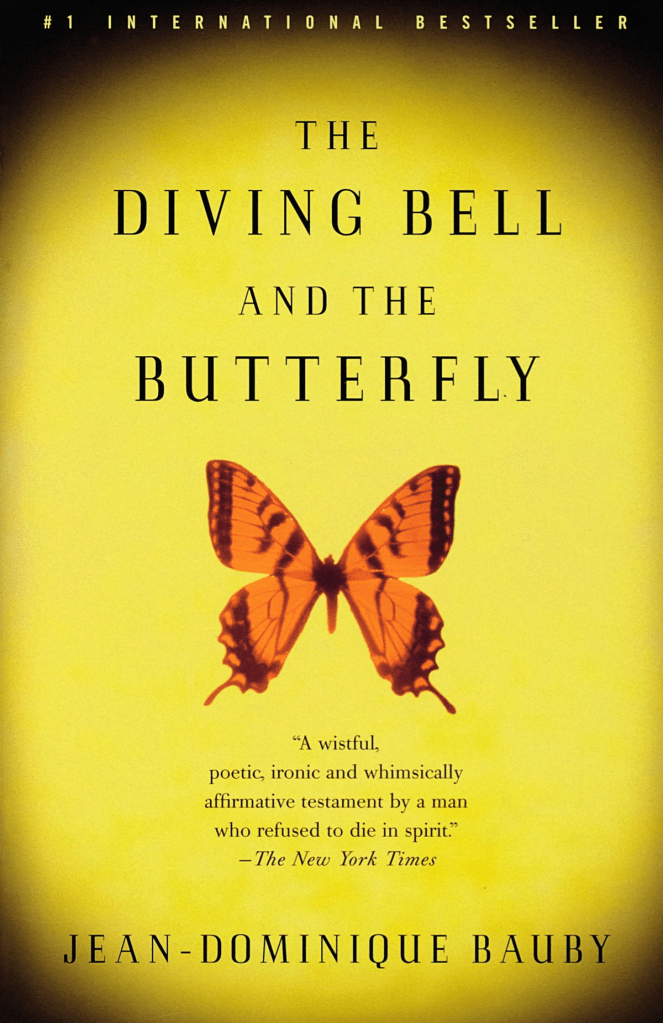
Beautiful, tender, deeply melancholic, and yet also surprisingly funny at times. What happened to Mr. Bauby was simply awful. How he processed his tragedy in this short elegant book, written by blinking his eye a letter at a time as he lay paralyzed in a hospital bed, deserves our awe.

To A Mountain in Tibet

A friend kindly leant me this. I often refuse to borrow books because I like to read my own copy and put it on a bookshelf for decades after. But I’d read and really enjoyed Shadow of the Silk Road, and I’m a (very) small business owner trying to live more frugally than when I was a lavishly funded public school teacher in the USA (LOL). So I accepted it (and three other excellent books she kindly offered).

Ostensibly, this is a travel book, and it does indeed recount a truly remarkable voyage to a particularly special and demanding destination. But this is actually a book about grief, and it’s the best book about grief I’ve read since Joan Didion’s The Year of Magical Thinking. Though the family members grieved by Thubron are present for less than 10 pages of the 220 in the book, they haunt its passages about Nepal and Tibet like the dakini spirits he describes.

Of course there is no better country than Tibet in which to devote a mournful pilgrimage and to explore loss and impermanence. Turbron describes the destruction by artillery of several ancient monasteries and the smashing of others by hand during the Cultural Revolution. He meets many people who have their own griefs about family and displacement and the Himalayas become a resonator for sorrow. Many practitioners of Tibetan Buddhism have been displaced by state terror or official exile. And yet the Hindu and Bon and Buddhist pilgrims still come and do their circuits of Mount Kailas. Thurbron does his as well, but finds little comfort in the astonishing myth-enshrouded terrain, birthplace of the Earth and abode of the gods and demons for several religions.