It’s autumn and a young man’s fancy turns to…well I’m too old to remember what young men fancy at any time of year. But I fancy reading horror and ghost stories as Halloween looms.
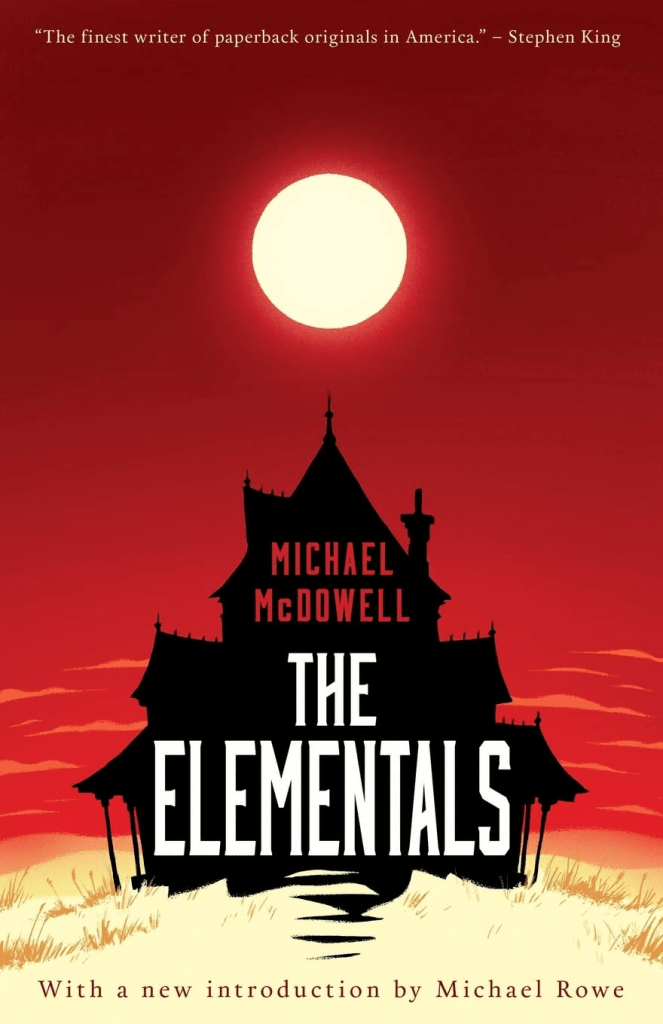
The Elementals is surprisingly well-crafted for an early ’80s mass market horror novel. It’s got a Southern Gothic flair, and without its supernatural elements the book could have succeeded as pop fiction with a literary bent. The families portrayed are Faulknerian, and the individual characters are Flannery O’Connor cute with their humorous quirks and tragic blindnesses. The setting is vivid and swampy and humid, rendered with evocative and stylish description.
The horror however is a bit silly, and didn’t ring true. I prefer subtlety with my haunts and spirits, and the chills here are far too garish and carnivalesque. It’s annoying to see well-rounded and sympathetic characters who do obviously stupid and pointless things contrary to who they are when faced with a crisis. And there is no suspension of disbelief possible with this sort of cartoonish creature. Using a scale likely familiar to those who know Stephen King novels, I’d rate The Elementals as closer in quality to The Tommyknockers than it is to The Dead Zone. But I must also note that McDowell’s prose is superior to King’s.
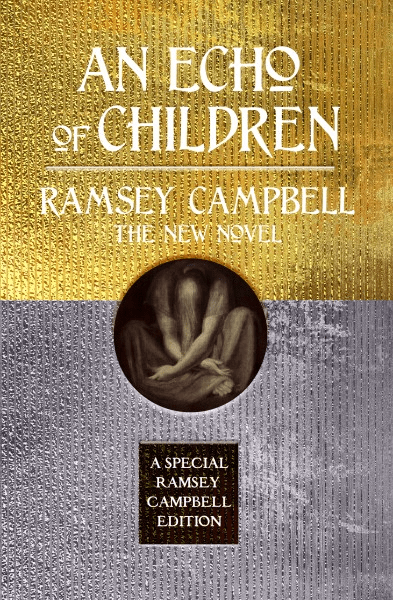
An Echo of Children has similarites with The Elementals, though they were written 45 years apart. Ramsey Campbell’s latest is also primarily a novel about a family in crisis, and its one of his best from the past two decades. Campbell is a personal favorite of mine, but many of the novels from the second half of his career have been interesting failures. I found this one compellkng enough to read nearly straight through.
Allan and Coral Clarendon move with their young son Dean from a crime-ridden neighborhood into a brand new house near the shore. Once they are installed in the new place, both sets of Dean’s grandparents arrive to visit for a weekend. Allan’s parents Jude and Thom note that Dean’s creativity and freedom is severely constrained in ways they find objectionable as parents and former teachers. Dean has an “imaginary” friend called Heady who promises to protect Dean from harm. All four grandparents are charmed by Dean and his friend until Jude and Thom experience Heady’s presence first-hand.
After a few interections with neighbors, a memory Thom has repressed returns, leading Jude to do some internet research. What Jude finds out about the neighborhood’s history, and in particular about Allan and Coral’s house, convinces her that Dean is in immediate danger. There is evidence that Carol and Allan are perhaps doing more than limiting Dean’s potential with helicopter parenting, and have strayed into psychological and physical abuse. They have pulled him from school and begin indoctrinating him with a dour form of Christianity which they’d never followed before. Jude commits herself to rescuing her young grandson, but is what she’s uncovered the truth? Or is her paranoid imagination coupled with senility the source of the horror?
Campbell is a fine writer and perhaps the greatest prose stylist in modern horror. He has the skills to keep the reader on edge as Jude’s potential unreliability competes with the possibility of an actual haunting in the reader’s mind. This one was more to my taste.
 Mysterium Coniunctionis