Cities of the Red Night

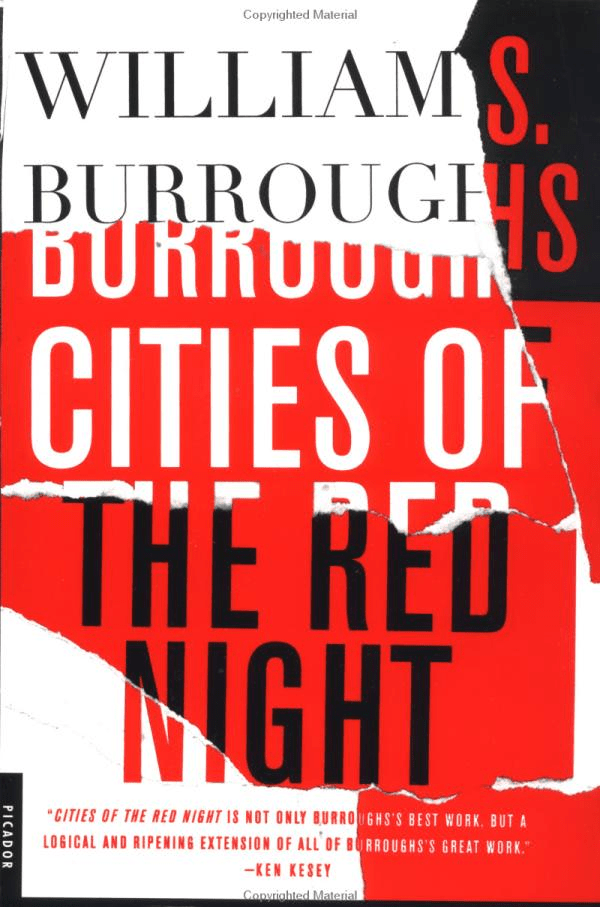
I’ve read a handful of Burroughs novels and also Casey Rae’s entertaining and informative William S. Burroughs and the Cult of Rock ‘n Roll. I think this is easily my favorite novel by the Beat icon. It is ridiculous, absurd, wholly pointless, unrepentently filthy, and a great deal of fun.

In Casey Rae’s examination of Burroughs I learned about his “cut-up” method of creation, splicing and collaging multiple texts and ideas together from disparate sources to forge something new. Cities of the Red Night samples deep cuts from across the 20th century: we get Crowley sex magic, pulp noir and sci-fi and horror, Mexican archaeology, chasms of time and ancient gods and civilizations borrowed from H.P. Lovecraft, political chicanary and revolutionary rhetoric, lots of guns and cannons and far-out weaponry, drugs, viruses, and oodles of hot gay sex featuring an asphyxiation fetish.

What is the novel about? Well, there is a doctor fighting a viral outbreak, and then a private dick investigating the disappearance of a young lad whose head ends up in a crate bound for Peru, a pirate revolution in Colombia and Panama, a war between humans and mutants in ancient vanished cities, conspiring conspirators doing conspiracies…it’s about so much it’s practically about nothing. Some of the characters shift from modern era New York to thousands of years ago and then to the jungles of 18th century South America before suddenly getting onto a starship in the distant future. At one point a main character wakes up in a rehab clinic and it appears the entire novel was a hallucination; but it might actually be that he could access actual reality in his comatose state and he’s only waking up into the shared illusion we call reality.

I mean it doesn’t matter what it means or if it means anything at all. Enjoy the ride!

I will note that I’ve likely read a couple thousand novels, and that this one has more ejaculations than all of the other novels I’ve read combined. And that includes a couple long books by the Marquis de Sade, so it’s an impressive number of money shots. So the novel could perhaps be classed as a sort of cartoonish pornography. Keep that in mind if you choose to read it.

The Rector of Justin

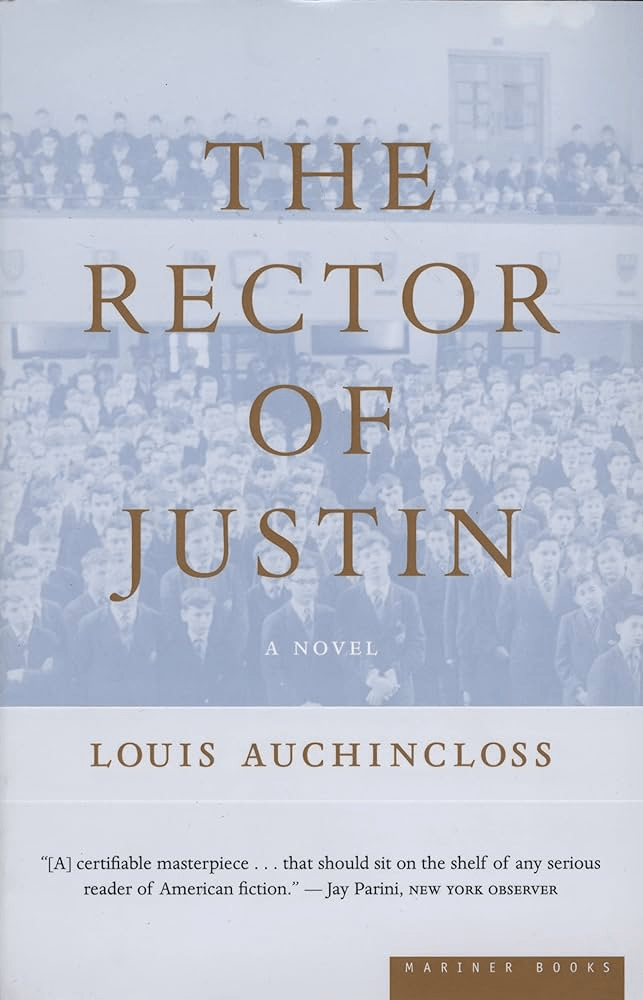
Brian Aspinwall becomes at age 27 a teacher at a prestigious private boys’ school in New England. He is recruited suddenly in 1939 to fill in for a master who has gone off to Canada to enlist in the RAF. It is primarily through Brian’s diary that we learn about the school Justin Martyr and its famous founder Reverend Francis Prescott. Immediately Aspinwall is awestruck by Prescott and comes to admire him and his accomplishments. He seeks to understand what makes Prescott and his world-class upper crust school tick, and The Rector of Justin takes off.

Aspinwall seems surprised to learn that Prescott is an intellectual and a progressive given the focus on sports, strict discipline, and religious tradition at the school. But many more surprises await. As the novel unspools we learn from other sources who come into Aspinwall’s orbit. Eventually Aspinwall is given files and documents by others and he takes on the task of possibly writing Prescott’s biography.

The book is breezy and warmly inviting, despite its substantial and ethically weighty themes. I found it an absolute pleasure. The characters are all interesting, and in particular the Rector himself. There are hints that Justin Martyr was founded out of some dark repressed desires. The WASP identity of the school proves problematic later on as Prescott has an epiphany about the kind of people running the board at his school, and the true values of the wealthy and influential class who send their kids to Justin Martyr. I could in fact trace many of the concerns Reverend Prescott has about his students and their morals down to the ethical catastrophe in current US politics.

Because the novel is from the 60s but set in the 30s and 40s we get groovy stuff intellectuals were into at the time, like Freud. The novel is saturated by Henry James but is not as dense and soupy as The Master’s.

I’d previously read only one other novel by Auchincloss–The Book Class. I remember quite liking that one but nothing about it has stuck with me after 3 decades. I do recall that both novels were given to me by Dan Bouchard in a box of remainders in perhaps ’94? I still have one more book by Auchincloss on the shelf–a collection of short fiction. I look forward to it.

Sula

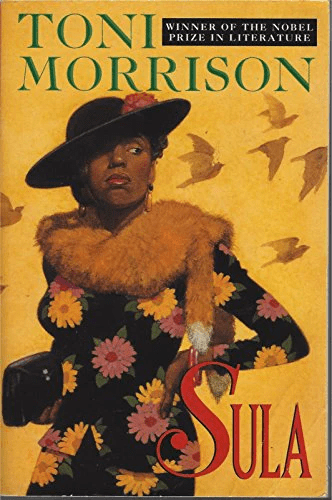
Sula is a magnificent read, a short novel but a richly realized world. We spend almost a century in Bottom, the Black neighborhood of Medallion, Ohio. Two families entwine in the narrative–one-legged Eva Peace serves as matriarch of one. She manages a thriving bungalow of sorts, a chaotic and haphazard structure akin to the Winchester House in complexity. There are family members, hangers-on, boarders, mountain people, addicts, crooks, working people and feral kids in the Peace home. Eva’s daughter Hannah raises her kids amidst the tumult. One of her kids is Sula.

The other family is Helene Wright’s–Helene was raised by her grandmother. Her mother was a prostitute in New Orleans and granny pulled her out of that drama and brought her up. Helene’s household is calm and organized and there is a sheen of middle class respectability. Her daughter Nel is raised in a tidy and peaceful environment and has adopted the virtues and social mores of the community.

Sula and Nel become best friends. Sula is adamant that she will never be bound in any way by the constraints of her community or its judgments and expectations. She will be free and her self will be unimpeded in its development and evolution by anyone or anything. Nel on the other hand is willing to tow the line and to do what’s right. They have a relationship where one is centripital and the other centrifugal, forces working together to flesh out a beautiful and adventurous childhood.

I recall a scene in Henry James’s The Turn of the Screw when well-mannered Flora is playing in the dirt and makes sexually suggestive gestures with sticks–shortly afterward the Governess has her first encounter with the apparition of Miss Jessel. There’s a similar scene in Sula where Sula and Nel are playing in the dirt and digging holes and burying things in the holes and the girls are frustrated and dis-satisfied in their game but manage somehow to conjure up a horrible event in an almost magical ritual. The reactions of each girl to this event have lasting impacts on the course of their lives.

Eventually Nel does what one is supposed to do in Bottom; she gets married and starts a family and focuses her energies on her children, her husband, and their home. On the day of Nel’s wedding Sula leaves town for ten years. When she returns she will be judged and scape-goated for the sins of her town and its inhabitants.

But what are morals and virtues if they simply hide hypocrisy? What are the consequences to true human freedom when small-town values are oppressive and retrograde? Sula, through her refusal to conform and to follow the niceties, becomes for Bottom an easy target for projection–she absorbs all the guilt and hostility and judgments of the town’s inhabitants. But is Nel really superior to Sula morally? What does genuine friendship entail? What are the costs of motherhood and are they compatible with true freedom? Is a life sacrificed for the benefit of others a worthy life? Bottom learns a lot about itself through Sula’s sad fate, and pays a heavy karmic debt.

Recent Reads

Art: A Sex Book by John Waters and Bruce Hainley

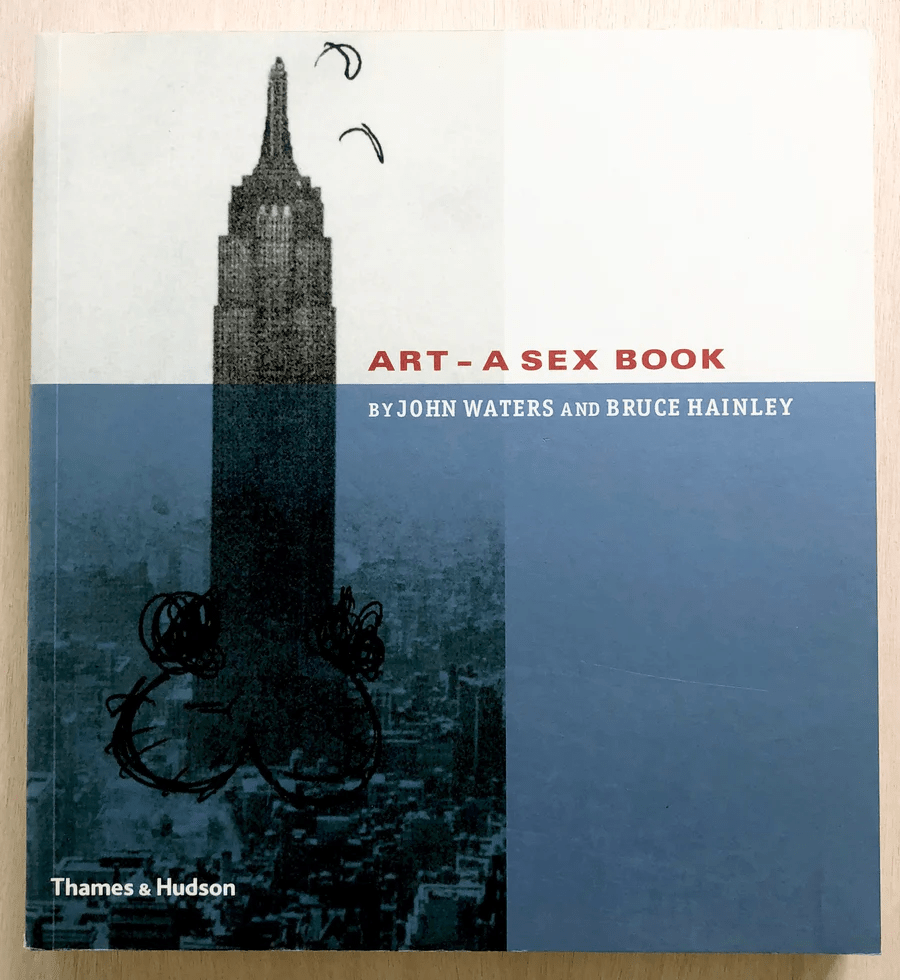
I bought a few copies of this when we had one of several book signings with John Waters at the old Borders Books & Music 043 in Towson. I gave three of them as gifts over the years and still have two signed copies. Probably have a box full of other stuff signed by John as well–DVDs, VHS tapes, other books.

It’s funny to think of an edgy and completely trashy Baltimore film-maker forging a side identity as a collector and modern art sophisticate well-regarded in New York and Paris. But nothing is surprising in John Waters’ career. A few years ago when we were home in the USA it was great fun to browse his substantial and surprising personal collection donated to the Baltimore Museum of Art. Shortly thereafter the museum dedicated a new public restroom in his honor.

After having Art: A Sex Book for more than two decades I finally got around to reading it. I’d looked at the art before but had never tackled the text. The conversations between Waters and his co-exhibitor Bruce Hainley are astute and clever and often as filthy as anything overheard in a high school cafeteria. I laughed out loud several times.

At the end of the book are 20-some artist responses to a list of provocative questions. These range from the silly to the sublime.

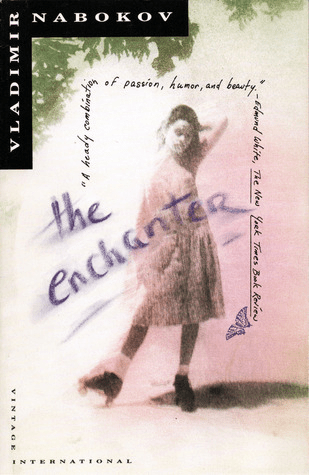
The Enchanter by Vladimir Nabokov

When I was first in grad school in Philadelphia in the early 90s we had a list of novels we were required to read outside of our coursework to ensure we had sufficiently deep knowledge of literature and its icons. On the list were two or three Nabokovs. I read at the time either Pale Fire or Ada, or Ardor–can’t remember which. All I recall from the book is a childhood with lots of butterflies and glimmering grass and trees and lazy summer days. And a sexy sibling or cousin? But the prose was dope. And, of course, I read Lolita.

When I found a stack of Nabokov on my bookshelf I took down The Enchanter knowing nothing about it. A quick read of the prologue and I discovered it was not really a novel at all but rather a novella and that the book was mostly prologue and afterward. The prologue discussed the history of the story and the afterward, by Vladimir’s son and translator, was about the challenges of translating some surreal and salacious images from Russian to English.

The Enchanter turns out to be Nabokov’s first examination and expression of the idea which later became Lolita. His son in the afterward explains the experience of reading The Enchanter as being trapped inside the mind of a sick criminal for 70-odd pages. The entire story is about a man who lusts after a 12-year-old girl and who marries her repulsive mother simply in order to rape the child. So, basically the same idea as Lolita, but without the polish. Humbert Humbert is a disgusting pervert but he’s got style and pinache, and discusses his quarry like a sophisticate who knows cheeses and fine wines. Lolita, despite its criminal main character and dark situation, has a sense of humor. The Enchanter has Nabokov’s delicious prose and characterization but I found the experience of reading it less than enchanting–mostly interesting as a curious sort of literary archaeology rather than as an actual good story. BUT the narrator gets his comeuppance in a satisfying way.

The Thanatos Syndrome by Walker Percy

Way back in the late 1980s I took a course called Psychology and Literature. It was taught by the miraculously brilliant and completely weird Dr. Benjamin McKulik (who I discussed on Gayle Danley’s Classy Podcast a few years back). One of the novels we read in that course was The Second Coming by Walker Percy. I recall being fascinated by a female character in that book who had schizophrenic episodes and who spoke in punning sentences full of double-entendres and layered with multiple potential meanings. I have no recollection of buying Percy’s The Thanatos Syndrome but figure at some point I saw it cheap in a used bookshop and bought it on the strength of the other.

There’s a lot to detest in this book. The narrator’s terrible Louisianna genteel racism and anti-semitism, his painfully neanderthal politics, the absolutely retrograde and bafflingly naive conservative sexuality (doggy-style sex is apparently evidence of a psychological problem and/or brain syndrome, and so is oral sex?). Vivid descriptions of pedophilia uncovered by the hero make stretches of the book truly troubling to get through. But I found myself pulled along nonetheless by the narrative, which is like a Robert Ludlum or Tom Clancy thriller written by a much more literary prose stylist.

The plot is completely ridiculous but at the same time believable–a bunch of hacks funded by the Federal government decide to dump chemicals in the water supply which revert people to “lower” primate behaviors because they hope the local crime rate will go down and math scores will go up due to savant capacities developed by those who drink from the tainted taps. Success! Just like flouride in the water saves teeth, their chemical brew from a local nuclear reactor coolant tower works as intended. A psychiatrist recently released from prison for hawking prescription drugs to truck drivers has about five interactions with people in his town and immediately suspects something is up from their speech patterns and changes in their sexual behavior. His wife suddenly becomes good at bridge and wants doggy-style and oral sex for the first time ever, so there must be a neurological syndrome in town! What is the cause? Well, our intrepid doctor finds out with the help of a weird cast of Southern Gothic characters including a kissing cousin, a mentally ill Catholic priest and wanna-be Nazi who lives in a fire spotting tower, and an uncle who wins duck-call competitions.

Nearly a decade ago the first season of True Detective aired on HBO. I thought it was an absolute hoot and a great example of prestige TV with compelling acting in a gritty setting and a peculiar Lovecraftian underbelly. There are several interesting plot and setting overlaps between that season’s arc and this weird AF novel. I wonder if the show’s writers knew Walker Percy’s last book?

The Sundial

https://bookshop.org/widgets.js

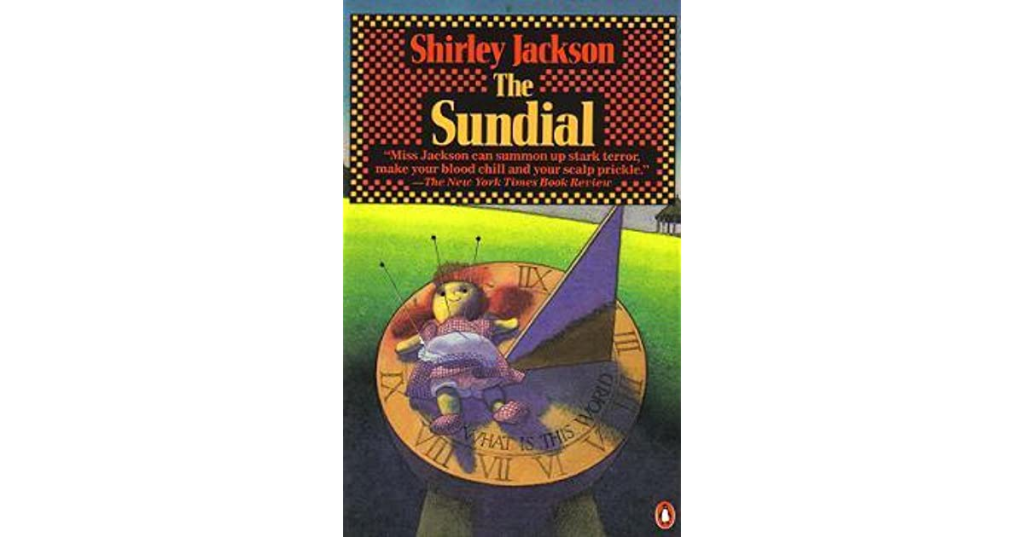
Shirley Jackson has the distinction of having written the novel I’ve re-read the most. As of last January I’ve read The Haunting of Hill House seven times. I’ve also read many of her short stories and the lovely and mysterious novel We Have Always Lived in the Castle as well. But for some reason my 1990s paperback re-issue of The Sundial sat on several shelves in several houses for a few decades before I got around to it this week.

I suppose I needed to wait until the collapse of civilization in order to fully appreciate the book. We’ve had several near collapses since I purchased The Sundial–Y2K, the end of the Mayan Calendar, various planetary alignments, wars, pestilences, George W. Bush elected twice–but something about recent events conjures more serious reflection on the End Times than all those others.

The Sundial is focused on the coming End of the World–or, more exactly, how people respond when they genuinely believe the End is nigh. The setting is a genteel massive manse in a New England town, built a generation previously by some fabulously wealthy businessman and currently inhabited by his two children and his grandson’s widow and daughter. The children are Mr. Halloran, confined to a wheelchair and in evident decline, and his sister Aunt Fanny. Mr. Halloran’s wife is still around as well, and is suspected by the grandson’s widow and granddaughter of having murdered his son by pushing him down the stairs in order to secure her own inheritance of the house.

Aunt Fanny one early morning takes a walk around the gardens she’s known since childhood, becoming somehow lost and suffering a potent vision of her father telling her the end is nigh, but that those inside his house will be saved to repopulate the Earth. What ensues is pure hilarity. Fanny shares her vision and somehow it becomes doctrine with all those trapped inside. They will be Robinson Crusoes and Noahs and Adams and Eves, left stranded to rebuild and repopulate.

As in every Jackson novel the characters are all delightfully awful and are skewered by her sharp sensibilities. The dialogue is funnier and better and more sophisticated than anything in Dorothy Parker, the wit makes Evelyn Waugh seem amateurish, and Dickens himself would have been awed by Jackson’s ability to lampoon class differences so efficiently. What took him 5 or 6 hundred pages takes her much less than 3.

I note that as we pass from Pisces and into Aquarius that the old gods have all lined up to watch our current collapse. The Planet Parade of late February/early March this year showed them all coming back to witness our decline once again into rebirth and renewal, just as the change from Aries to Pisces saw the cratering of all the great Mediterranean civilizations and the birth of new orders. In Jackson’s novel the end doesn’t matter so much as the way people behave anticipating it. And just as she predicted, they behave shamelessly and hilariously so–Buckle up, folks!

Everyman

I’ve been going back through the physical library and pulling down unread volumes lately. In the last six months four of those have been novels by Philip Roth.

Roth wrote Everyman shortly before killing off his alter-ego Nathan Zuckerman in Exit Ghost. I think Everyman is a superior novel and a more beautiful meditation on mortality and death than Exit Ghost.

The novel opens with the death of the main character, who remains unnamed throughout the story. We attend his funeral with some family and some former lovers, and then we are inside the mind of the dead man as he projects backward in time. I believe this is only the second novel I’ve read where the entire story is told from the point of view of a dead dude, the other being The Living End by the delightful Stanley Elkin.

The narrator worked in the ad biz but always wanted to be a painter. We see his triumphs and failures and his major regrets. We meet his children and his three wives and some of his lovers. We encounter his parents and siblings, and the theme which ties everything together is decay and death and their inevitability. Hence the title Everyman, because no one escapes death, and as a result the book is basically about all of us. Perhaps we get to buzz back through and revisit our time here after we go to our final rest? It’s a comforting thought.

There is a beautiful scene where the narrator visits his parents’ graves in a dilapidated cemetery in an unsafe part of New Jersey before going in for a surgery he does not survive. He meets the gravedigger and there is a beautiful moment between the two men, one whose living is digging holes for the dead, and one who is about to die. The scene’s got “Alas, poor Yorick” chops.

Roth was a substantial artist and a chronicler of the USA in the decades leading up to its decline into irrelevance and buffoonery. He confronted his end with dignity and continued to work until his final moments. I am grateful to have his novels as a roadmap to my own final decades.


…the merciless encounter between the no-longers and the not-yets

I made another trip down to the public events space in our building where most of my books are currently housed and pulled a half-dozen unread titles off the shelves. The book I intended to read first I placed on the coffee table, then went off to complete some errands and returned to find my wife 10 pages in and engrossed. So I grabbed another off the pile.

Exit Ghost is the last of Roth’s Zuckerman novels. Nathan has lost his mojo literally after a bout with prostate cancer. Impotent and incontinent, he has retreated to the Berkshires and lived in isolation for 11 years–part of this history was recounted in The Human Stain. While living in his cabin by a swampy pond Zuckerman has focused entirely on his work and further cemented his reputation as a literary master. He doesn’t watch the news, doesn’t read the paper, doesn’t use the internet–he’s become completely detached from the world. But the promise of a medical procedure which might fix his urinary incontinence draws him back to the New York he’d abandoned. A chance encounter with a woman he knew briefly decades before, compounded by the mistake of buying the current New York Review of Books and seeing an intriguing advert in the the Classifieds section threatens to involve Zuckerman in a literary controversy involving his favorite writer. After more than a decade out of the game, Zuckerman finds himself unwillingly pulled back into an imbroglio.

Like Ishiguro’s The Buried Giant, Exit Ghost is an exploration of history and memory. What should be recorded for posterity, and what can remain unsaid and unmemorialized? Who is a reliable recorder of events? How fallable exactly is memory and how biased? And as one ages, these questions become more immediate and profound.

Nathan Zuckerman of course served as the fictional alter-ego to Roth through several novels across several decades. The early works were full of intense and zesty voice and delighted in experience and the savors of life. The later works develop in craft and profundity and seriousness and serve as powerful documents and indictments of various eras in US political and cultural history.

Exit Ghost is not Roth at the height of his powers. He is putting to rest and tying up the world his alter-ego inhabits, and giving us a glimpse of his own writerly process along the way, as Zuckerman notes his own rapidly failing memory and tries desperately to record his conversations and then to create fictional dialogues using them. An author renowned for his breathless writing about sex and desire finds himself droopily noodling around young women he can no longer seduce because of his age and decaying physique.

I enjoyed the novel a great deal mostly because I could see a lot of myself in its pages. I’ve stopped reading news almost entirely after a life devoted to being informed. I’ve become cantankerous about the internet and social media and refuse to use AI programs (though I’m aware AI is now powering and manipulating other platforms I’ve used for years). I live in an old factory in a rural area and hope to have time at some point to do more reading and writing and serious study. After decades of glorious city living I find cities exhausting for more than a day or two, and prefer a quiet sedate life to the continuous glamor of going out multiple times a week. Hopefully I avoid the other problems Zuckerman experiences, but as my mother says when I tell her about knee or neck or back problems: “All of that just gets worse.”

Another enjoyable aspect of the novel is to read Zuckerman/Roth thinking about writers who were important: Dostoevsky, Hardy, the Bronte sisters, Conrad, Plimpton, Mailer. Zuckerman and some older characters bemoan the state of the world for mercilessly finding fault with Faulkner and Hemingway and banishing their work from the canon for personal failings. Young characters are keen to find those faults in previous generations and expose their sins. Zuckerman exits an exasperated ghost indeed.