Human Smoke

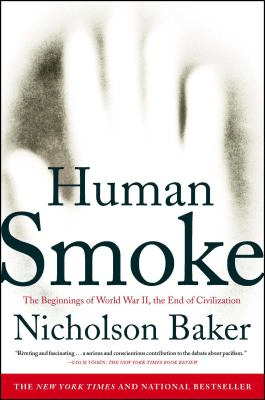
Human Smoke is by the novelist Nicholson Baker, who has written some very touching and outrageously silly books which I’ve enjoyed tremendously. But Human Smoke is not a novel, it’s a sort of experiment in collage, cobbling together diary entries, letters, news reports, and speeches from dozens of sources leading up to and during World War II and the Holocaust. Unlike his novels this work is not touching or silly. It is deeply troubling.

I’m familiar with only two comparable works. One is Baker’s other non-fiction experminet, called Baseless, which focused on the Korean War. In that book Baker investigated the possibility that the US had covertly employed biological weapons against civilians and soldiers during the conflict, and kept a sort of personal journal of his process, his reactions to government secrecy, what it was still possible to find out, and what was likely down the memory hole. Another work similar to Human Smoke is Charles Reznikoff’s Holocaust, a work of poetry created through the artful rearrangement of fragments from witness testimony at the trials of Nazis. I used Reznikoff’s text when I taught Hitler’s rise to power and the Holocaust to public school students.

I’ve read a few dozen books about the second World War, and about Nazi Germany, and about Hitler and the Nazis, about Churchill and FDR, and probably also a few hundred articles along the way. On top of that are the countless documentaries, television shows, news reports, literary works, memoirs, and feature films, etc. Human Smoke is troubling because I learned new things which made me uncomfortable. I had to question my own assumptions that I had the narrative straight, that I knew that story pretty deeply for an amateur who was not a trained historian and yet who had the heavy responsibility to teach it to young people and guide them as they explored the topic. Of course I like when I have to challenge my assumptions–that’s the entire point of the reading life.

I’d long questioned and critiqued what I was taught in high school about US involvement in the war. I was taught that the US intervened to stop the Holocaust and save Jews, and that the US military won the war. Previously I’d known that this was not true and was largely propaganda instead of history. The Soviets defeated the Nazis in Europe, with help from the US. 4 out of 5 Nazis killed by the Allies were killed by the Soviets, and overwhelmingly the Soviets did the heavy lifting and endured the heaviest losses. The US of course did the hard work in Africa and in Italy, and paid a huge cost in Normandy. They did all the ghastly work in the Pacific as well. I don’t minimize the losses or the sacrifice of the United States in the war. But we were outright lied to about why the US intervened when I was a teenager. We were also misinformed about the USSR and its role.

Human Smoke reveals things about Roosevelt and Churchill and their schemes and their tactics which are extremely distasteful. Some of them I knew before, others were grotesque revelations. At a time when heroes are needed badly in the West, you won’t find them here. Again we are confronted with the problem long presented in the western democracies–there are no good guys in power, only somewhat less bad guys. The pacifists are the only worthy ones in this book.

A History of France

I wanted to refresh my general knowledge of French history before focusing in detail on a few eras, regions, and personalities. A History of France seemed a good place to start. John Julius Norwich had written quite readable histories of Byzantium and European monarchs, and his father Duff Cooper was Churchill’s liason with the Free French during WW2, and later was Ambassador to France from the UK. I thought this book merited a try.

There is way too much history in this short and readable history. We start with Julius Ceasar and his campaigns in Gaul, and progress through 2000 years up to Charles DeGaulle. But this is a fun read, written by a lifelong Francophile, and it did what I hoped it would–reminded me of the proper sequencing of early monarchs and refreshed my knowledge of the 100 years war and 30 years war and the long deeply intertwined relationship of France and England. The cast of characters is immense of course, and Norwich is particularly good at bringing them to life, from Eleanor of Acquitaine and her sons to Joan of Arc to Napolean 3.

I must say that even immediately upon finishing the book I can’t differentiate all the King Louises and King Charleses. There are too many of them to remember. But Norwich brings them to life and situates them in the context of their times and analyzes their impact on the entirety of French and European history.

Like many English (and Americans) of his era he seems to truly admire but also to have not inconsiderable contempt for Charles de Gaulle. But a historian worth his or her salt can hold two contrary opinions in his or her mind at once and still manage to get the job done. I had to laugh out loud when De Gaulle tells Churchill that the French people regard him as a reincarnation of Joan of Arc, and Churchill says “we had to burn the first one.” History is so much fun, except when you have to live through it.

Passings

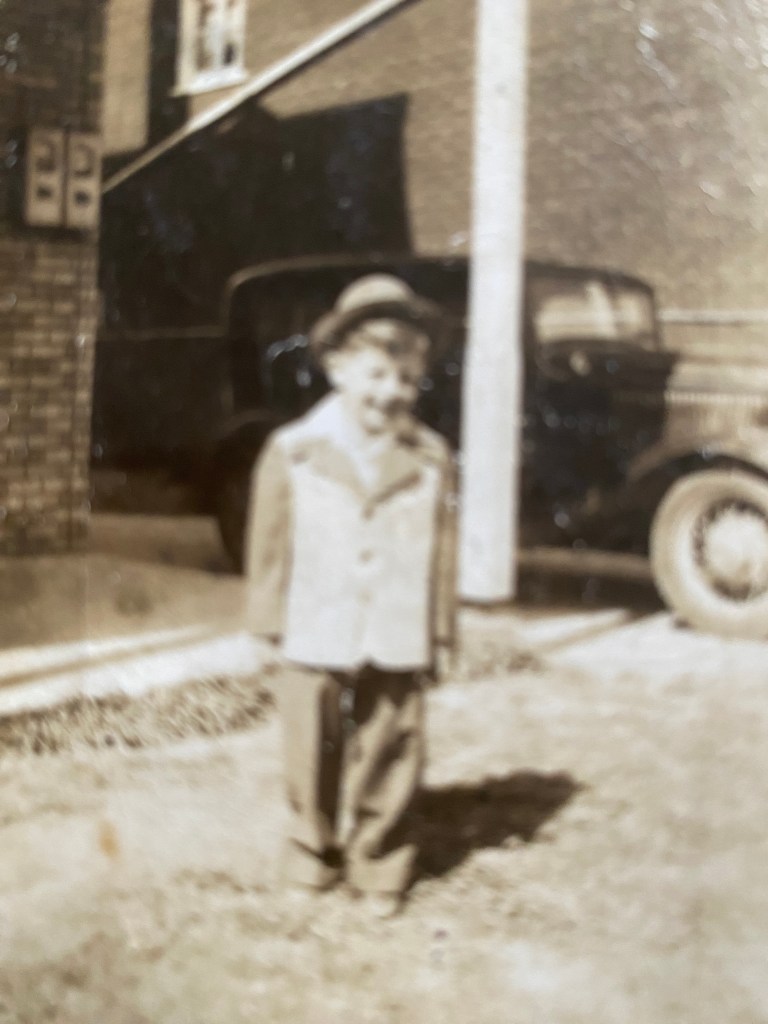
The reverse of this tiny sepia-toned photograph reads “Paul Godfrey Easter 1949 Stewartstown, PA.” It was originally written in pencil but was later partially fleshed out in ink. The handwriting I immediately recognize as that of Mary Godfrey, my paternal grandmother. I’ve no recollection of how I came into possession of this photograph, but after moving to France it fell out of a book as I was unboxing and shelving stuff we’d had shipped from the USA. It’s possible Paul himself sent it. He used to mail me strange messages including Garfield or Far Side clippings from the newspaper and hand-scrawled notes on old receipts. Once he sent me a Polaroid of a woman he was then involved with–she was nude and far younger than he. He’d scrawled “daily vitamin pill” on the photo. I don’t know the name of the young woman but I heard later that she took Paul’s ATM card and emptied his bank account. A bit later Paul became unhoused.

On June 1st at 8:45 pm Paul Godfrey died in hospice care in Gettysburg PA, the town where I was born in 1969. He’d had a stroke a few weeks earlier which left him a bit weak on the left side. He was institutionalized to undergo rehab but refused to participate, refused food and water, and went into a rapid decline. Eventually staff gave up trying to engage him and instead medicated him against the pain of starvation. He was 80.

Paul Benjamin Godfrey was my biological father. Your inclination might be to offer sympathy in this circumstance; that’s kind and considerate but wholly unnecessary. We weren’t close, and were in fact estranged from one another for decades. I think we spoke a half-dozen times in 35 years. My younger sister heroically assisted him his last few years and had visited him in hospice without getting much response. I, on the other hand, had almost entirely excised him from my life quite some time ago. Due to the staid dictum don’t speak ill of the dead, I’ll refrain from cataloging the reasons here. I’ll simply state that my mother gathered our belongings into a few trash bags and left his house after calling the police one night in the 1970s, my sister and I in tow. She wanted the police there as she fled in case Paul showed up. He worked night shift and we escaped to shelter in a good samaritan’s house for a couple weeks before moving into the home of my maternal grandparents. Later, there was a brief attempt at reconciliation which failed and divorce procedings were engaged. I was 7 years old, my sister 5.

My sister asked if I’d write an obituary. I could barely come up with 500 words. It says something that a man of 56 years could know so little about his father’s life that minimal details were tough to scrape together into a brief narrative. But such was our relationship, or lack of.

There will come a time when I have more to write about Paul Godfrey. For now, however I’ll remain silent and allow that photo from 1949 to be my memory of him. It was taken 20 years before my birth, and it’s a very cute and charming photo of a presumably loveable little chap. May the conditions and torments which caused that young child to become the man I knew be laid to rest.

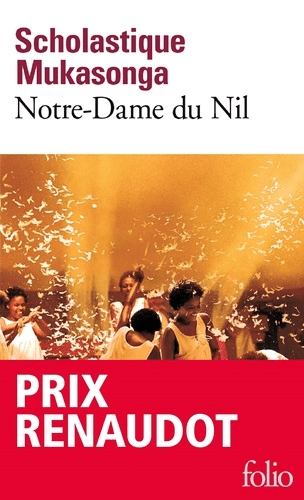
Notre Dame du Nil

Back when I was young and energetic I spent a couple decades working a full-time job, a part-time job, and going to university full-time. At some point in this burst of insanity I was working in the Cook Library at Towson University, while teaching in the English Department, and still working at Borders Books & Music, while pursuing a degree in French Literature and also taking courses necessary to become a public school teacher. At that time I’d already earned a Bachelor’s Degree and a Master’s Degree–but it was never enough, LOL.

During that burst I took a really brilliant class with Dr. Lena Ampadu focused on literature in English coming out of post-colonial Africa, and also took a delicious class in French with Dr. Katia Sainson focused on postcolonial lit. So a couple decades later when an algorithm suggested Notre Dame du Nil on sale I purchased it while living in an oceanside apartment in a high-rise in Panama. I desperately wanted to improve my Spanish but also wanted to keep my French alive. Six years later I finally got around to reading it.

It was worth the wait. Ostensibly a memoir novel set in an all-girl’s school in Rwanda in the early 1970s, it is actually a densely layered critique of colonialism. Imagine Mean Girls if Franz Fanon dropped in as script advisor.

The French was not too difficult, and I needed to consult a dictionary only a few times each chapter. The characters are engaging and I found much of the novel quite interesting and at times hilarious. The girls at Notre Dame du Nil are all Rwandans who are being groomed for elite roles–they are daughters of wealthy merchant families, of diplomats, of government figures or military officers. Many come from small rural villages and of course “elite” grooming requires the learning of European languages, European traditions, European religion, European manners…The Europeans teaching in the school are hapless and ridiculous and deserve the mocking they receive. The Catholics in charge of the institution are just as bad. The school has as its setting one of the furthest away sources of the Nile river, hence the designation in the title. The bits about Rwandan culture, including a fascinating sequence when two students visit a rain-making shaman to purchase a love spell-were excellent. And the fishy Catholic priest in charge of the school who bestows nice garments on girls but only if they try them on in front of him? Classic.

One tangent of the plot involves a European man who lives on an old coffee plantation and has a bizarre theory that Tutsis are descended from Pharoahs–he abducts a student and then begins painting her and using her in a film he’s making. Another involves a visit to campus by the Queen of Belgium.

But the novel slowly simmers and builds a truly dark and disturbing undercurrent as the typical mean teen girl drama reveals roots deeply entwined in Hutu and Tutsi history, with absolutely catastrophic results. What at first seems like surly teen sniping eventually develops an undercurrent of tribal hatreds and it becomes clear that the parents of several students are encouraging the cataclysmic outcome. “It’s not lies, it’s politics,” says a ringleader who happens to be the daughter of the President of Rwanda. One student, who is half Tutsi and half Hutu, does her best to straddle two worlds and attempts to insinuate herself into the dominant group but redeems herself to a degree when the crisis comes.I shan’t say more to avoid spoilers.

…the merciless encounter between the no-longers and the not-yets

I made another trip down to the public events space in our building where most of my books are currently housed and pulled a half-dozen unread titles off the shelves. The book I intended to read first I placed on the coffee table, then went off to complete some errands and returned to find my wife 10 pages in and engrossed. So I grabbed another off the pile.

Exit Ghost is the last of Roth’s Zuckerman novels. Nathan has lost his mojo literally after a bout with prostate cancer. Impotent and incontinent, he has retreated to the Berkshires and lived in isolation for 11 years–part of this history was recounted in The Human Stain. While living in his cabin by a swampy pond Zuckerman has focused entirely on his work and further cemented his reputation as a literary master. He doesn’t watch the news, doesn’t read the paper, doesn’t use the internet–he’s become completely detached from the world. But the promise of a medical procedure which might fix his urinary incontinence draws him back to the New York he’d abandoned. A chance encounter with a woman he knew briefly decades before, compounded by the mistake of buying the current New York Review of Books and seeing an intriguing advert in the the Classifieds section threatens to involve Zuckerman in a literary controversy involving his favorite writer. After more than a decade out of the game, Zuckerman finds himself unwillingly pulled back into an imbroglio.

Like Ishiguro’s The Buried Giant, Exit Ghost is an exploration of history and memory. What should be recorded for posterity, and what can remain unsaid and unmemorialized? Who is a reliable recorder of events? How fallable exactly is memory and how biased? And as one ages, these questions become more immediate and profound.

Nathan Zuckerman of course served as the fictional alter-ego to Roth through several novels across several decades. The early works were full of intense and zesty voice and delighted in experience and the savors of life. The later works develop in craft and profundity and seriousness and serve as powerful documents and indictments of various eras in US political and cultural history.

Exit Ghost is not Roth at the height of his powers. He is putting to rest and tying up the world his alter-ego inhabits, and giving us a glimpse of his own writerly process along the way, as Zuckerman notes his own rapidly failing memory and tries desperately to record his conversations and then to create fictional dialogues using them. An author renowned for his breathless writing about sex and desire finds himself droopily noodling around young women he can no longer seduce because of his age and decaying physique.

I enjoyed the novel a great deal mostly because I could see a lot of myself in its pages. I’ve stopped reading news almost entirely after a life devoted to being informed. I’ve become cantankerous about the internet and social media and refuse to use AI programs (though I’m aware AI is now powering and manipulating other platforms I’ve used for years). I live in an old factory in a rural area and hope to have time at some point to do more reading and writing and serious study. After decades of glorious city living I find cities exhausting for more than a day or two, and prefer a quiet sedate life to the continuous glamor of going out multiple times a week. Hopefully I avoid the other problems Zuckerman experiences, but as my mother says when I tell her about knee or neck or back problems: “All of that just gets worse.”

Another enjoyable aspect of the novel is to read Zuckerman/Roth thinking about writers who were important: Dostoevsky, Hardy, the Bronte sisters, Conrad, Plimpton, Mailer. Zuckerman and some older characters bemoan the state of the world for mercilessly finding fault with Faulkner and Hemingway and banishing their work from the canon for personal failings. Young characters are keen to find those faults in previous generations and expose their sins. Zuckerman exits an exasperated ghost indeed.

Recent Books

I’ve been lax about posting lately; things are chaotic and our schedules have been packed with events and tourist rentals and visitors and animal care, then we went to Spain for a few days. So here are some rapid-fire blurbs about books I’ve read lately.

Written in a charged “hair-on-fire” tone, They Knew by Sarah Kendzior will raise your hackles whether you agree with her or not. It’s a book about conspiracy theories which notes that conspiracy theories are quite often true but are labeled conspiracy theories to make them seem crazy or loony and unworthy of your attention. She provides many examples of actually true and demonstrable conspiracies which have been lampooned or ignored in the press, which is guilty of aiding and abetting a long-standing conspiracy by major corporations, billionaire oligarchs, and DC politicians and insiders to undercut the rule of law and drain the USA dry. When your own government has become a self-policing criminal enterprise, what remains to be done? She notes that January 6 was a surprise to no one, and there were warnings from many sectors about its imminence and possible success which were shrugged off by the mainstream media until members of Congress were hiding in locked closets from a rampaging mob of deranged people who had been misled by well-funded conspiracy theories hatched in propaganda labs as part of a vast and ongoing conspiracy to delude Americans. Read it and weep.


And, speaking of conspiracies…I’ve read and enjoyed a few novels by Nicholson Baker, including the hilarious and randy The Fermata, as well as his breathless Checkpoint, about a conspiracy theorist who is so frightened by the unreal realities of the George W. Bush presidency that he imagines assassinating the then president in all sorts of nutty and creative ways. But this book is not a novel; Baseless delves deeply into the idea that the United States recruited Nazi and Japanese war criminals who helped develop biological weapons which were secretly used against North Korea, and that the intelligence agencies have hidden this history away in classified documents which are rapidly disappearing. Baker shares his frustration with the CIA’s often total disregard of Freedom of Information Act requirements, and he documents documents which have disappeared from their folders and which are redacted to the point of complete insensibility despite legal requirements that they be freely available. His conclusion is that the government is not protecting “sources or methods” but rather high crimes and misdemeanors. Like Sarah Kendzior, Baker notes that people in power and in the media scoffed absolutely at the idea that the USA would ever use dreadful weapons of this sort, and yet from his research and many testimonials it seems that the USA indeed did use them.

About 30 years ago I remember hosting a book signing and discussion with Mr. Menand at the Borders Books & Music just north of Baltimore in Towson. At the time he had published The Metaphysical Club, and though I never read that book I did attend the discussion. In The Free World, which I read periodically over a half-decade, Menand delves into intellectual, literary, critical, and artsy trends poinging back and forth across the Atlantic between Paris and New York during the height of the Cold War. There are chapters about popular music and trends in visual arts and art criticism, chapters about film, chapters about writers and editors. There are also some revelations about the CIA secretly funding publishers and certain writers and intellectuals and even founding journals, which Menand shrugs off as no big deal, because the Soviets also funded such stuff. But, I’d respond: the West always claimed to be a free marketplace of ideas, not a marketplace where some ideas received covert funding to place them in the forefront of mainstream media coverage and public discussion. Menand shrugs off US interference in elections in France and Italy as part of the game, and his take on Vietnam seems a bit shallow. But I rate this book highly nonetheless as an interesting examination of creative and intellectual trends at a time when many people thought we were going to blow ourselves up.

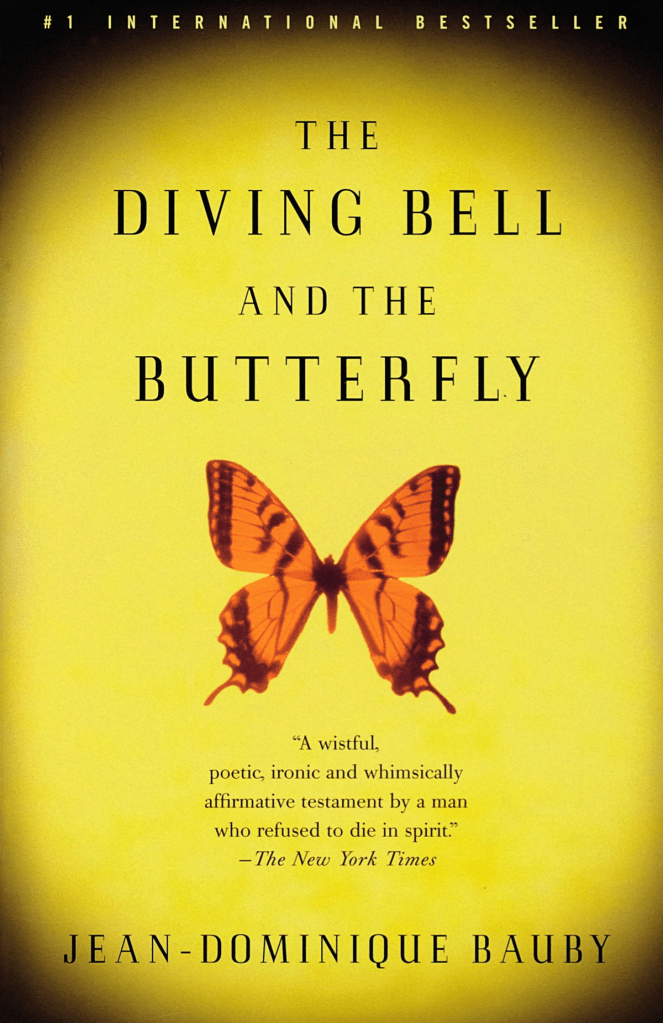
Beautiful, tender, deeply melancholic, and yet also surprisingly funny at times. What happened to Mr. Bauby was simply awful. How he processed his tragedy in this short elegant book, written by blinking his eye a letter at a time as he lay paralyzed in a hospital bed, deserves our awe.

Blood on the Forge

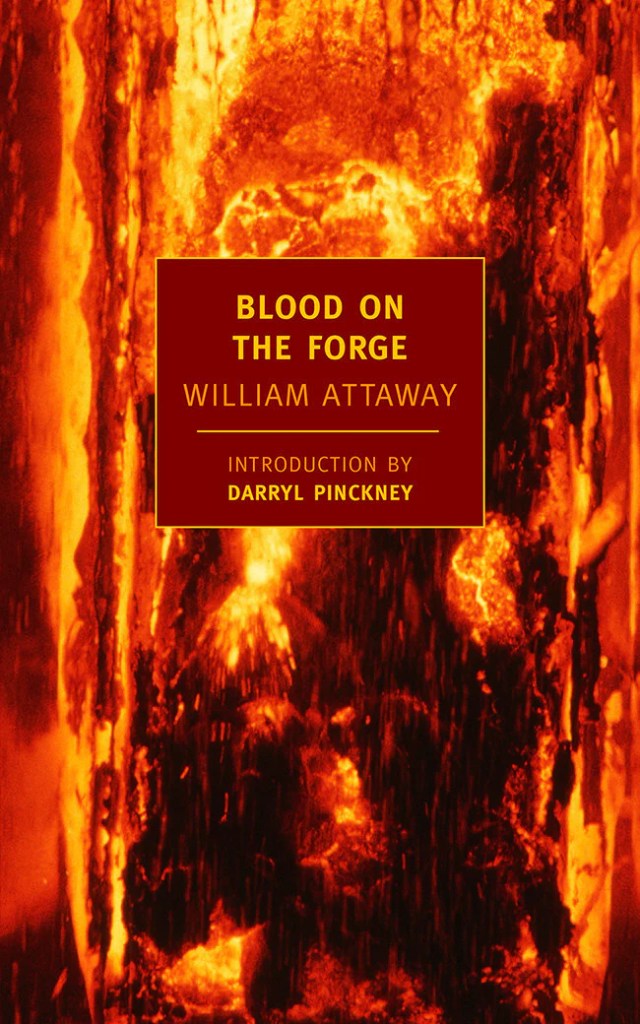
Sometimes going through my own bookcases is like browsing a great used bookshop, and a volume pops out that I didn’t even know I’d purchased. Ironically, William Attaway’s Blood on the Forge was a book I was searching for several years ago without knowing it and I had it all along.

When I was a teacher in Baltimore City Public Schools I was imagining a Great Migration unit starting with an image exploration and analysis using Jacob Lawrence’s Migration series as a starter. It was a fave tactic of mine to start units with images and to teach kids how to make inferences, ask deep questions, interpret, connect to previous knowledge, make predictions, etc before even learning about the topic of the unit. I never wrote that unit, however, because the Lewis Museum in Baltimore had a show of Jacob Lawrence which included works featuring Toussaint L’Ouverture and John Brown and Frederick Douglass and Harriet Tubman. After seeing that show, because I already taught units about Brown and Douglass, I took the Jacob Lawrence idea and tacked it onto those units.

Another reason I decided not to create the Great Migration unit was because I didn’t have a meaty novel-length text to use. And yet I did have the perfect one–and didn’t realize it until I lived in rural France in the 2nd year of not being a teacher. Oh well. There is probably a bit too much prostitution in the novel for 8th graders anyhow!

William Attaway is unfortunately not well-known, though he had a profound cultural impact. Until I read his novel and its fine introduction by Darryl Pinckney I was unaware that Attaway wrote the “Banana Boat Song” for his friend Harry Belafonte. He also influenced Richard Wright and Ralph Ellison, who both knew him and read this searing white-hot novel. (Side note: Darryl Pinckney has a fine article in the current NYRB about the Harlem Renaissance, and Attaway was apparently an indifferent and bored school student until he read a poem by Langston Hughes and found out that Hughes was Black, at which point he devoted himself to writing).

So, Blood on the Forge–talk about going forth and forging in the smithy of his soul the uncreated conscience of his race! This is an incredibly vital document of an important era in US history, the great movement of Black laborers from the South to Northern cities as the industrial revolution took off. Attaway, who was a middle-class son of a teacher and doctor who himself migrated as a child from Mississippi to Chicago, weaves in all the complex societal strands into a short elegant and harrowing story. You’ve got urban/rural, White/Black (Slav/Irish), union/scab, capitalist/socialist, agrarian/industrial, modern/traditional. There is enormous violence and powerful interests interfere in everything to protect what they regard as theirs, and the fates of three sharecropper brothers who are recruited and taken north to Pennsylvania to the steel mills herald prophetically the racial and class tensions to come. HIGHLY recommended.

Le Croix en Haute

This morning I had a To Do list, which I’ve been working through this week. I glanced at it around 9am, and looked at the weather forecast, and thought: “I’m not going to get most of this done before it rains anyway.” I did a bit of gite prepping for guests arriving tomorrow, I put a first coat of paint on my antique window greenhouse, and I hopped in the car to do a bit of site-seeing.

Just around Treignac and throughout the Correze are multiple layers of history: neolithic sites, Druid/Celt sites, Gallo-Roman sites, medieval ruins, Romanesque and Gothic churches and abbeys, painted caves, etc. We’ve lived here a year and have done some exploration, but it’s easy to get into a rut of “I’m working in the garden” and to forget one of the primary reasons we chose to live here: to see cool shit.

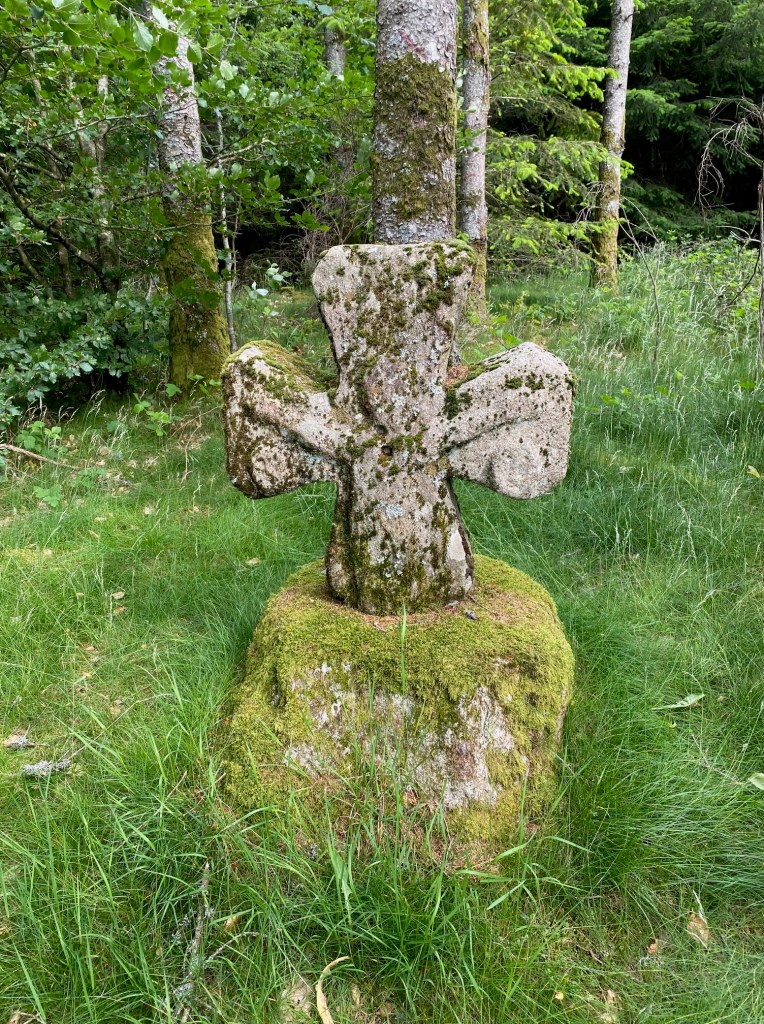
Today I drove 10 minutes over to the small village of Lestards. Sprinkled about Lestards in the forested hills are several medieval crosses–some dating back to immediately after the fall of Rome. I’d passed a small sign next to the main road several times which read “Le Croix en Haute.” Today I parked alongside the entrance to the trail and hiked up.

“En Haute” is an apt description. The hike was short–perhaps ten minutes, but it was steep. The path is an old rocky lumber road mostly overgrown and it runs directly uphill between pastures dappled in the typical French wildflower display.

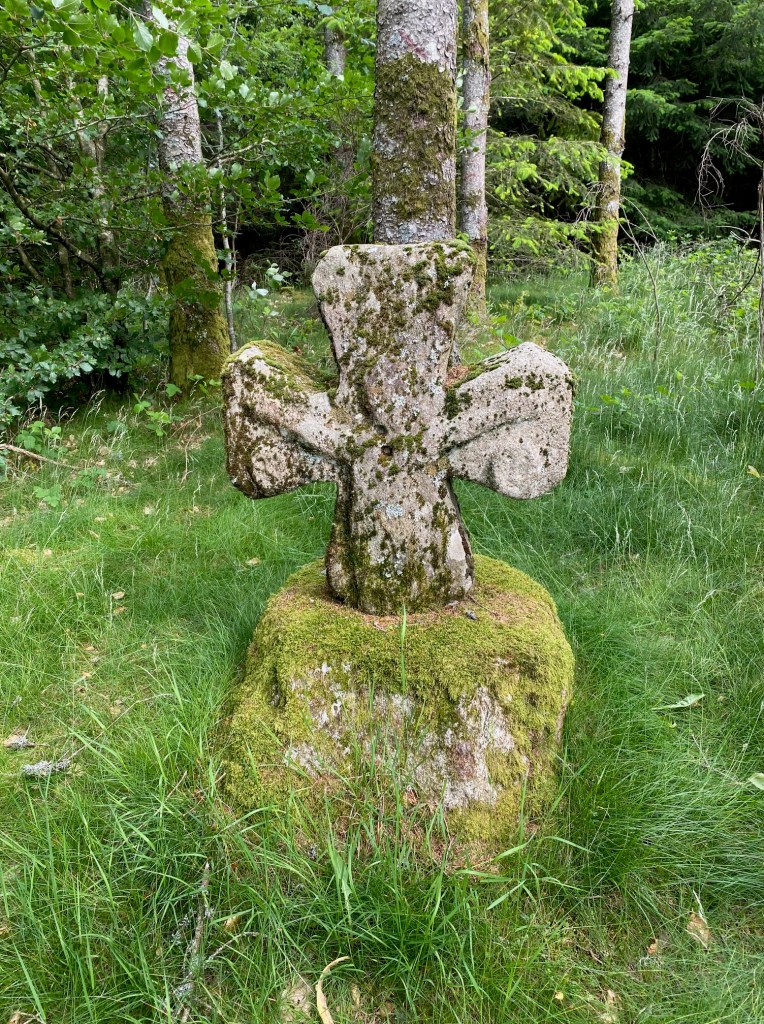
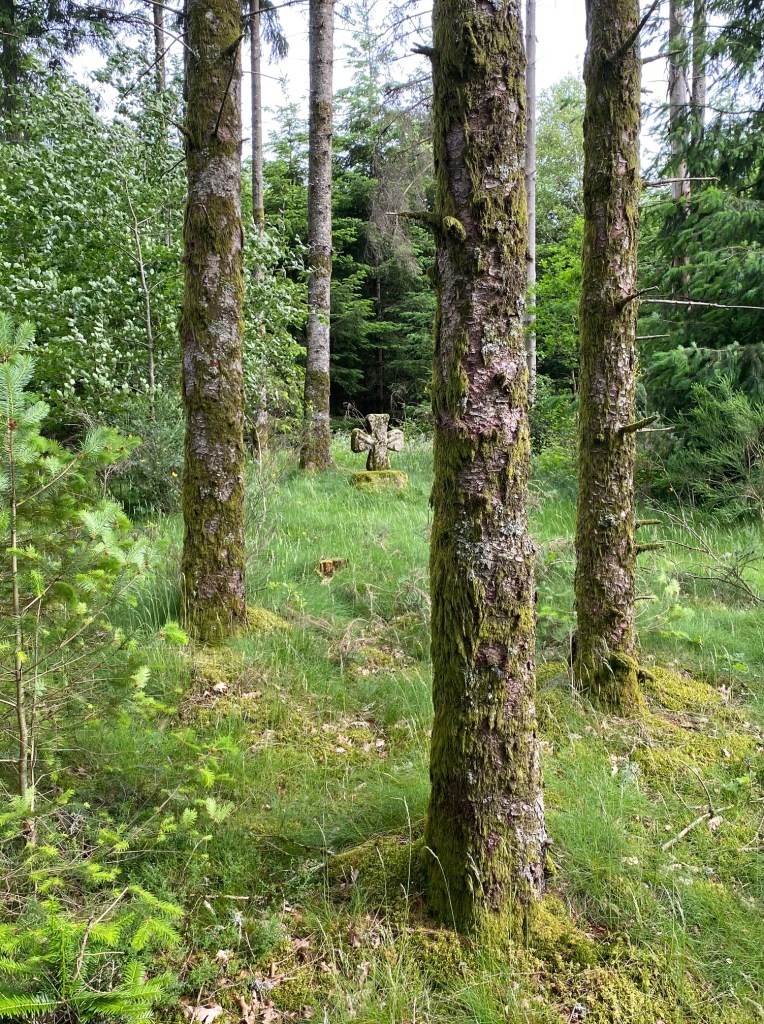
There is on the left hand side a forest after a bit of a climb, and at the edge of the forest is a grove which feels different somehow from the rest of the landscape. One gets the sense immediately that this is a sacred spot, and likely was long before the Croix itself was placed, probably by monks desperate to convert the local pagans to Christianity by decorating their holy sites and sacred wells with crosses and saint’s names. The air is fresher and cooler in the grove, the loamy moss-covered earth invites one to move slowly and thoughtfully. The birds sing but they are less raucous than elsewhere. Whatever spirit or deity was originally evoked in long-forgot rites at this place still whispers around the trunks and amongst the grasses and flowers.

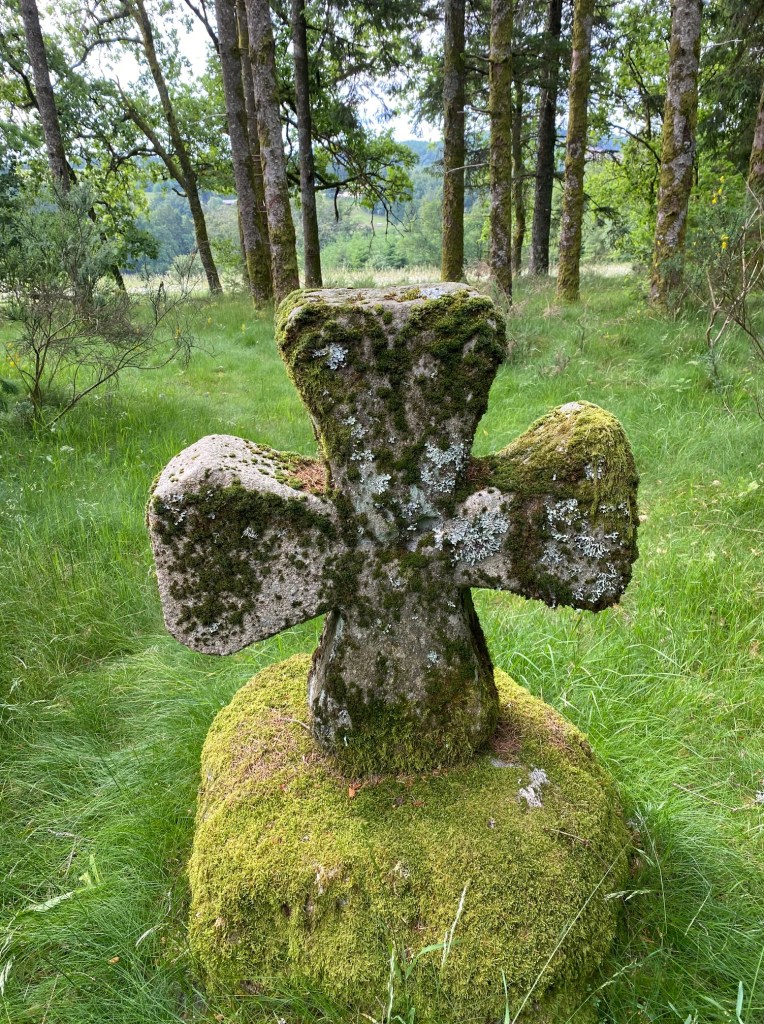
Le Croix en Haute from behind

But there is room here for the early Christian sentiment as well, and it pervades the spot with a more dense and contemplative mood in counterpoint to the brisk and playful fay. I spent a good 40 minutes at the site, examining the cross and its surroundings, then doing my daily Qi Gong routine at the grove’s edge. As I moved through the sequence of slow movements, village church bells rung 10 am–the first sounding deep and bronzy from Lestards, then a moment later from Veix somewhat tinny and a bit further down the valley. The long-stemmed flower varietals swayed in a strong steady wind up the slope from below, indicating an approaching storm. Somewhere above and behind a woodpecker did his tapping devotions .

Christ on the cross is pretty clear in this rough carving, as are the faces of two others beneath his arms. Are they those crucified alongside him that day? Or witnesses to his execution? The two Marys perhaps, or Roman centurians? Were I to scrape away the lichen and moss on its base would I find any markings? Or spots worn smooth by the touch of generations of genuflecting seekers?

Definitely a mystical aura to this place

I imagine I’ll come here often over the years we spend in Treignac. It’s a very evocative place, and Lestards with its small thatched-roof eglise and spring water fountain is a favorite regular destination for us. I might later this summer or fall have to tackle the trail which hits several of these crosses around the village.