

…the merciless encounter between the no-longers and the not-yets

I made another trip down to the public events space in our building where most of my books are currently housed and pulled a half-dozen unread titles off the shelves. The book I intended to read first I placed on the coffee table, then went off to complete some errands and returned to find my wife 10 pages in and engrossed. So I grabbed another off the pile.

Exit Ghost is the last of Roth’s Zuckerman novels. Nathan has lost his mojo literally after a bout with prostate cancer. Impotent and incontinent, he has retreated to the Berkshires and lived in isolation for 11 years–part of this history was recounted in The Human Stain. While living in his cabin by a swampy pond Zuckerman has focused entirely on his work and further cemented his reputation as a literary master. He doesn’t watch the news, doesn’t read the paper, doesn’t use the internet–he’s become completely detached from the world. But the promise of a medical procedure which might fix his urinary incontinence draws him back to the New York he’d abandoned. A chance encounter with a woman he knew briefly decades before, compounded by the mistake of buying the current New York Review of Books and seeing an intriguing advert in the the Classifieds section threatens to involve Zuckerman in a literary controversy involving his favorite writer. After more than a decade out of the game, Zuckerman finds himself unwillingly pulled back into an imbroglio.

Like Ishiguro’s The Buried Giant, Exit Ghost is an exploration of history and memory. What should be recorded for posterity, and what can remain unsaid and unmemorialized? Who is a reliable recorder of events? How fallable exactly is memory and how biased? And as one ages, these questions become more immediate and profound.

Nathan Zuckerman of course served as the fictional alter-ego to Roth through several novels across several decades. The early works were full of intense and zesty voice and delighted in experience and the savors of life. The later works develop in craft and profundity and seriousness and serve as powerful documents and indictments of various eras in US political and cultural history.

Exit Ghost is not Roth at the height of his powers. He is putting to rest and tying up the world his alter-ego inhabits, and giving us a glimpse of his own writerly process along the way, as Zuckerman notes his own rapidly failing memory and tries desperately to record his conversations and then to create fictional dialogues using them. An author renowned for his breathless writing about sex and desire finds himself droopily noodling around young women he can no longer seduce because of his age and decaying physique.

I enjoyed the novel a great deal mostly because I could see a lot of myself in its pages. I’ve stopped reading news almost entirely after a life devoted to being informed. I’ve become cantankerous about the internet and social media and refuse to use AI programs (though I’m aware AI is now powering and manipulating other platforms I’ve used for years). I live in an old factory in a rural area and hope to have time at some point to do more reading and writing and serious study. After decades of glorious city living I find cities exhausting for more than a day or two, and prefer a quiet sedate life to the continuous glamor of going out multiple times a week. Hopefully I avoid the other problems Zuckerman experiences, but as my mother says when I tell her about knee or neck or back problems: “All of that just gets worse.”

Another enjoyable aspect of the novel is to read Zuckerman/Roth thinking about writers who were important: Dostoevsky, Hardy, the Bronte sisters, Conrad, Plimpton, Mailer. Zuckerman and some older characters bemoan the state of the world for mercilessly finding fault with Faulkner and Hemingway and banishing their work from the canon for personal failings. Young characters are keen to find those faults in previous generations and expose their sins. Zuckerman exits an exasperated ghost indeed.
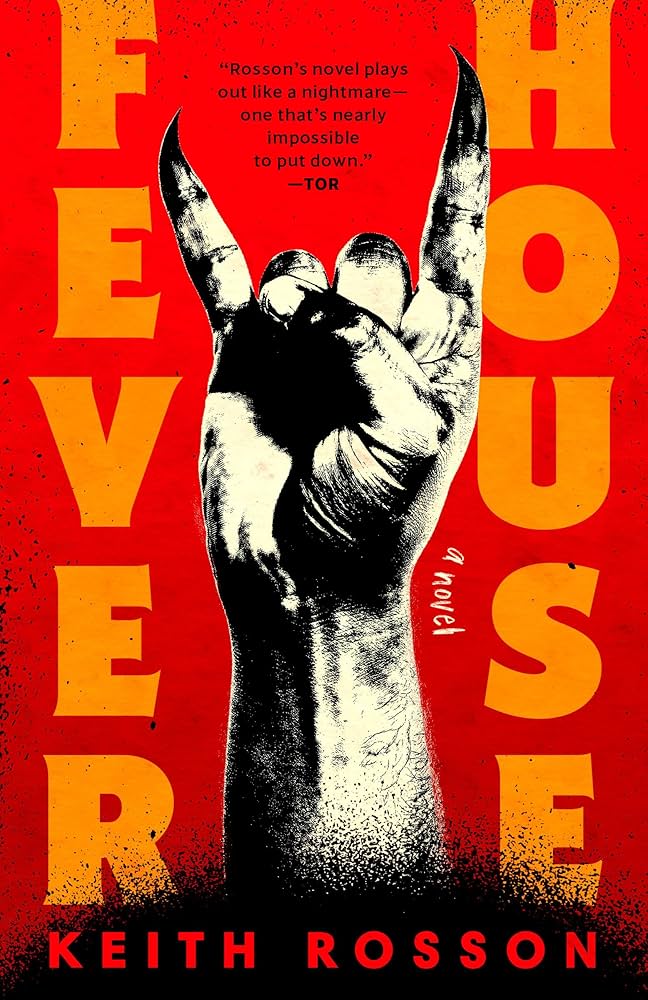
Fever House

Back before Halloween I bumped into a list of recommended recent horror–probably on the NYTimes website. Of the 7 or 8 titles listed I chose a couple to add to my To Read pile.

The first I read from the list was barely OK. Too derivative of a Stephen King novel, and too many clichés from current horror movies (unnatural smiling, kids crawling on the ceiling, animals behaving strangely like humans–yawn). The writing lacked King’s folksy warmth and humor as well, and was more like Tom Clancy’s stiff and uninteresting prose. The characters were not atypical of genre fiction–types rather than people, and the dialogue reminded me of the old Superfriends cartoons popular when I was a kid, where the superheroes would explain what they were doing while doing it as if the audience were too stupid to see what was happening (example: Aquaman would have circles shooting out of his forehead and would intone “I’m using my powers to summon fish friends,” and Superman would have red beams coming out of his eyes while saying “I’m using my infrared heat vision to burn the villain’s shoes off.”). I read Mean Spirited on a flight from Paris to the US and it whiled away the time, but I prefer more profound fare. The ending had an unexpected twist which nearly made it worth getting through.

But the second I read from the list was a knock-out. I’ve seen many zombie films, and have been an enthusiastic fan of the genre since I fist saw Romero’s initial trilogy back in the day. What I like about zombie stuff is how the genre moved from its racist origins to really incisive and often quite witty social commentary.

Fever House is the first zombie novel I’ve read–and it is excellent. There are actual fleshed-out and fully developed human beings involved, and I was on the edge of my seat as the familiar tropes of the zombie apocalypse were delivered with a new and clever backstory. I’d love to go into detail about the novel’s critiques of the hypercapitalist USA and its intelligence apparatus and the military industrial complex, but inevitably I would spoil the experience of finding out for yourself.

Rosson can write–which is atypical of authors in modern horror. Ramsey Campbell is by far the most literary and stylish current writer in the genre, but Rosson can craft sentences and structure a novel at an exceptionally high level. This book is a Slayer album redone as literary fiction. I burned through it in a day and half, and now must give myself a break from the walking dead before jumping into the second volume of the duology.

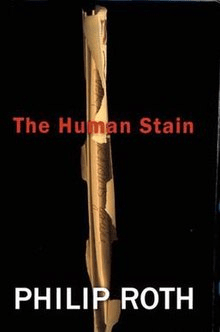
The Human Stain

I read a lot of Roth back in the ’90s, to the point where I found myself Zuckered out. When The Human Stain arrived I bought it in hardcover but never got around to reading it (my copy still has a “Borders Books 30% off sticker” on the cover, LOL). Recently the NY Times released their Best Books of the Century list; the novel’s inclusion sent me downstairs to dig it out.

The Human Stain is third in a trilogy of novels (the previous two are American Pastoral and I Married a Communist). There’s a twenty-some year gap between my readings of Volume 2 and Volume 3!

Roth is typically strong at recreating a time period of American political and cultural absurdities, which he’d done in the previous novels in the trilogy for earlier eras. As the title and timing of the novel might indicate, we’re in the era of Bill Clinton and Monica’s stained blue dress. What a terrible time to be alive and American! Moralizing hypocrites unbound, a sleazy and easily manipulated Chief Executive who fell for a honey trap even the bait didn’t understand, the rise of sensationalist and salacious cable ‘news’ coverage, etc. Out of that mess came an extreme and reactionary right-wing movement angry that Clinton out-triangulated them and co-opted their economic wish list to the point where he hammered through the final achievements of the Reagan Revolution. As the Democrats moved right wing economically the Republicans went wholly off the rails. A Democratic Party beholden to Wall St and corporate interests emerged, leaving the political left in the US nobody to support except for the occasional quaint New Deal Dem who got smoked in the primaries or a third-party candidate. What a joke all that was, and yet the consequences were dire and are yet to be resolved in the USA.

The Human Stain centers around (SPOILER ALERT) a Black academic who chose to pass for white and Jewish and pulled it off, who is fired from his position of Dean for using a racist expression while teaching at a small elite liberal arts college in the wilds of New England. But the slur was not necessarily a slur given its ambiguities and the context, and perhaps the firing was an unreasonable rush to judgment (Roth perceived the emerging phenomenon of cancel culture?). Nathan Zuckerman, who befriends the fired prof and former Dean central to the story, sets out to untangle the events leading up to the situation and to write a book.

My favorite Roth novels feature a manic, hilarious, and zesty narrator. If you’ve read Sabbath’s Theater or Portnoy’s Complaint you know what I mean. Those novels breeze by in a vortex of delicious voice, and the reader is ensconced enchantingly in the conscience of a pervert who participates vividly in experience and has things to think about. But this novel (like The Plot Against America) succeeds on its level of refined craft. It brings up big themes, big ideas, big hypocrisies, and the reader is forced to examine her own beliefs and assumptions.