
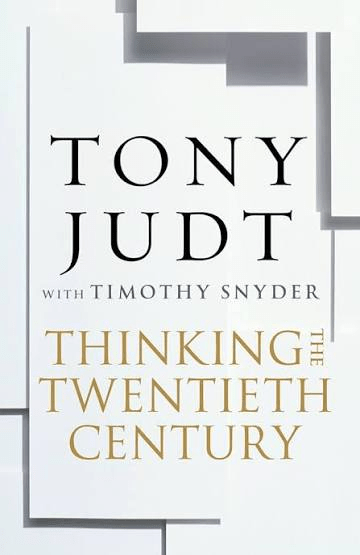
Good Riddance to All That

I first encountered Tony Judt’s writing in the NYRB back in the early 00s. He caused a stir with an article fiercely critical of Israel as a Jewish ethnostate and called for a single-state solution with equal rights for Jewish and Arab inhabitants. For a decade plus I read him regularly in the NYRB and in a few other outlets. Along with fellow historians Timothy Snyder and Timothy Garton Ash I came to appreciate Judt’s appraisals of events from the USA to Europe and the Middle East. He was diagnosed with ALS but continued writing for a while, and published several memoir essays before his passing.

Timothy Snyder is one of the sharpest critics of what is happening now in the USA, as that nation is stripped of parts and looted by a cabal of immoral tech tychoons, petroleum overlords, big pharma pushers, agrobiz schemers, war profiteers, and barely literate pedophilic opportunist/real estate conmen/human trafficking specialists. This series of conversations was quite enlightening and entertaining. I had planned to read Judt’s Postwar first, but chose Thinking the Twentieth Century instead–perhaps I wanted to get a sense of Judt’s methodology and concerns before reading his magnum opus?

My fave bits of the book involve Judt demonstrating his intellectual and ethical evolutions over an academic lifetime devoted to history and its analysis. He grew up in a firmly Marxist family with Marxist sympathies but eventually came to disavow communism. He developed an enthusiasm for Zionism at one point (in part because of time spent on a socialist kibbutz) and spent two years in the IDF, serving in the occupied Golan Heights. But the Zionist enterprise became distasteful to him as the moral rot at its core (colonialism, ethnic cleansing, and increasing apartheid violence) became increasingly apparent and insupportable. His historical interests moved from a focus on France to Europe more generally and then to Eastern Europe in particular as that part of the world became open to western academics and scholars. It is in part his gift as a historian to write history about events and movements in which he was an active participant. This is key to understanding the 20th century.

Along the way there are delicious bits of memoir, as two rather important figures of the last two decades discuss the role of history and historians, and how history should be taught and to what purposes. Judt also was highly concerned with “hyphenated history” focused primarily on specific historically marginalized groups, and thought that this teaching and focus should come AFTER a serious grounding in some sort of narrative history. Students in his view should all be taught the same or similar history and then given means of digging deep into critiques of that history.

Judt discusses at several points the concerning rise of the far right in Europe but thought the US was impervious to this because of the strength of its institutions, its enormous size and incredible diversity. LOL. Only a few years after his death that all proved untrue. There are some surprising bits at the end of the Afterward about the “victory of liberalism” despite the darkness and violence of the previous century. A decade after Judt and Snyder’s appraisals of the 20th century parts of it seem as silly as Fukuyama’s The End of History (though Judt does posit that the two decades after the fall of the Soviet Untion were wasted and ruined by Clinton and particularly by Bush 2).

As this book shows, history and its underpinnings are complex. Predicting the future using the past and present is a fool’s errand. A few things are got wrong in retrospect but the book is quite valuable and belongs on the bookshelf of anyone interested in history or the humanities.
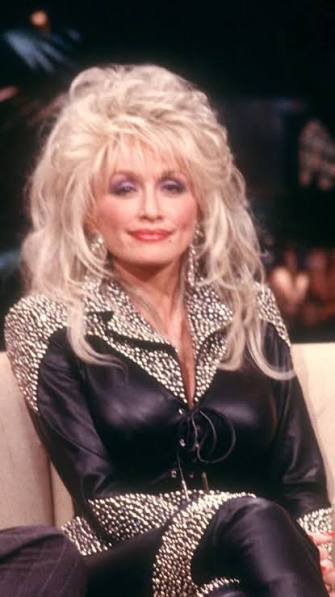
Goodbye, Dolly

Across the river from us here in rural France, at a spot a bit higher than our house in a somewhat drought-droopy forest, I can hear a dog mournfully howling. Typically I’d go see if the dog was OK, but today I know why he’s howling. It’s for the same reason that my Instagram feed is full of grieving people.

Dolly is dead. She’s of course one of the all-time greats by anyone’s measure. I don’t care about all the other divisive issues currently being used to drive wedges between groups and to sow hatred and anger. But if you don’t like Dolly there is something wrong with you and you should be cast out as unclean, and forced to do some repentence ritual in the desert or high on a mountainside.

I’ve been watching internet tributes all morning, and quietly crying. So many of the tributes are from Black people and Black artists, some of whom are doing mournful versions of Dolly’s songs in a jazz or blues or gospel style. There are tributes from up-the-holler rednecks, drag queen tributes, gay tributes. I’ve seen metalheads, rastas, a couple of dudes in Sub-Saharan Africa, Irish, Welsh, Scottish, English tributes. Even some punk rock MFers have joined in.

As a dude of a certain age I can attest to the enormity of this loss. Dolly was already a superstar when I was a wee lad. The part of Pennsylvania where I was born is in Appalachia, and I knew several people with Dolly posters on their walls when I was in elementary school–the poster with the flannel shirt, jeans, and cowboy hat was most common. She was known for writing great story-telling songs and singing with that angelic voice, that constant and perfect vibrato, those precious flawless clear high notes. Always smiling, always full of ethereal light and grace, even while singing a sad song.

And Dolly was a badass guitar player too. That fingerstyle with the immaculate nails? Ridiculous! And she was very humble about her guitar and banjo skills because she wasn’t known to fill a break with a glitzy solo–but she was always humble about everything.

I was thinking the other day about her blue grass albums from the 90s, and in particular how she crushed a Billy Joel song (“Travelin’ Prayer) on one of them. I also particularly loved her performing old-timey country and church tunes wth Linda Rondstadt and Emmylou Harris. Some of the best harmony singing ever recorded for sure!

I remember when “9 to 5” arrived, and seeing the movie at the drive-in. She really took off into the stratosphere as an actress. Then her cover of the Bee Gee’s “Islands in the Stream” with Kenny Rogers hit. What a boss track! Still a killer decades later.

And of course, Whitney–but everyone knows that story. Everyone knows the generosity. So many tributes I’ve seen today feature young people who only knew Dolly as the Book Lady at first, and only later discovered she was a singer-songwriter. Or those who knew her as an actress but didn’t know the rest…

She was a fixture on TV when I was a kid, from the talk shows and game shows to Hee Haw and The Muppet Show. MAD magazine made routine jokes about her bosoms; this was expected back in the 1970s and 80s. She was always so witty, so charming, and so full of easy grace. And sexy and saucy and unafraid to be herself.

Dolly could have been a billionaire. She could have bought yachts, buildings, and built data centers. But she chose a different path. She identified needs in her community and in the communities of others, and she acted to make things better. She put her resources to work in health care and in literacy and education, and never wanted praise or anything in return. She was gracious to other artists, particularly those just starting out, and never forgot her roots.

The world is a bit dimmer today, but Dolly would want us to be hopeful and optimistic. If the world is dimmer we all need to shine that much harder.